A load of BrewYork'ers descend on NJ Beer Co via heli

We traveled from all parts of the tri-state area; in sporadic clumps, we trickled into New Jersey Beer Company like seafarers in need of a warm pub.  Brew York #4 was about to go down in the history books.

BrewYork is a collective of beer bloggers, homebrewers and professional brewers whose mission is to promote the valor of craft beer.  I guess we’re sort of like the Special Ops Craft Beer Division who have eyes and ears glued to the latest happenings in the beer world.  We’re known to sniff out illicit cask ales and flood the scene when special release parties hit NYC.  If it’s malt-based or hop-centric, we’ll geek out on it like bees to a honeycomb.

The big event each month is “BrewYork”—yep, also the name of the group, so don’t get confused—where  each person brings two of their most prized beers, such as these.

While we are now technically gearing up for BrewYork #7, I went back in time and trolled through my video footage.  What follows is an homage to the colorful cast of characters that compose our group and the shenanigans that transpire when we get together.

65 craft beers, 23 beer geeks & 1 axe murderer.  I give you:  “BrewYork IV” the video:
httpvhd://www.youtube.com/watch?v=wqtqP3X1i1g

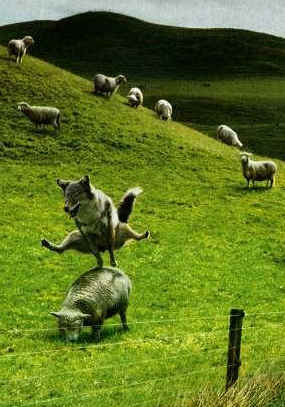
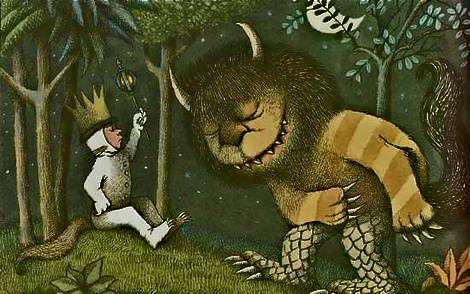
A Belgian Tripel at play in the meadows of your mind

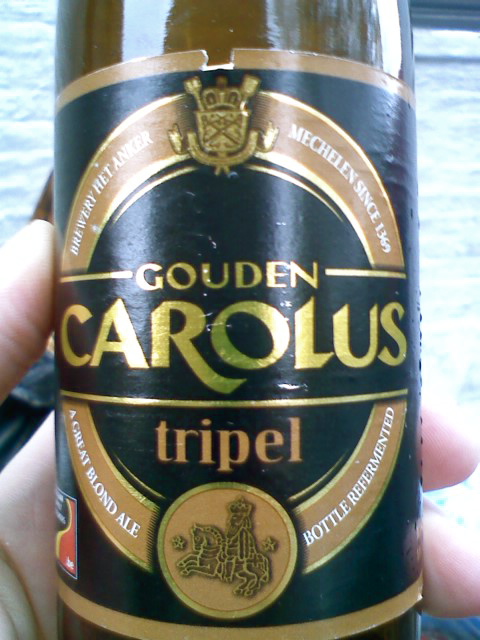
Gouden Carolus Tripel, Brouwerij Het Anker, Belgium
(9% abv)

A wolf in sheep’s clothing…yep, that about sums it up.

Belgian Tripels are deceptively smooth and ridiculously drinkable; watch out, though, cause they’ll knock you on your ass lickety-split.  Granted, you’ll have a big smile on your face, but on your ass, you will be knocked.

Bursting at the seams with alcohol, they clock in anywhere between 8% and 12% abv.  They are not your tailgate party tipple.  Instead, they are a long-established Belgian style that will put a few hairs on your chest.

In the initial stages, the brewer uses three times as much malt as they would for their standard Trappist “Simple”.  More malt = more sugar for the yeast to eat = more alcohol.  Finished off with Belgian candy sugar—which gives the beer a lighter body—and enough hops to balance out the sweetness, you’ve got a rocket-fueled steam engine on your hands that handles like a precision Ferrari.

The Gouden Carolus Tripel is a fine, fine representation of this.  It’s sleek, it’s delicious and you’ll notice your glass is empty quicker than you can say, “Gosh, officer, I could have sworn I only had two beers.  How many front lawns did you say I drove through? “

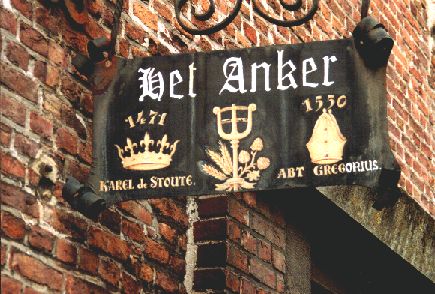
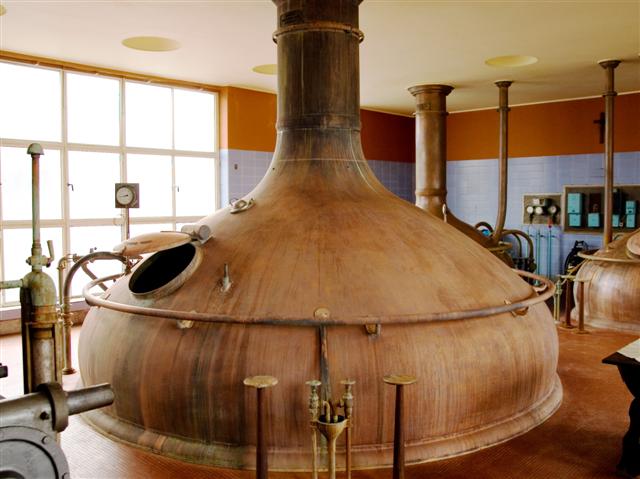
Made by the Het Anker (“The Anchor”) Brewery in Mechelin, the Gouden Carolus is named after the golden coins of Charles the Great.  In existence since 1471, the brewery now sports a distillery—their single malt whisky is made from the same malt as the Tripel—and hotel (perfect for wild nights in the tasting room followed by a short stumble to the pillow).

Medium golden in color with hints of caramel, the Gouden Carolus Tripel pours with a huge, billowy white head.  Deceptively delicate on the nose as you move in, your mouth is then hit with a wallop of flavor.  The taste of apricots drenched in clover honey mix with notes of caramel toffy.

But, most surprisingly, the beer tastes light and lifted and keeps you yearning for another sip.  Marshmallow cream and nougat come together with hints of spicy hops.  Wow.  It paired beautifully with Cookies & Cream ice cream (yep, I don’t mess around).

You be careful with those Belgian beers that moved in down the block, kids.  They sure have nice manners but there is a devilish look in their eyes, I tell you.  Especially that little Tripel…he’s got “trouble” written all over him.  Mark my words.

The machine at Het Anker that disguises feral wolves as innocent sheep (pic courtesy of A Considered Glass)

Long live the grapes, yo, I'm from the Empire State

We live in a wild world here in the city, and it’s all to easy to overlook what’s right at our doorstep.

The state of New York is a powerhouse in the world of wine; to the over 8 million people living in the city, though, the vineyards are far out of mind.

When I first traveled to the North Fork of Long Island—a mere 90 minute car ride from NYC—I felt as if I passed an invisible curtain and the trappings of urban life instantly transformed to bucolic countryside.  Vineyards and apple orchards replaced gas stations and billboards hawking insurance claims.  I was astounded at how close it was and how little I knew about it.

My trips through the Finger Lakes were equally transportive.  The myriad shades of green and rolling hills reminded me of my travels through Ireland in my early 20’s.

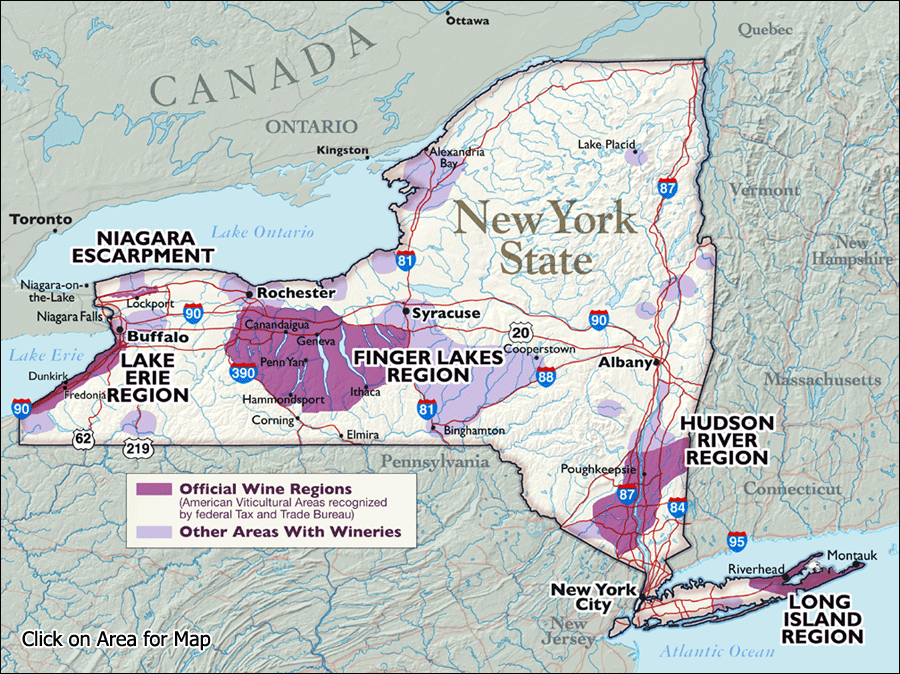
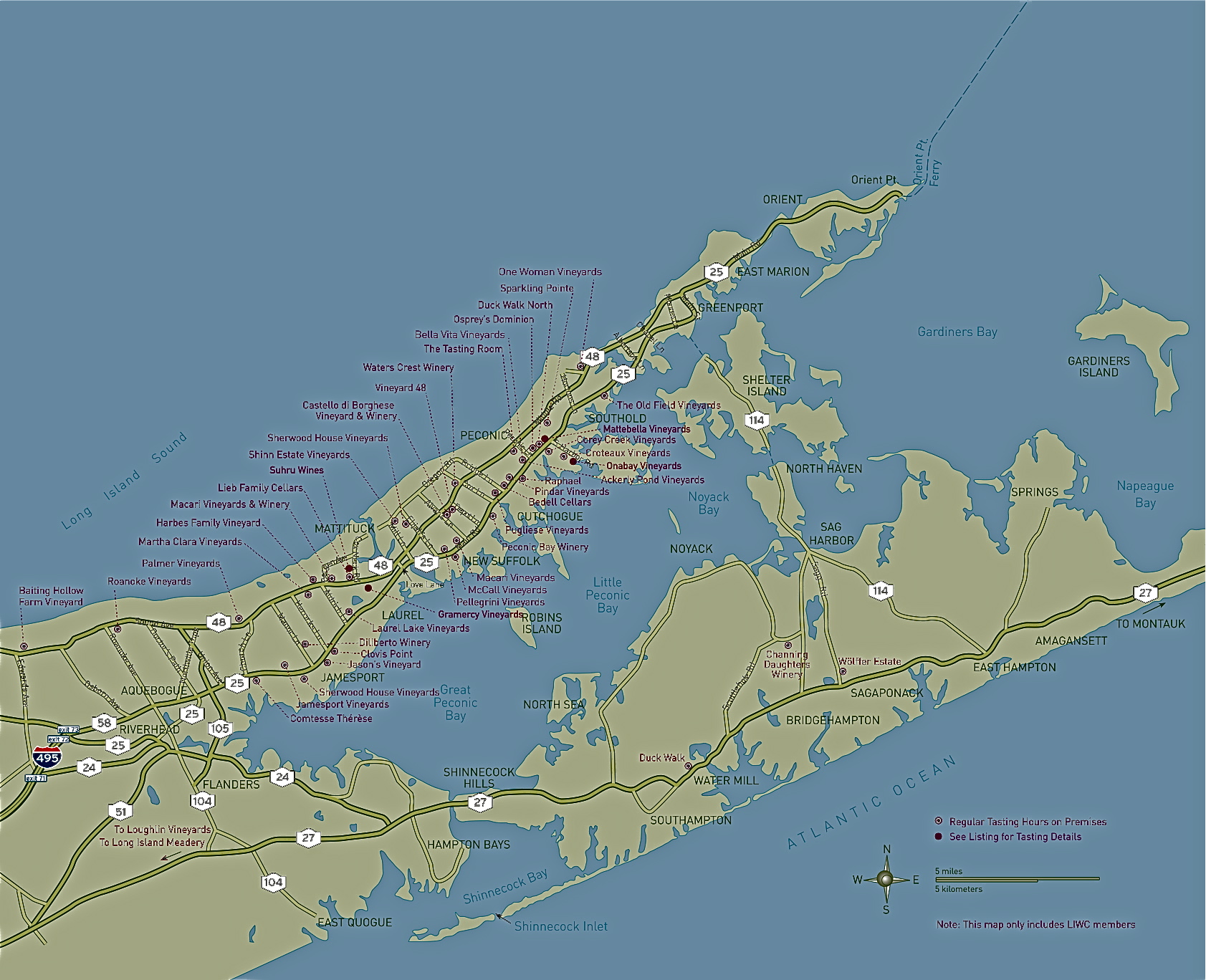
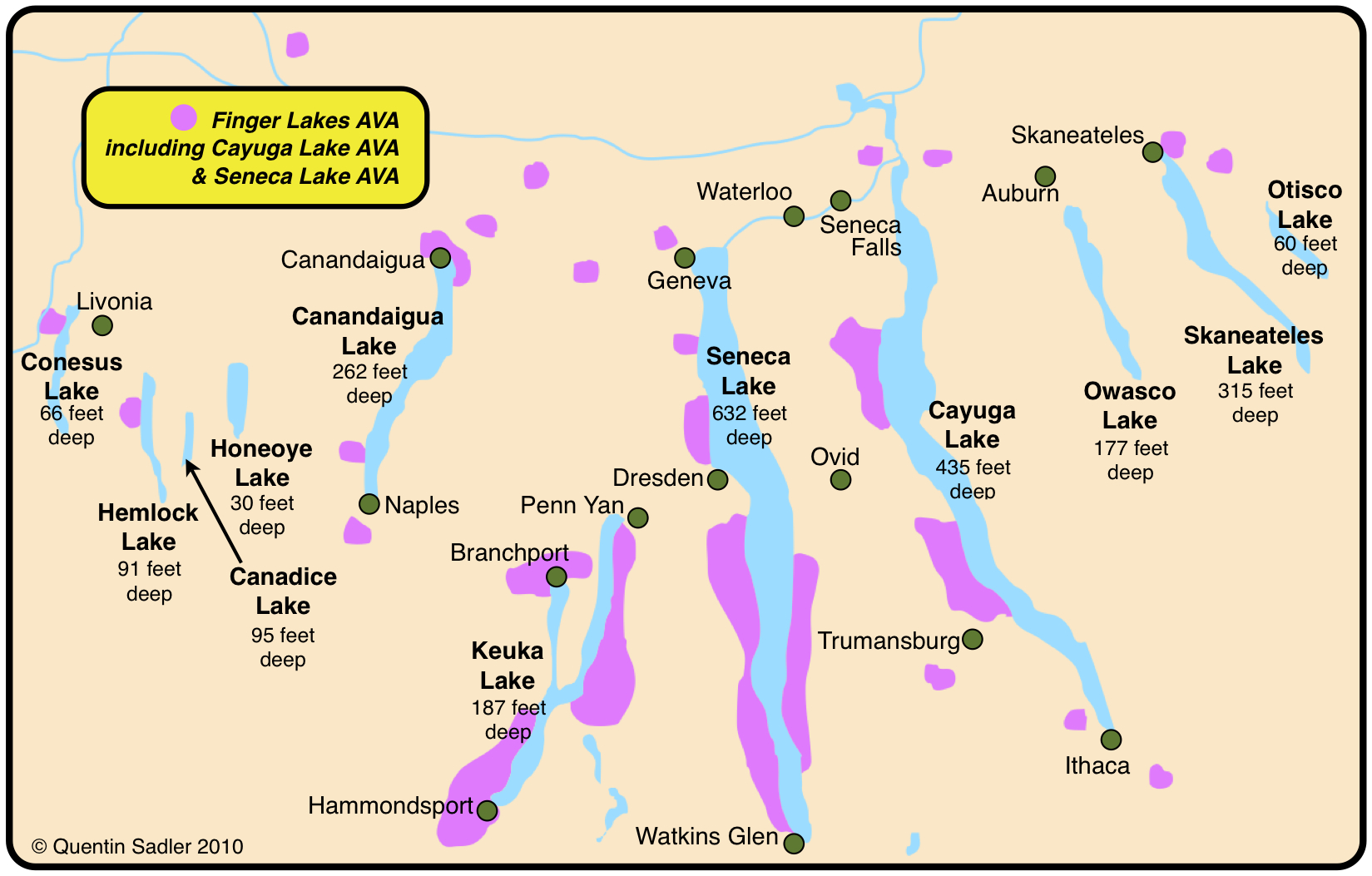
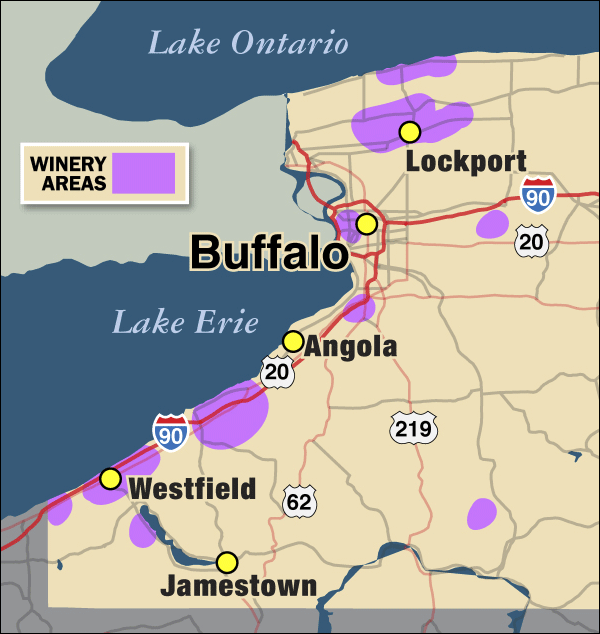
I’ve only cracked the surface of learning what lies here in my vinous-filled state, though, so I did some sniffing around the web in search of geeky maps and even-geekier facts to give you an overview of where our juice comes from.  Below is a look at the state as a whole, followed by three of it’s major wine-producing regions (North Fork, Finger Lakes & Lake Erie).

So, let’s hear it for New York, New York, New York.

NEW YORK STATE

  • Ranking: Third largest wine producer in the U.S.
  • New York has 10 AVA’s (American Viticultural Areas)
  • 40 million gallons (200 million liters, 200 million bottles) average annual production (Finger Lakes 85%, Hudson River 10%, Other 5 %)
  • Wineries: 255 Statewide (Finger Lakes- 96, Hudson River Region- 37, Long Island-50, Lake Erie- 18, 7 in the Niagara Escarpment and surrounding area, Other- 47)
  • Average Crush:  160,000 tons of grapes from about 950 growers
  • Gross Wine Sales:  Over $420 Million
  • Employees: About 3,000 at wineries; about 12,000 in vineyards
  • 1647-1664 Grapes planted on Manhattan Island by the Dutch.

North Fork of Long Island

NORTH FORK OF LONG ISLAND

  • Date established: October 10, 1986
  • Acres of vineyard: Approximately 1,830
  • Bonded wineries: 39
  • Growing season: 233 days
  • Located within the Long Island AVA; characterized by the long growing season and unique meso-climate produced by Long Island Sound and Great Peconic Bay.

Finger Lakes

FINGER LAKES

  • Date established: October 1, 1982
  • Acres of vineyard: 9,341
  • Bonded wineries: 96
  • Growing season: 190-205 days
  • Characterized by the “lake effect” meso-climates along several of the glacier carved Finger Lakes, the “air drainage” of sloping hillsides, and glacial soils conducive to drainage.

Lake Erie

LAKE ERIE

  • Date established: November 21, 1983
  • Acres of vineyard: 20,217
  • Bonded wineries: 18
  • Growing season: 200 days
  • Characterized by the temperature-moderating effects of Lake Erie, captured by the parallel Allegheny Plateau

For more information, click on the links below to visit some of the NY wine websites where I found the above facts and maps:

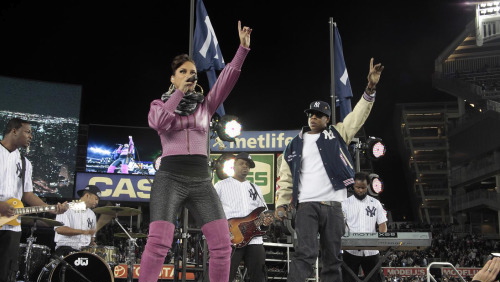
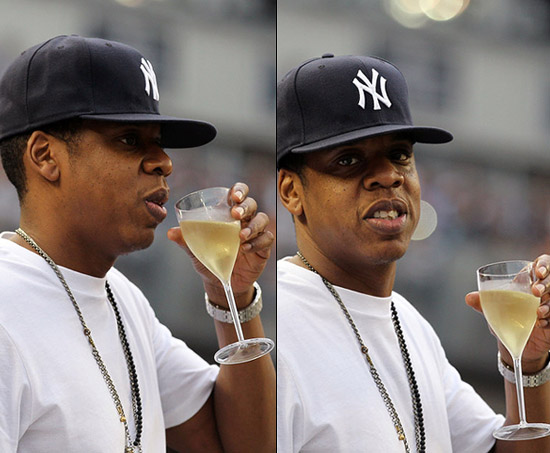
And remember: drink local…Jay-Z would want it that way.

Jay-Z doing a comparative analysis of the various representations of terroir found in Finger Lakes Riesling


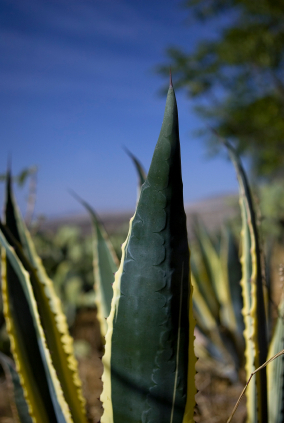
The Agave leaf: where unbridled soul awaits...

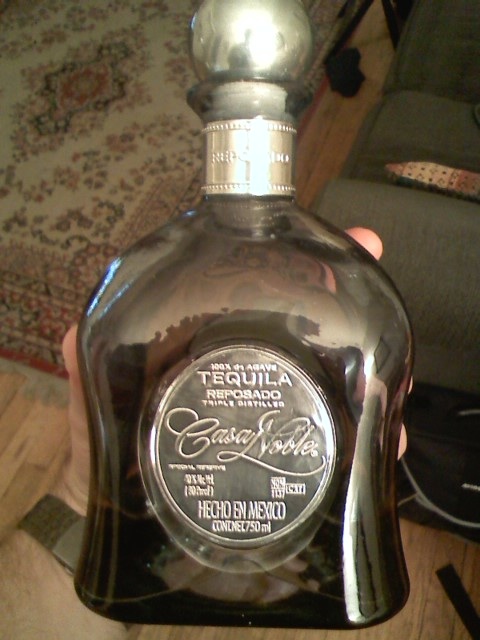
Tequila Reposado, Casa Noble, Mexico
(40% abv)

Tequila: it’s not just for margaritas anymore.

I’m kind of shocked at the sheer number of people that have never tried good tequila…and I don’t mean expensive Tequila, I just mean the authentic kind.

For all those who love it, but have only been weaned off the teet of Jose Cuervo Gold, this is akin to those who’ve drank only Budweiser and call themselves ‘beer lovers’. Tequila is a beautiful spirit, with a rich history and an incredible range of complex flavors.

As the pendulum has finally swung in our favor, we now have artisan products available to us from the backroads of Mexico, as well as Chapels to the Sacred Agave in the form of tequila lounges and bars.  When you taste a great Tequila, the experience can be life-changing. This isn’t a spirit you want to blast with lime juice and sour mix. And you can definitely keep the orange liqueur far away from your lips.  Here’s why:

Yes, the bottle doubles as a battle axe

Made from organically raised Blue Agave that’s been slow-roasted in a stone oven for 38 hours—and later aged in French White Oak barrels for 364 days—Casa Noble Reposado is the real deal.

The complexity of the aromas and the flavors is hypnotically transporting. On the nose, notes of caramel and maple syrup swim around with lime zest and the smell of sea air. On the palate, brown sugar and citrus reminded me of baked pie, but one in which I’d never encountered at the fair before (maybe I need to go to the Jalisco fair?). Bold, integrated flavors led to a long, fruity lime finish where the sweetness from the agave brought flavors of roasted pineapple.

Oh, and you can leave your salt shakers and Jimmy Buffett at home…well, okay, if you must, play the Jimmy Buffett—but save the body shots for the trip to Cancun.

Brain damage patients found in Margaritaville

Robert Thomas Vineyard - Russian River Valley, CA (J Vineyards)

Happy Halloween, my libation-loving friends.

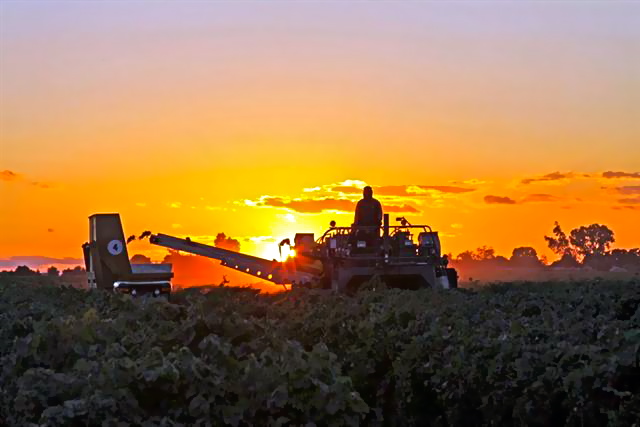
As the streets are filled with sugar-craving, maniacal little beasties going door-to-door begging for the sweet stuff, the end of October unofficially marks the end of prime time for the 2010 harvest.

While there are still certainly some grapes a-hanging on the vine, for the majority of North American and European wineries, the fruits-of-their-labor have been picked.  No more nerve-wracking, weather-watching, hail-fearing afternoons.  Its time to hang up the shears and disappear into the bowels of the cellar.

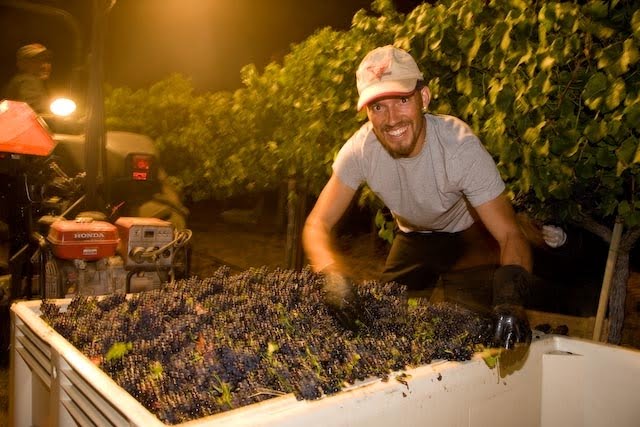
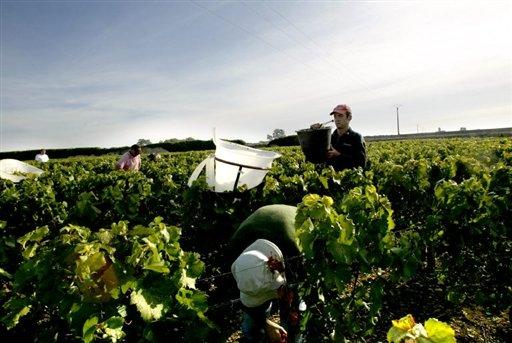
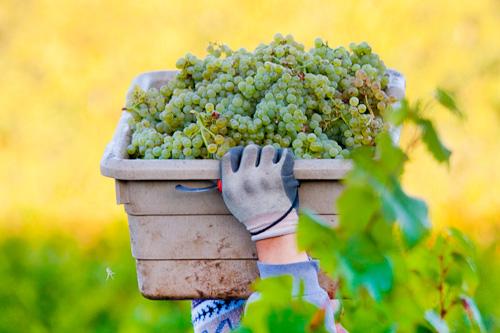
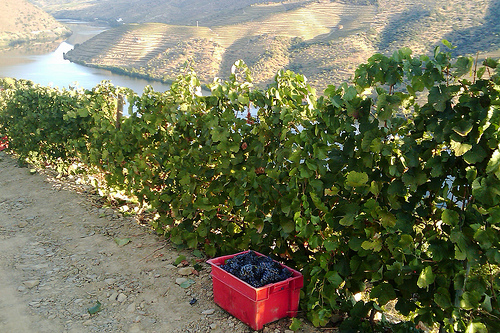
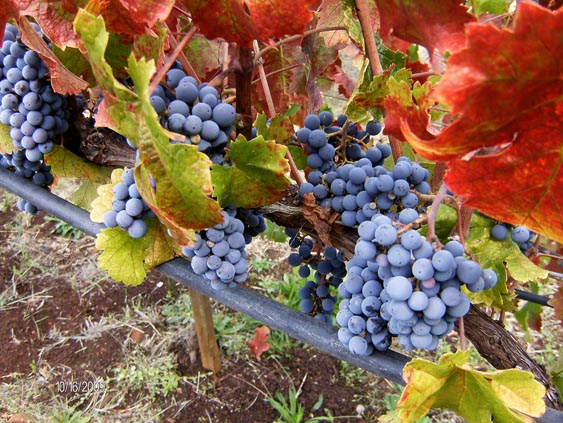
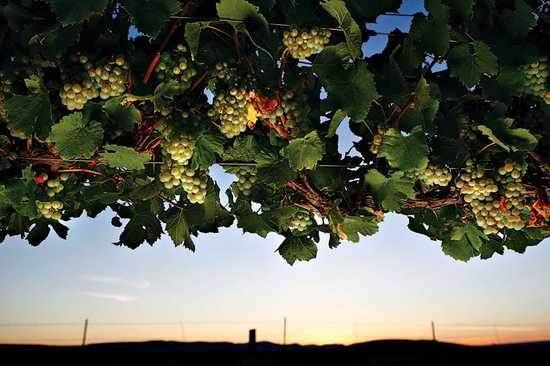
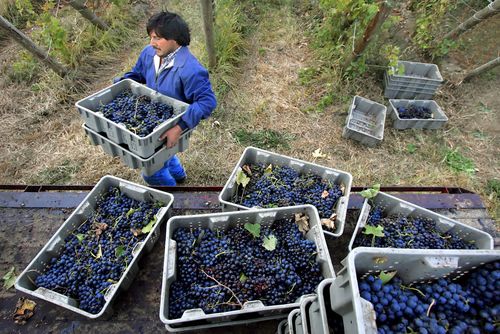
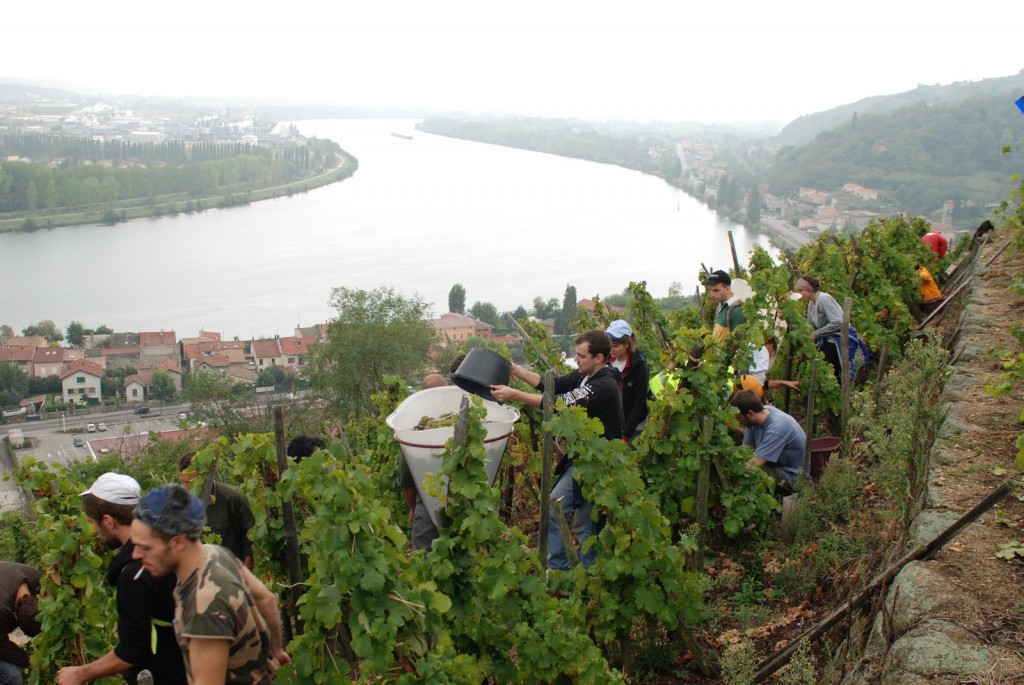
So tonight, slip off your Kenny Rogers and Dolly Parton costumes, grab a glass of vino and hoist it high in honor of the 2010 grape harvest.  Here’s a pictorial round-up (click on the pics to visit the respective host websites):

Burgundy, France

Napa Valley, CA

Duero Valley, Portugal (Quevedo)

Sonoma, CA

Goose Ridge Estate - WA (pic by Kai-Huei Yau/Tri-City Herald)

(pic from MovingPictures - A Blog about Life and Weather...)

South of France

Lodi, CA

Meeting a wild Lambic face to face

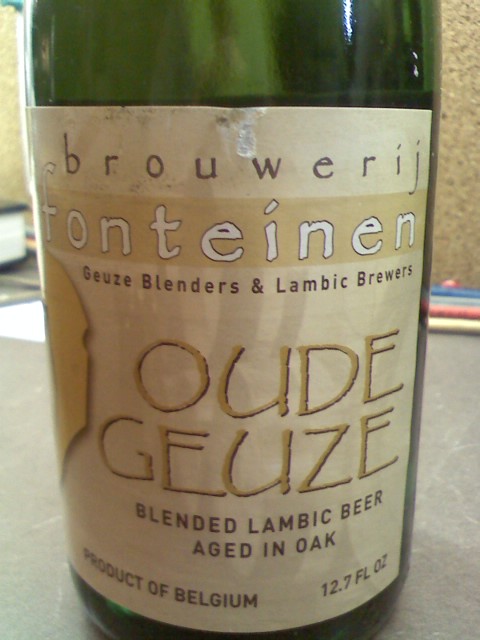
Oude Geuze (lambic), Drie Fonteinen, Belgium  

(6.5% abv)  

Last night, one of my co-workers asked me what my favorite beer on our list is.  

I was paralyzed.  Whoa, choose one?  But these are my babies and they’re all unique in their own way!  How could I possibly zero it down to one?  I felt like I was a kid again in front of my grandma’s ridiculously overstuffed toy drawer being told I had to choose one toy for the afternoon.  

But, if I had to, if I had to, I’d go with what I think is the most interesting beer on the list right now.  The Drie Fonteinen Oude Geuze.  Not so much a beer, as a slap across the face.  A 2×4 of sensoral awakening.  It is a mind trip and a walk down the wild side of beer.  

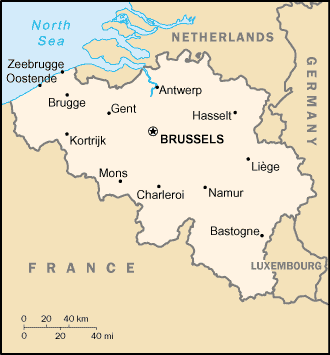
The Pajottenland region lies Southwest of Brussels

Ladies and gentlemen, I give you:  the Lambics.  Often called “sour” beers, Lambics hail from the Pajottenland region of Belgium.  Everything you’ve learned about modern breweries—intense cleanliness, maniacal sanitization—all gets flipped on its head when you enter the lambic brewery.  Spider webs, dirt, bacteria, used barrels—these are gold for the lambic brewers.  It’s said that sweeping and cleaning is completely frowned upon, as this is where the bacteria live.  And bacteria is what these beers are all about.  

If there is terroir in beer, it is here.  Again, contrary to everything you know about brewing, lambic beers are made by spontaneous, open fermentation.  The unfermented beer is left uncovered in large vats, completely exposed to the air, and vents at the top of the brewery are opened to allow the ambient yeasts to enter the brewery.  It is these yeasts which cause the fermentation and add their own unique signature to the beer.  Once begun, the fermenting beer is syphoned into oak and chestnut barrels to age (for 1-3 years) and continue it’s journey.  Soon, it meets one of the most cherished (and feared) yeast strains in the beer and wine world: Brettanomyces.  It is from the ‘Brett’ that Lambics get their signature sour, barnyardy flavor and aromas.  

Lambics are then blended by expert tasters just like the great wine blenders of Champagne.  As each batch of Lambic can be wildly different—and take on different characteristics as time goes on—it is the blender’s job to create the final flavor.  This is how the Kriek and Geuze styles are created.  To augment the often sour flavors of these beers, the Belgians will sometimes add fruit to the beer which causes another fermentation and results in a dry beer with a fruit component.  In the case of Geuze, one, two and three-year old lambics are blended together (no fruit is used).  


Drie Fonteinen is one of the few remaining traditional geuze blenders, and uses 100% spontaneously fermented lambic and no artificial additives or sweeteners.  This beer is not for the faint of heart.  On the nose, one is greeted by a strange aromatic wonderland of funky, sweaty lemonade that’s been infused with gym socks.  Not necessarily appealing in description, but trust me, there is something that lures you in with its hypnotic charm.  On the palate, it wraps your mouth in a sour choke-hold that reveals a vast complexity of flavor.  Your mind fights to identify the myriad of flavors and sensations.  It reminds me of eating hot peppers; your body screams with the endorphin rush but after a moment of release, you’re craving more.  

Lambics are the big leagues of beer.  This is where the diehards head to experience a new realm of possibility for beer.  They are in a category of their own.  Wild mustangs on the prairie fighting to be tamed.  And, in my mind, the Drie Fonteinen Geuze remains the wildest, most transfixing beer in my stable of prized beauties.  

Just be sure to strap your saddle down real tight before tasting.  

Armand Debelder of Drie Fonteinen

Beer on my brain (photo by Daniel Krieger)

I was flattered yesterday to receive a wee bit of press on Eater.com for all my beer geeking & drinking.  Aren’t you proud of me, Mom?

Here’s a link to the piece by Greg Morabito which details my current sudsy work at Hearth Restaurant and the two Terroir wine bars“Hearth’s Resident Beer Geek, David Flaherty.”

It got me thinking…with three separate beer programs at three separate locations running at once, maybe I should take a moment to take stock.  I’ve become my frickin’ childhood self again, but instead of collecting M.U.S.C.L.E men or baseball cards, I’m stockpiling beer like ‘Prohibition II’ is just around the corner.

The beers change constantly, and certainly with the seasons, with newbies making appearances as much as possible.  I guess it would be easier to just lock it down and re-order each time, but that’s as painfully boring to me as watching the Jersey Shore.

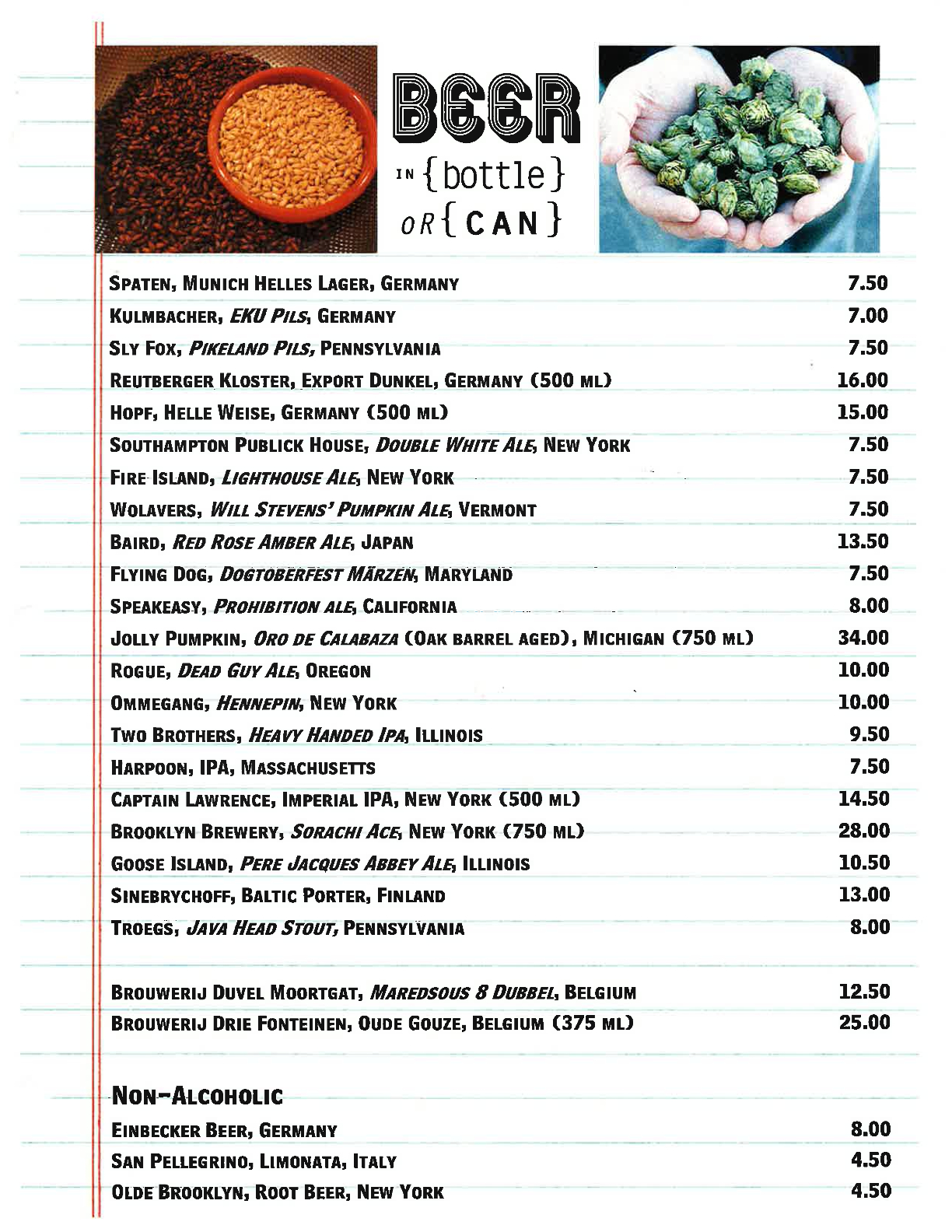
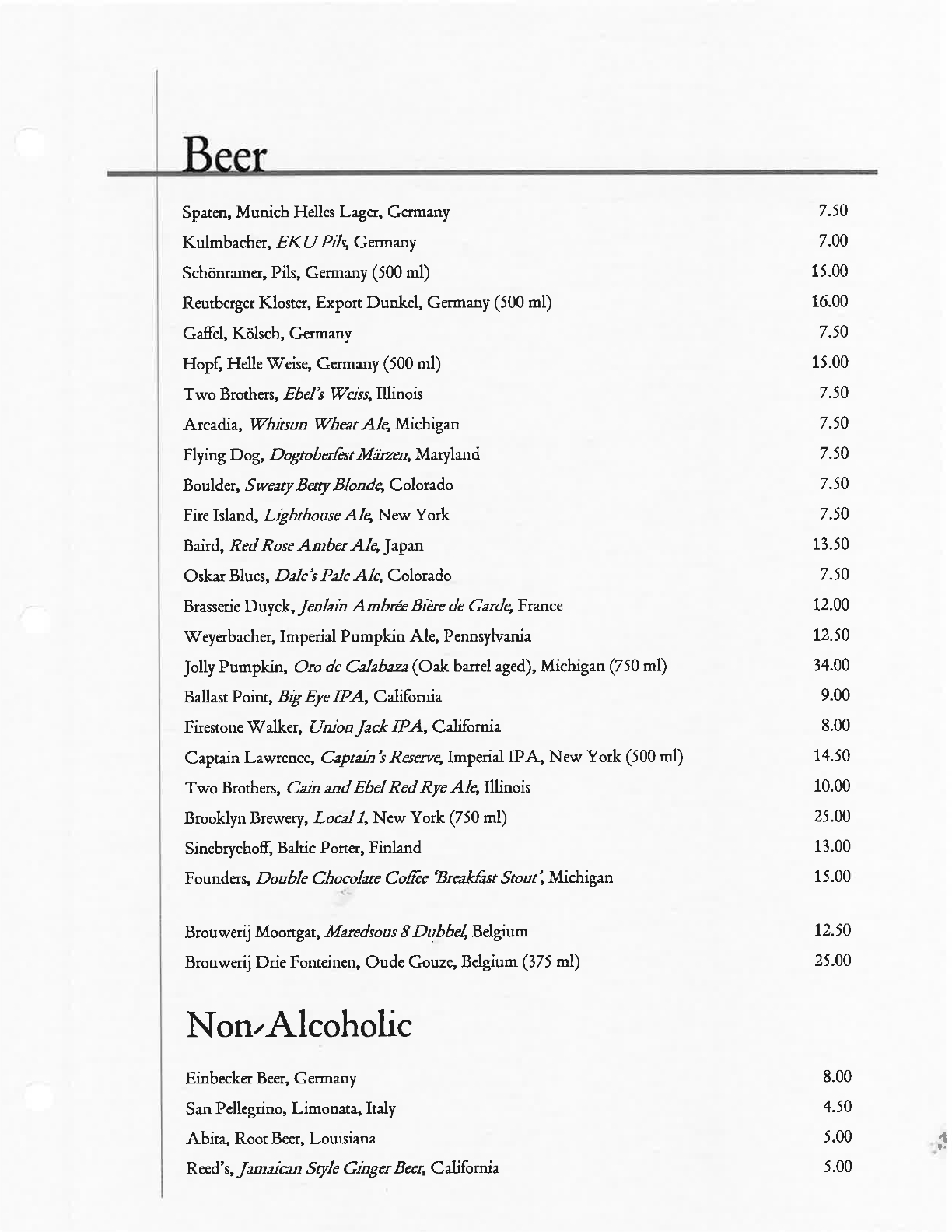
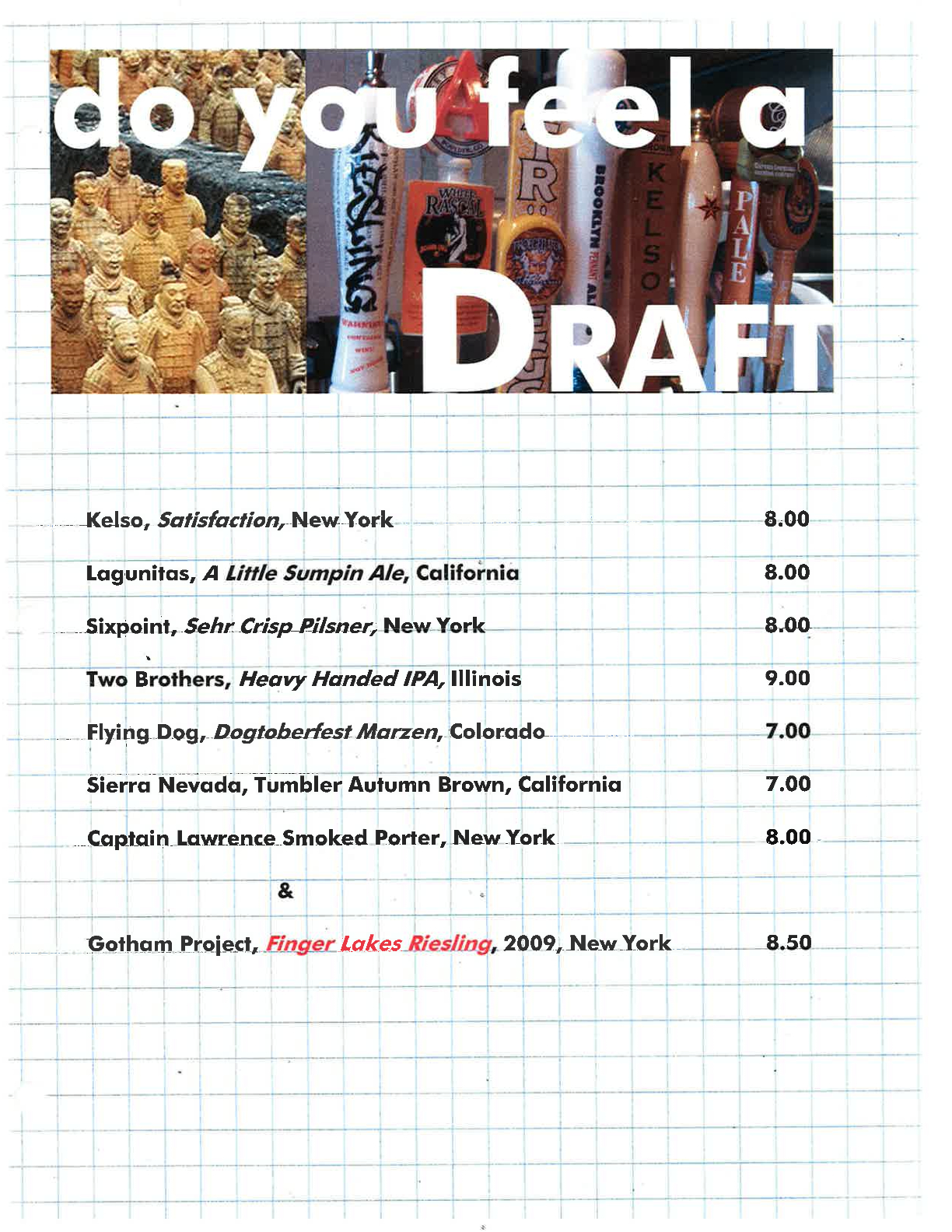
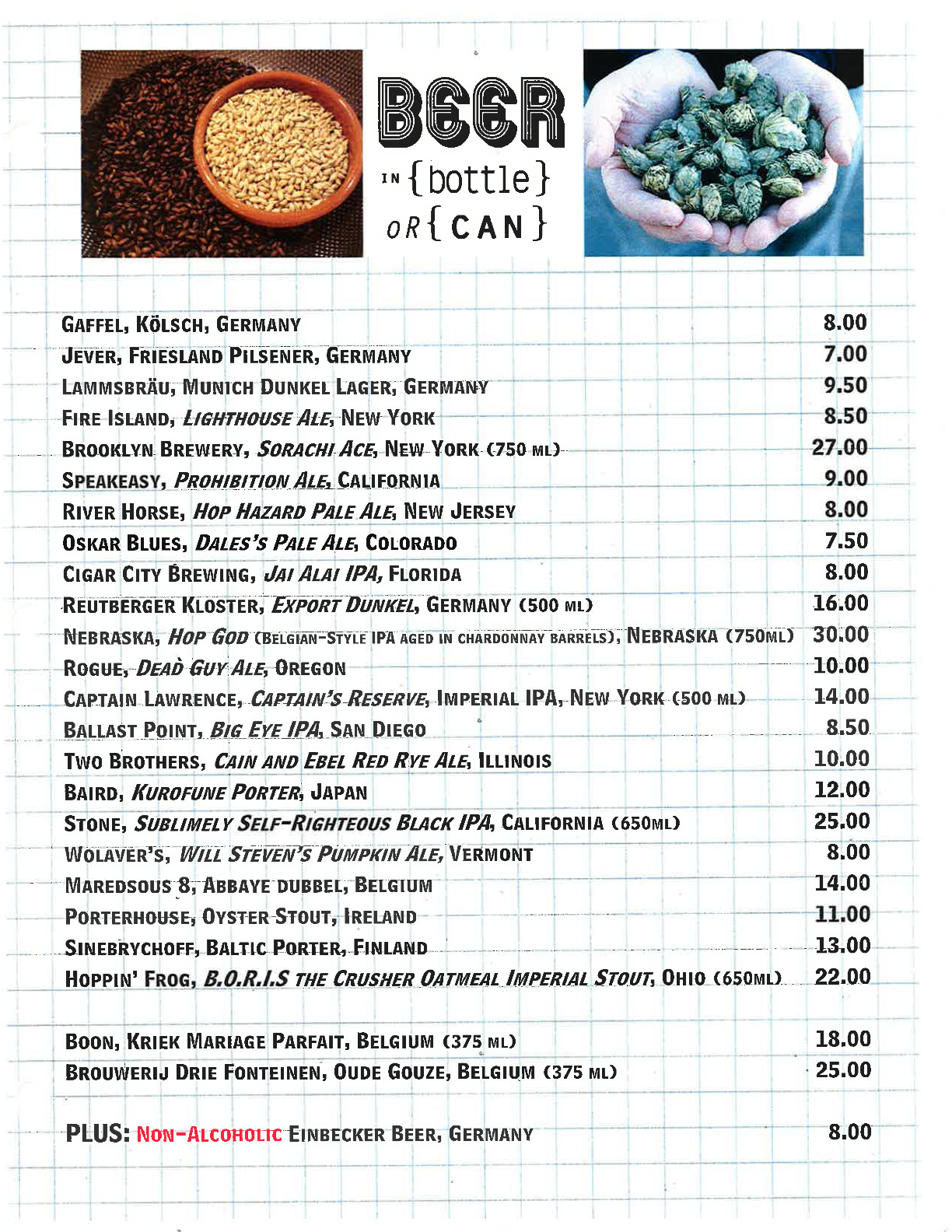
So far all you fellow beer geeks out there, I’ve posted the pages from our respective beer lists, and here’s a brief sum up of dorky facts that make my pulse quicken like when I scored the 1989 Upper Deck Ken Griffey Jr. rookie card:

  • Total beer selections (3 locations):  82
  • Beer selections at Hearth: 26
  • Beer selections at Terroir EVil:  24
  • Beer selections at Terroir Tribeca:  32 (25 bottled, 7 draft)
  • International:  32
  • West Coast/Colorado/Mid-West:  26
  • East Coast (not including New York):  10
  • New York:  14

Here’s a closer look at the lists (just click on the jpg’s to enlarge them)

*Warning: looking this over without a pint in hand may lead to rash & fever

Terroir East Village

Hearth

Terroir Tribeca Draft

Terroir Tribeca Bottled

The moral?  I’ve got a sickness.  And I need your help to feed me the medicine.  Come on down to the East Vilage and Tribeca.  Let’s share a pint.

In the luxury world of Champagne, a small rip has appeared in the king’s frock.

There has been a descension in the ranks.  And this thread may unravel to reveal the true beauty that lies underneath the polished exterior.

After centuries of domination, the massive Champagne houses are now seeing small renegades rising out of the cracks of their precious chalk soil.  Who are these brave stalwarts?  Multi-millionaires sweeping in with even-deeper pockets?  An operation named ‘Buffett & Gates’ House of Bubbles‘ setting up shop next door?

No, my friends, they are the grape growers, themselves.  The little guys who own small parcels of land.  Traditionally, they’ve provided the prized grapes and juice to the Moets and the Cliquots.  But now, a select few of them have decided to make their own wines from their own grapes.  They are the resistance in the world where the Death Star is fully operational.

To give you a sense of the hold the mega brands—Moet & Chandon, Veuve Clicquot and Mumm, to name a few—have over the market, it helps to know that they produce more than 80% of the total output but only own 12% of the vineyards.  They buy from many different growers (sometimes as many as 80 different ones) to meet their output needs and to blend their “house-styles”—a process that essentially whitewashes away any specific vineyard characteristics.

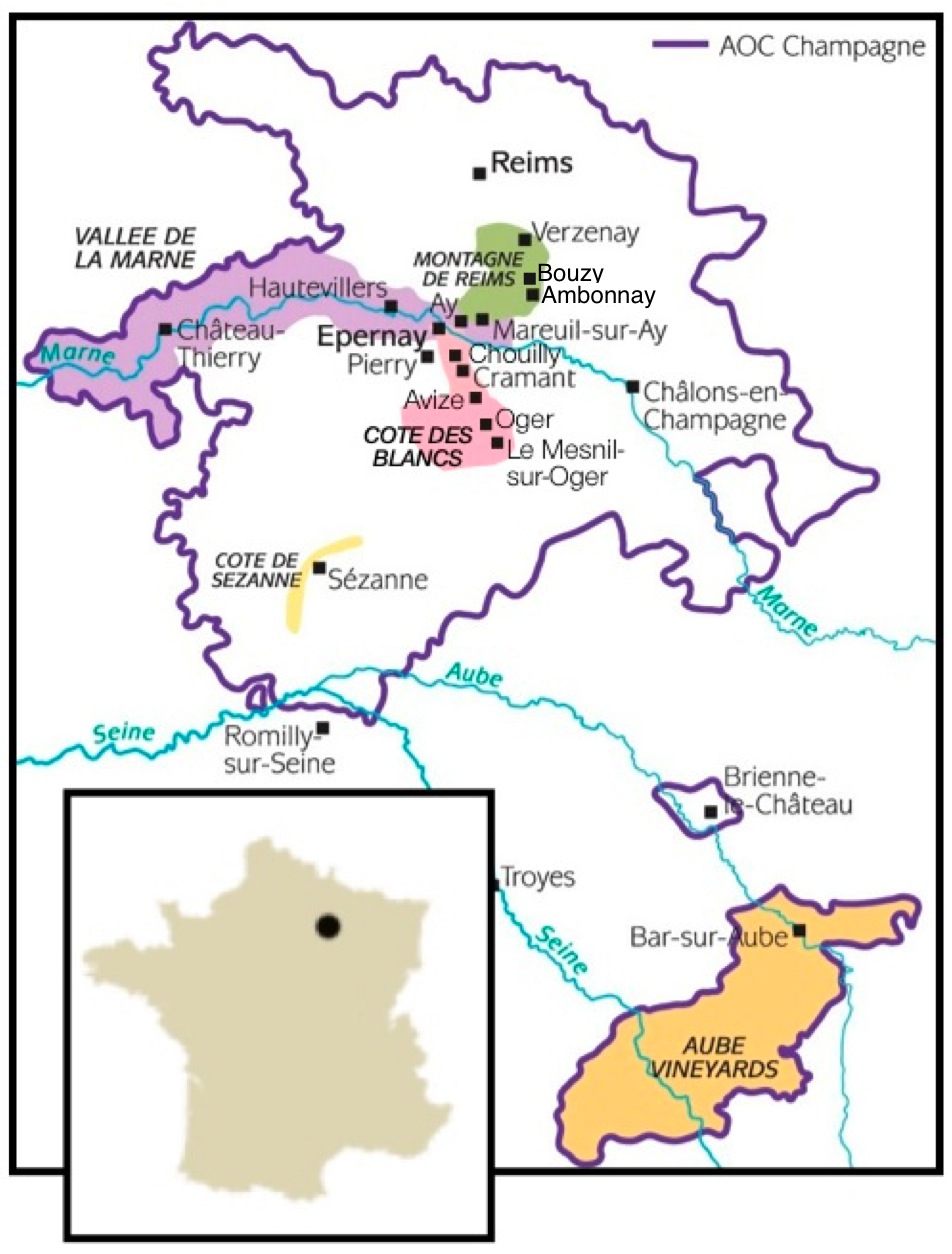
Today, there are more than 19,000 independent growers in the region but due to the economics of producing themselves, only 5,000 of them make their own wines.  But they are finally coming into the spotlight.  Consumers and sommeliers, alike, are finding single-vineyard representations that are astounding, and truly expressive of the terroir of the region.

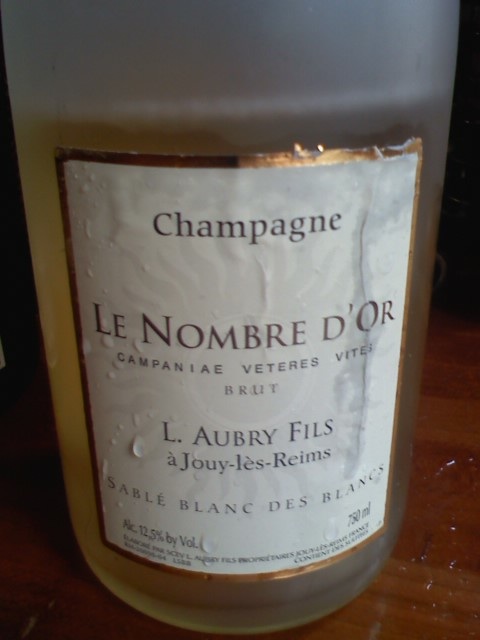
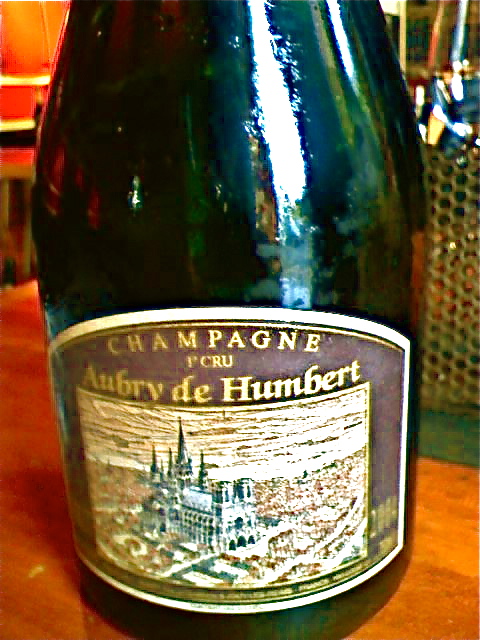
I recently tasted two examples from L. Aubry Fils, part of the Terry Theise collection of grower’s Champagne.  Owning 17 hectares of vineyards (approximately 42 acres), the Aubrey brothers produce only 11,700 cases of wine.  Compared to the more than 2 million cases produced by Moët & Chandon and the more than 1 million cases produced by Veuve Clicquot, this is a tiny drop in the bucket.  I was bowled over by their uniqueness.

Le Nombre d’Or Sable Blanc des Blancs, L. Aubry Fils, 2004
(40% Chardonnay, 30% Petit Meslier, 30% Arbanne)

In 1989-1990, the Aubry brothers planted the traditional Petit Meslier and Arbanne grapes, two white varieties that have long been forgotten in the Champagne region.  Light straw in color with hints of golden thread.  Cream puff pastry, meringue and a hint of gunmetal on the nose.  Silky and vibrant like a velvety mouthwash that leaves one feeling zippy and ready for a French kiss.  A tartness on the palate reminiscent of Pop Rocks candy or a tart lemonade served from a silk chalace.

Aubry de Humbert, L. Aubry Fils, 2004
(Equal parts Pinot Noir, Pinot Meunier and Chardonnay)

Named for Aubry Humbert, the archbishop of Reims who laid the “cornerstone” of the Cathedral on May 6th, 1211, this is a coeur du cuvée selection (meaning only the ‘heart’ of the juice is used, with the first and last pressings not being bottled).  Light straw in color, with rich aromatics of strawberry cream flecked with flint and lemon meringue.  A big, round, complex body with an elegant fatness from the red grapes.  A cleansing acidity which washes from front to back.  Rounder in its acidity than the fencing sword blow of the blanc des blancs.

For anyone who supports local farmers or praises artisan production, wave your rebel flags in support.  Ask your local wine shop and restaurants to get on board.  In 1997, growers sold only 0.62% of the total Champagne exported to the US, and today its somewhere just over 2%.  Let’s change that.

These guys are flying the Millenium Falcon and there is no better place to ride than in the cockpit with Han Solo.

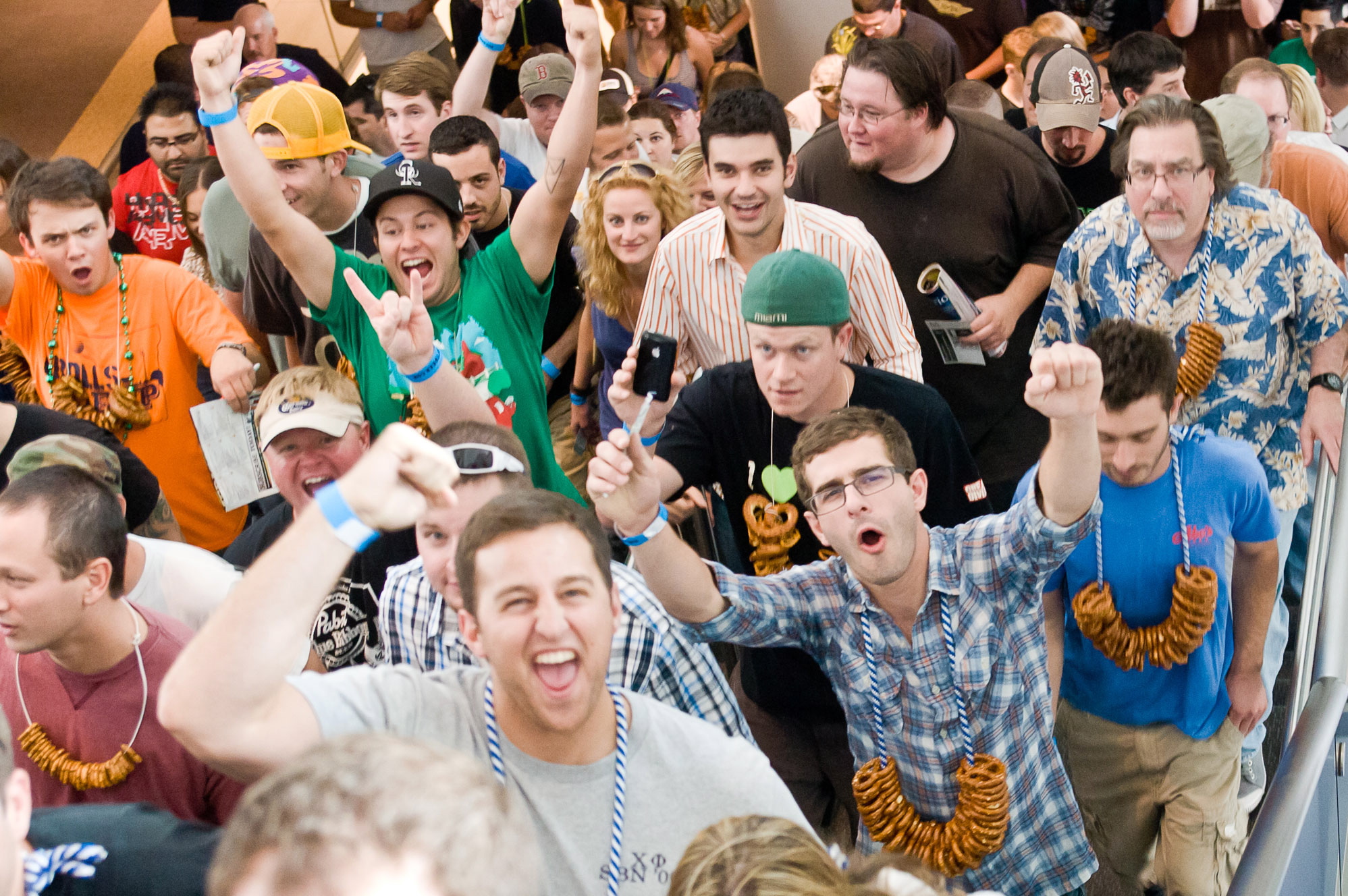
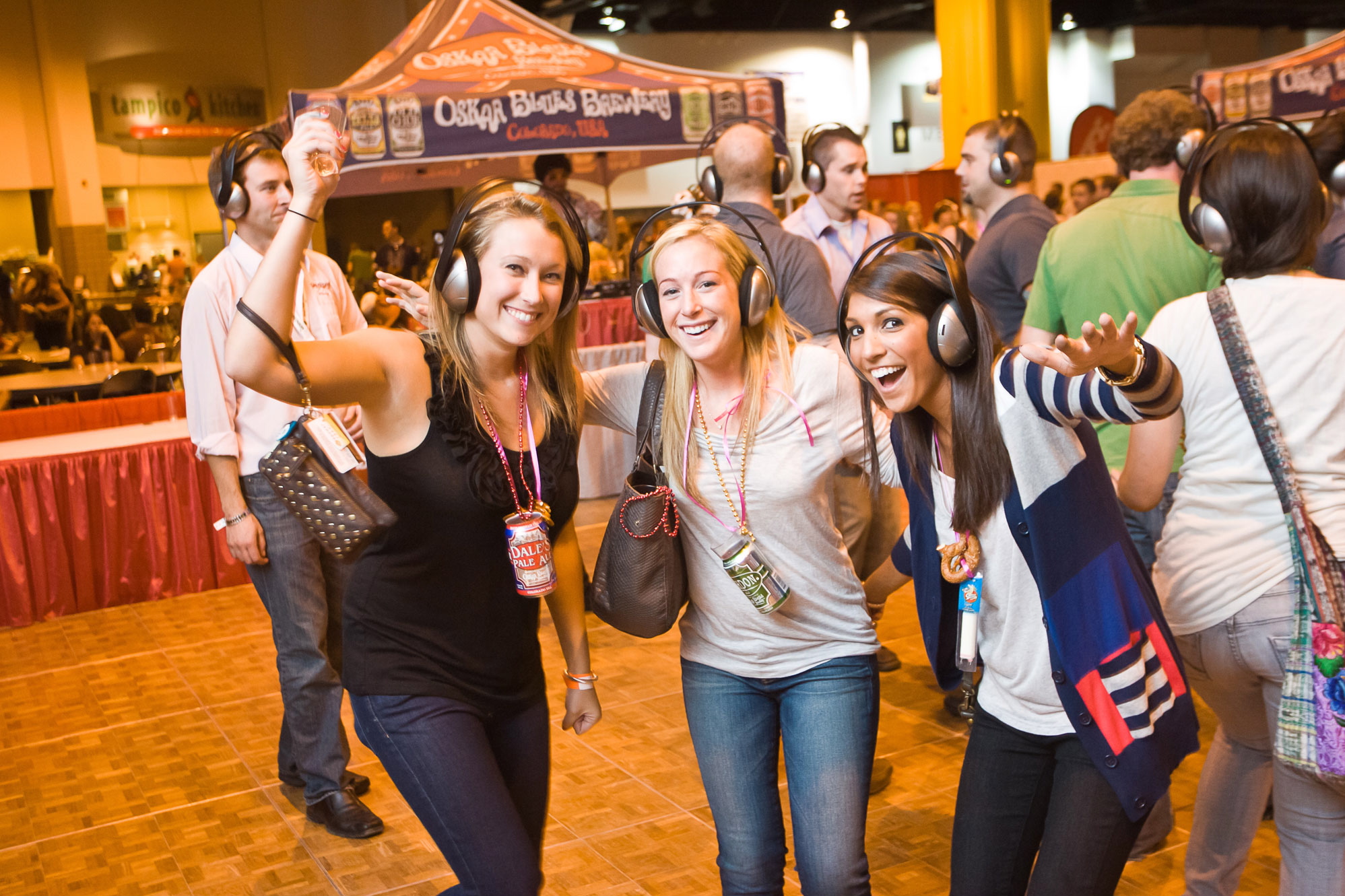
Armed with pretzel necklaces they came (Photo by Jason E. Kaplan)

The jealousy has finally subsided.    

After a few weeks of dark, introspective depression and nursing myself with chicken soup to ease my wounded soul, I can finally write about the Great American Beer Festival.  I wasn’t there.    

This simple fact, alone, is one that I was reminded of again and again via Facebook status updates, intoxicated and joyful tweets and now the steady stream of pictures, further rubbing in the fact that my home state played host to my heroes, my friends and my dreams.    

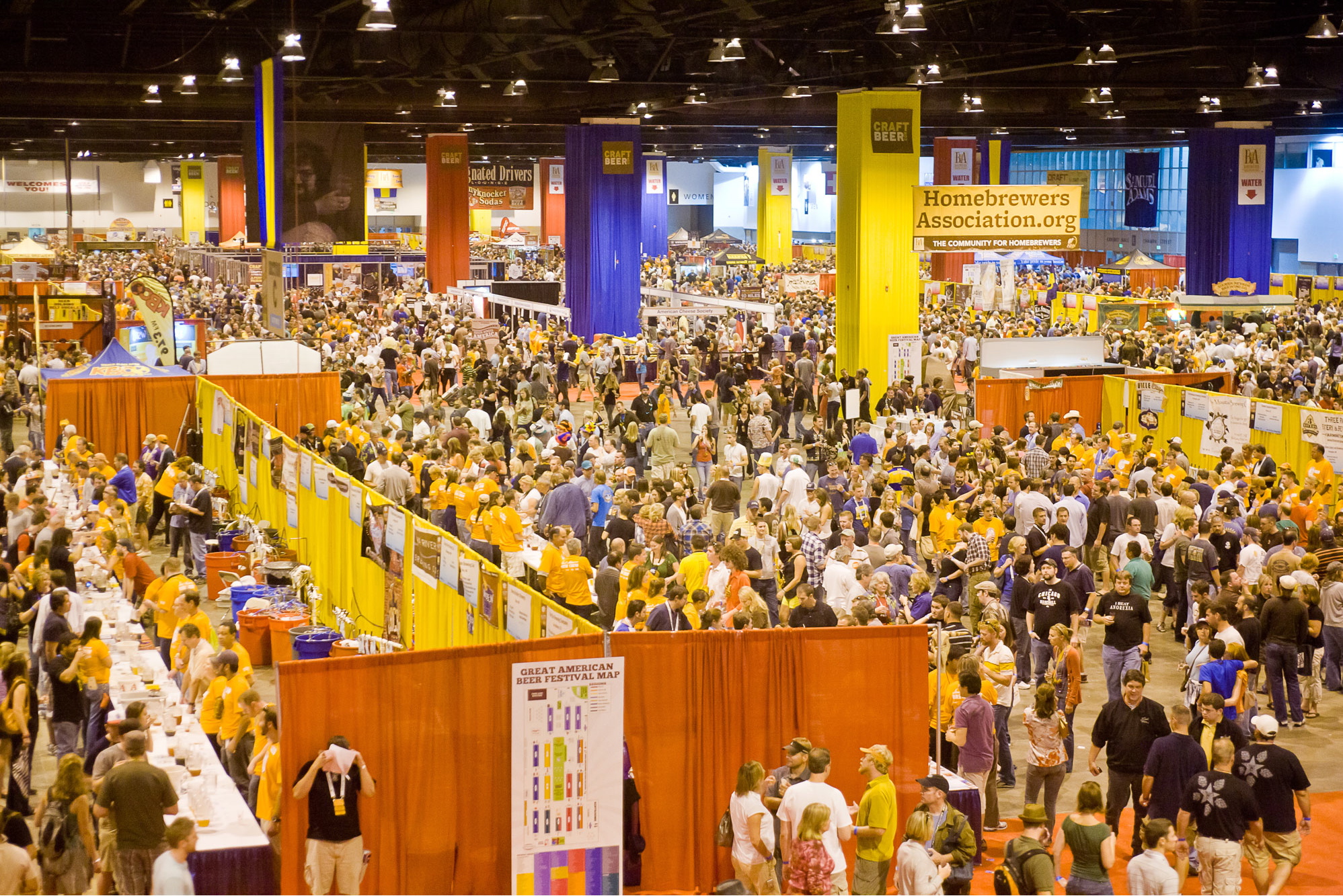
The sound of suds? (Photo by Jason E. Kaplan)

It was further made painful by the fact that a handful of my friends from NYC made their way west and came back with a glint in their eyes that was akin to explorers who had seen the new world.  I even wrote about it last year with excitement (“The GABF: Get the F Out of Its Way“).  This year took me a little longer.  But fuck it, I’ve manned up.  Here we go.    

The GABF:  Denver, Colorado.  Every year around September and October.  Began in 1982 by Charlie Papazian—known to homebrewers as the man who created the oft-overused, although the prisitinely perfect phrase, “Relax.  Have a Homebrew”— in Boulder, Colorado with only 22 breweries in attendance, the GABF has become a juggernaut.    

A tour de force of American brewing talent and a gaggle of fans akin to a UN summit of the world’s superpowers, or the masses who gathered at Woodstock to combat the powers of war with peace signs and hits off the nitrous tank.  For the beer world, this is it.  This is heaven’s gate.    

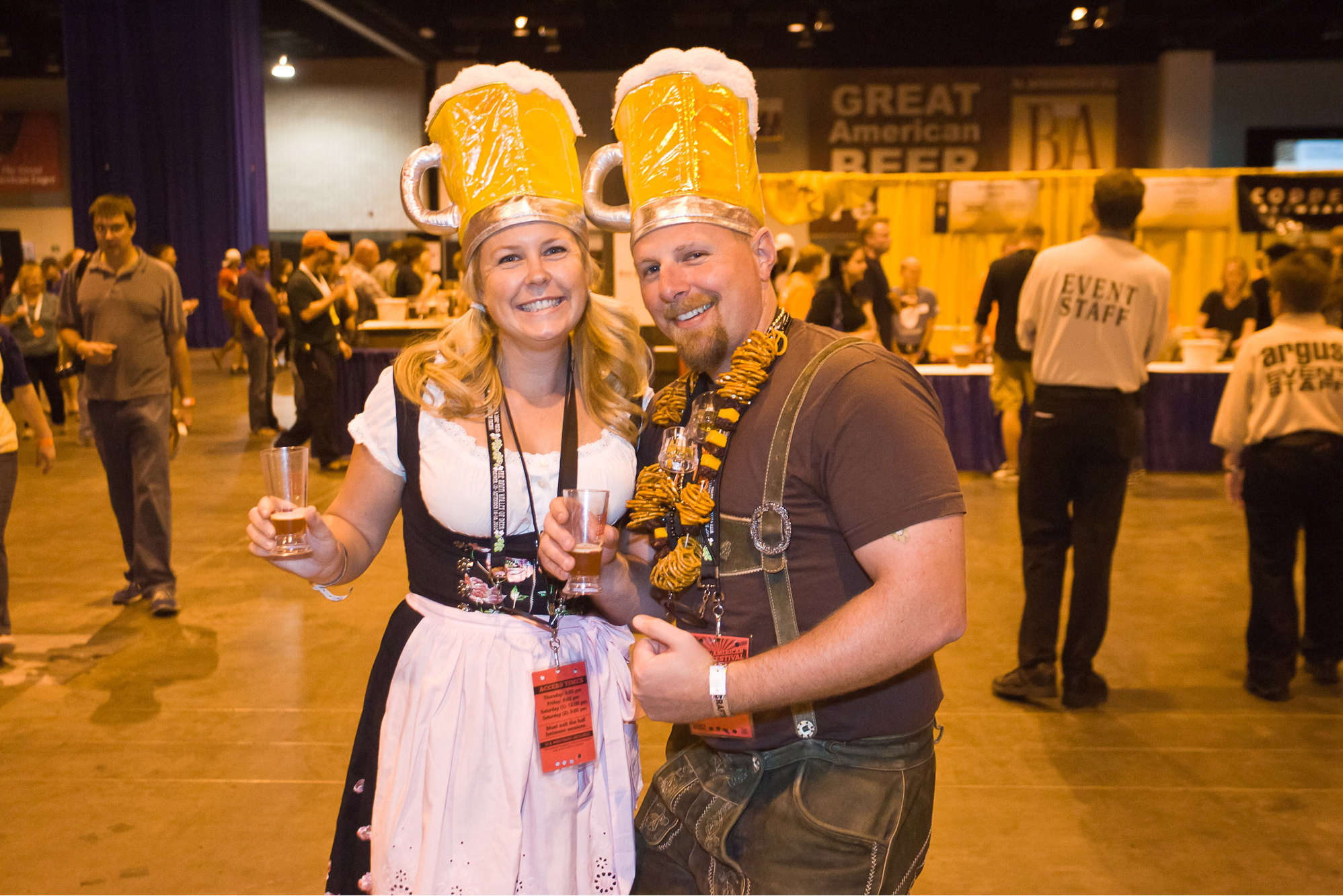
Those who wear beer hats together, stay together (Photo by Jason E. Kaplan)

Let’s look at some stats for 2010:    

  • 29th annual festival.
  • More than 2,200 beers in the festival hall—the biggest selection of American beers ever served.
  • 36,000 gallons of beer.
  • 49,000 attendees expected (includes ticketed attendees, brewers, judges, volunteers and journalists).
  • 462 U.S. breweries serving in the festival hall.


New This Year    

  • 56 new breweries serving in the festival hall.
  • New beer style categories in the competition:
    1. American Style India Black Ale
    2. Wood and Barrel Aged Strong Stout
    3. Pumpkin Beer
    4. Field Beer


Despite the endless tables of beers and endless drones wandering the floor like Charlie in the Chocolate Factory, the Great American Beer Festival is also the largest commercial brewing competition in the world.  To take a gold medal here is an honor that any brewer would get down on a knee for and humbly offer his or her soul in the service of the Crown.    

For a complete list of winners, click HERE.    

Some of my favorite categories and winners:    

Category 4: Field Beer (28 Entries)    

  • Gold:  FROG’S HOLLOW DOUBLE PUMPKIN ALE, Hoppin’ Frog Brewing Co., Akron, OH
  • Silver:  DARK O’ THE MOON, Elysian Brewing Co., Seattle, WA
  • Bronze:  IMPERIAL PUMPKIN ALE, Weyerbacher Brewing Co., Easton, PA

Category 47: American-Style India Pale Ale (142 Entries)    

  • Gold:  “PSEUDO” IPA, Pizza Port San Clemente, San Clemente, CA
  • Silver:  HEAD HUNTER IPA, Fat Head’s Brewery & Saloon, North Olmsted, OH
  • Bronze:  LUMBERYARD EXTRA IPA, Lumberyard Brewing Co., Flagstaff, AZ

Category 48: Imperial India Pale Ale (97 Entries)    

  • Gold:  DOHENY DOUBLE IPA, Pizza Port San Clemente, San Clemente, CA
  • Silver:  HOP CRISIS!, 21st Amendment Brewery, San Francisco, CA
  • Bronze:  DECADENCE IMPERIAL IPA, Trinity Brewhouse, Providence, RI

Category 49: American-Style Amber/Red Ale (83 Entries)    

  • Gold:  RED NECTAR, Firestone Walker Brewing Co., Paso Robles, CA
  • Silver:  HOP BACK AMBER ALE, Troegs Brewery, Harrisburg, PA
  • Bronze:  RED ROCK, Triple Rock Brewery and Alehouse, Berkeley, CA

Category 16: American-Style Sour Ale (39 Entries)    

  • Gold:  BRUTE, Ithaca Beer Co., Ithaca, NY
  • Silver:  ERIC’S ALE, New Belgium Brewing Co., Fort Collins, CO
  • Bronze:  RED POPPY, The Lost Abbey, San Marcos, CA

Category 18: Wood- and Barrel-Aged Strong Beer (77 Entries)    

  • Gold:  BARREL AGED BIG ISLAND, Island Brewing Co., Carpinteria, CA
  • Silver:  HE’BREW RIPA ON RYE, Shmaltz Brewing Co., San Francisco, CA
  • Bronze:  MELANGE A TROIS, Nebraska Brewing Co., Papillion, NE

Category 19: Wood- and Barrel-Aged Strong Stout (34 Entries)    

  • Gold:  BOURBON BARREL AGED SEXUAL CHOCOLATE IMPERIAL STOUT, Foothills Brewing, Winston-Salem, NC
  • Silver:  REMY, TAPS Fish House & Brewery, Brea, CA
  • Bronze:  BOURBON COUNTY BRAND STOUT, Goose Island Beer Co., Chicago, IL

Category 20: Wood- and Barrel-Aged Sour Beer (54 Entries)    

  • Gold:  LE SERPENT CERISE, Snake River Brewing, Jackson, WY
  • Silver:  TEMPTATION, Russian River Brewing Co., Santa Rosa, CA
  • Bronze:  THE JASPERS, Bullfrog Brewery, Williamsport, PA

Category 64: French- and Belgian-Style Saison (52 Entries)    

  • Gold:  SAISON VAUTOUR, McKenzie Brew House, Malvern, PA
  • Silver:  COLETTE, Great Divide Brewing Co., Denver, CO
  • Bronze:  BELGIAN SUMMER ALE, Great Adirondack Brewing Co., Lake Placid, NY

Category 66: Belgian-Style Lambic or Sour Ale (33 Entries)    

  • Gold:  OUDE TART, The Bruery, Placentia, CA
  • Silver:  COOLSHIP RESURGAM, Allagash Brewing Co., Portland, ME
  • Bronze:  LE SERPENT, Snake River Brewing, Jackson, WY

Category 67: Belgian-Style Abbey Ale (76 Entries)    

  • Gold:  NECTAR DES DIEUX, Bastone Brewery, Royal Oak, MI
  • Silver:  GOLDEN SLUMBER, Sun King Brewing Co., Indianapolis, IN
  • Bronze:  THREE PHILOSOPHERS, Brewery Ommegang, Cooperstown, NY

Category 34: European-Style Dunkel (19 Entries)    

  • Gold:  DUNKEL, AC Golden, Golden, CO
  • Silver:  DUNKEL LAGER, Triumph Brewing Co. of Philadelphia, Philadelphia, PA
  • Bronze:  DARK SIDE LAGER, C.B. Potts Restaurant & Brewery (Fort Collins), Fort Collins, CO

Category 76: Imperial Stout (50 Entries)    

  • Gold:  RUSSIAN IMPERIAL STOUT, Iron Hill Brewery & Restaurant, Wilmington, DE
  • Silver:  NIGHT RIDER IMPERIAL STOUT, Pizza Port Carlsbad, Carlsbad, CA
  • Bronze:  ANASTASIA RUSSIAN IMPERIAL STOUT, Weasel Boy Brewing Co., Zanesville, OH

Category 78: Old Ale or Strong Ale (38 Entries)    

  • FOURTH DEMENTIA OLDE ALE, Kuhnhenn Brewing Co., Warren, MI
  • CURMUDGEON, Founders Brewing Co., Grand Rapids, MI
  • OUTBACK X, Bend Brewing Co., Bend, OR

One day.  One day, I too will wander these crowds with a smile on my face and a hop in my step.  You best be on the lookout, Denver.  I’m coming for you.    

Yep, every one of them is sauced (Photo by Jason E. Kaplan)

The request was odd.  Create a cocktail for a friend’s baby shower.

Aren’t baby showers supposed to be about silly games, endless cupcakes and a relentless procession of swaddling devices?  And what fun is a cocktail if baby momma doesn’t get to enjoy it?

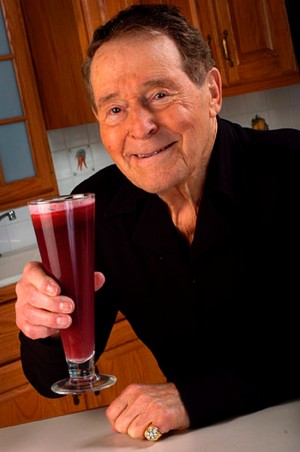
I put the Jack LaLanne juicer to work.  You remember him—the overly energetic geriatric in skin-tight clothes doing the infomercials interspersed with pictures of him pulling various locomotives and tugboats with his strength alone?  All powered by the glory of fruits and vegetables?  What evolved was the “Mommy’s Final Push”.

The Mommy’s Final Push has a dual meaning (the heart of all cleverness, right?)  Using the final fruits and vegetables of the summer season (mother nature) to support my friend, Clayton’s, final month of pregnancy (the other mommy), I hit up the vegetable market and started concocting.

This was the final recipe sent through the Jack’s Juice Annihilator:  4 cucumbers, 3 pears, 2 yellow peppers and 1/2 lemon.  The juice was diluted with water (to taste) and I added about 4 ounces of simple syrup.  It was ready for mommy.  But for those of us not carrying a little one in our baby box, we would need some booze to liven it up.

I tried the drink with 3 spirits: Vodka, Gin and Soju.  The winner?  Soju.  What the hell is that, you ask?  Well, unless you are Korean, you probably have never seen nor heard of it.  (I, in fact, ended up with a bottle when a friend in the wine biz bailed to the UK and downloaded her liquor and wine cabinet on her friends.)

Soju: bringing the sexy to rice

Soju is a spirit similar to vodka that has been made in the Koreas since around the 13th century.  When the Mongols invaded, they brought with them their recently acquired powers of distillation—they had picked it up from the Persians who were making Arak (an aniseed-flavored distilled alcohol drink).  Originally made only with rice, Soju can now often be found to be made with rice and a blend of barley, sweet potatoes or tapioca.  Remember people, where there is starch, there can be alcohol.

The Soju added a hint of sweetness to the drink and allowed the delicate cucumber and yellow pepper flavors to come through.  By not adding the soju into the drink before serving, our pregnant host didn’t feel left out.  She, too, could taste the summer’s final push as she prepares for her own.

Cheers to you, Clayton, and be it boy or girl, may it be hearty and full of life.  Just keep him or her away from the Soju for a little while…

Jack LaLanne (whom my wife thought was Ronald Reagan)

NY Craft Beer Week is afoot, gumshoes. Lurking in every alleyway, creeping around each corner and looking to take you over like a bedbug does your sheets.  

It’s off and running.  Officially beginning last Friday, you’ve got seven days left to attack the streets with a penchant for hops and malt, a hunger for conviviality and a fever for action.  

In it’s third incarnation, NY Craft Beer Week now cloaks gotham in a sudsy foam that grows bigger each year. With over 100 beer destinations involved and 30 top-notch restaurants reined in for your pleasure, it’s time for you to get off your ass and out the door. It’s for the love of craft beer, baby.  

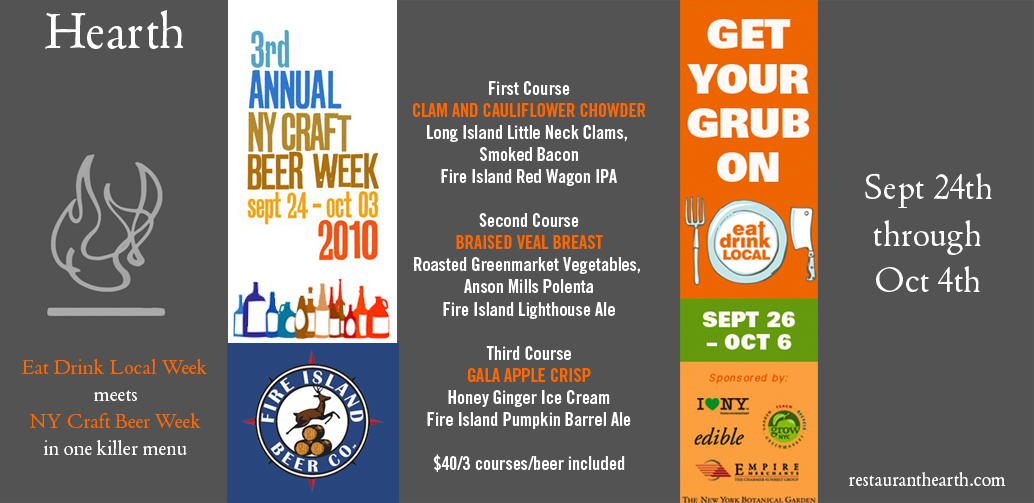
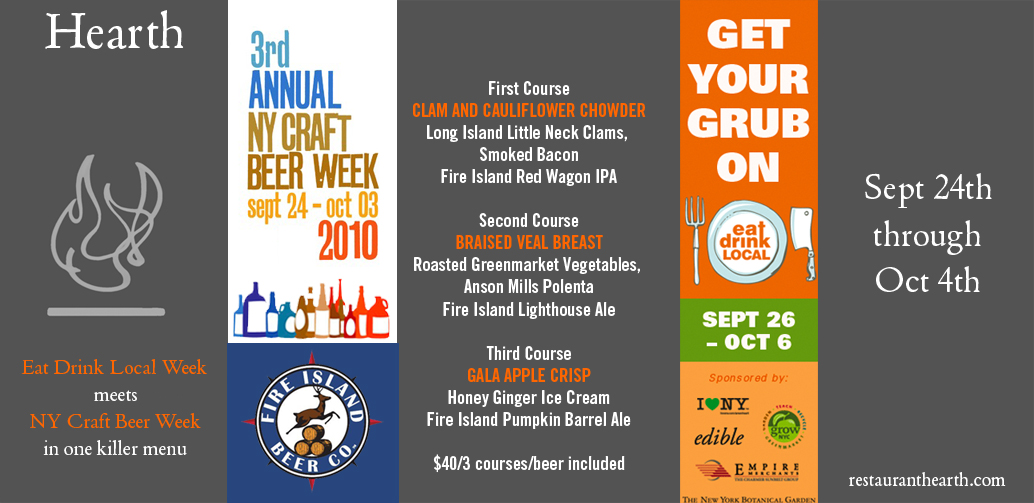
For the first time, Hearth Restaurant (my East Village bastion of employment) is in on the action. Teaming up with Fire Island Brewing Company and Edible Manhattan magazine—using local ingredients as part of their Eat Drink Local Week Campaign—we’ve created a 3-course menu with beer pairings sure to knock your socks off (see menu below).   

And at $40/person, this just may be the best deal you’ll ever snarf down in the city.  

Here’s a link to more info on who’s involved, what’s shaking and where to get your piece of the prize:  NY Craft Beer Week Official Site.   

And if you’re interested in joining us in the East Village, here’s a look at our menu:   

(Click anywhere on the pic to enlarge & begin salivating)

My first feature article for New York Cork Report came out today.

I was originally asked by Lenn Thompson, my editor, who I’d like to write about in the NYC beer scene–I chose Kelso of Brooklyn.  I’d heard the tales of brewmaster Kelly Taylor; what a great guy he was, how he made the beer for Kelso, for Heartland Brewery, and had done the contract brewing for Six Point Craft Ales.  I’d tasted his beers for years but had never met the man, himself.

Little did I know, he is running one of the largest breweries in New York State.  And right in Brooklyn.  I was inspired by the commitment of one man’s passion.  Click here to read the piece:  Kelso of Brooklyn’s Kelly Taylor:  The Beer Maestro of Brooklyn

And here’s a little video I made to wet your whistle:
httpvhd://www.youtube.com/watch?v=nHI7-msp7iI

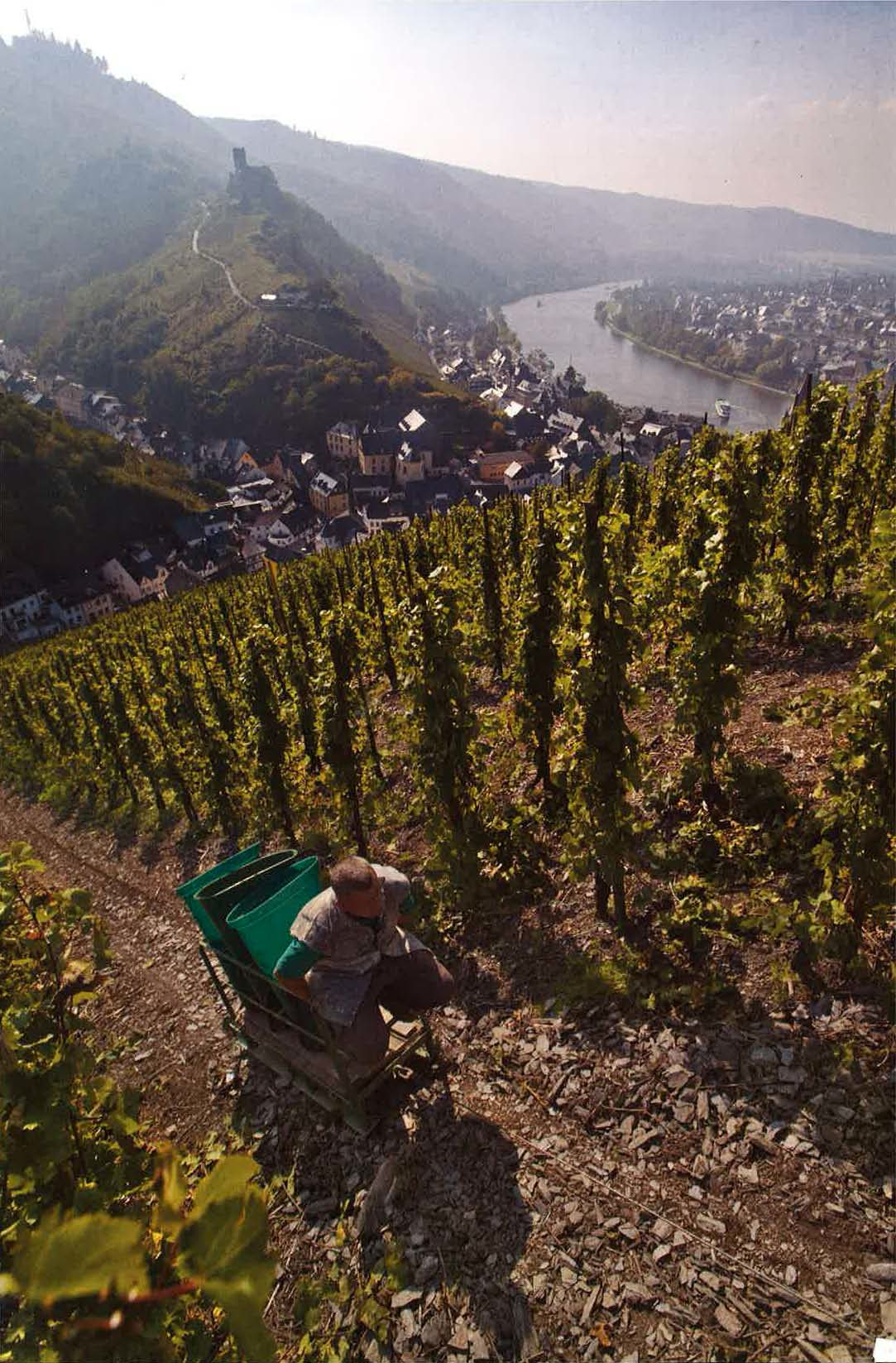
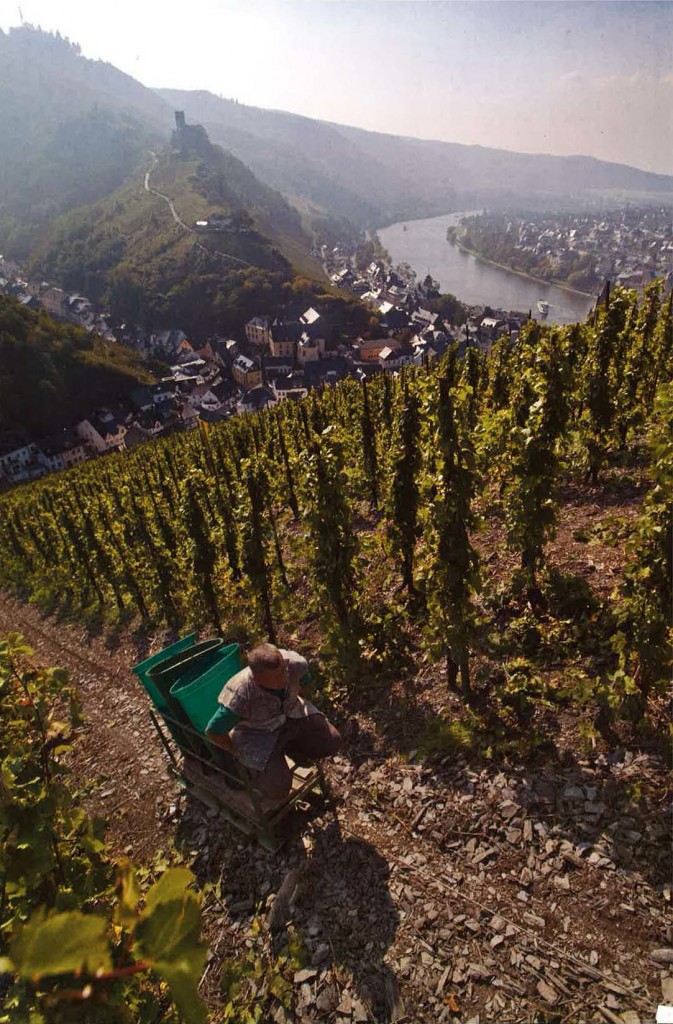
The Doctor vineyard is so steep that all picking is done by hand and a wired-trolley system is used to carry grapes from it's slopes (pic courtesy of "The World Atlas of Wine")

Herr Paul Grieco touted the wines for this tasting as “the greatest Riesling from the greatest Riesling vineyard in all of Germany”.

And, I may be mistaken, but I believe he silently wept numerous times throughout (no doubt with at least 5 grams of acid and 10 grams of residual sugar per tear, because that’s how he rolls.)

Like lemmings gathered at the edge of a cliff with naive anticipation, we filled the confines of Terroir EVil last week to take part in one of the most special Riesling tastings to hit Gotham in ages.  We are nearing the end of this year’s Summer of Riesling and were joined by many of the valiant conquerors of the Summer of Riesling 2010 Wine Bar Crawl.

The Bernkasteler Doctor is only 8.1 acres in size but it’s place in the wine world is legendarily grand.  In the 13th century, the Archbishop of Trier was in this area of the Mosel Valley when he bacame deathly ill.  After countless cures didn’t work, he was poured Riesling from a humble flask from this vineyard and was cured.  From then on, it became known as “The Doctor”.  Today, it is the most expensive agricultural land in all of Germany.

Led by Barbara Rundquist-Müller, who currently oversees the vineyard, we were led through seven Rieslings and experienced the “trilogy” that Barbara says make these wines truly special: minerality, fruit and acidity.  The vines are pre-Phylloxeria—their roots travel more than ten meters down and are therefore protected from the louse’s jaws—and clock in at 80-100 years old.

TASTING NOTES

1.  Riesling Kabinett, Bernkasteler Doctor, Dr. H. Thanisch – Erben Muller Burggraef, 2008, Mosel-Saar Ruwer

Barbara described it as having the “charm of youth”.  Light straw in color, giving off notes of fresh stone fruits.  On the palate, a vibrant, peppery acidity carried tasty notes of pear juice.  The blast of acidity felt like a quick hailstorm of pleasure moving through my mouth.

2.  Riesling Kabinett, Bernkasteler Doctor, Dr. H. Thanisch – Erben Muller Burggraef, 2005, Mosel-Saar Ruwer

Light gold in color, we begin to see some of the more classic notes this vineyard is known for.  A buttery, salty lanolin on the nose with a hint of petrol creeping around the corner.  Again, notes of concentrated, canned pear juice, but, man, that acid was a different beast.  It sent a cleansing sensation from the tip of the tongue to the back of the throat, and then, as if on lurching ship, it came rifling forward again back to the tip of the tongue.

3.  Riesling Spatlese, Bernkasteler Doctor, Dr. H. Thanisch – Erben Muller Burggraef, 2003, Mosel-Saar Ruwer

Due to a very hot vintage, Barbara called this the “Dolly Parton” wine—a lot up front, not a lot in back.  Light/medium gold in color, with rich honey and caramelized apples rising from the glass in waves.  Reminded me of Jelly Bellies candy.  On the palate, it had the flavor of red Macintosh apples rolled in caramel and drizzled with peach syrup.

4.  Riesling Auslese, Bernkasteler Doctor, Dr. H. Thanisch – Erben Muller Burggraef, 2003, Mosel-Saar Ruwer

Medium gold in color with hints of amber.  Tangerine, citrus and candied fruit on the nose.  The flavors on the palate confirmed the nose and were INTENSE, with a rich, unctuous body and a long, lasting finish.

5.  Riesling Auslese, Bernkasteler Doctor, Dr. H. Thanisch – Erben Muller Burggraef, 2001, Mosel-Saar Ruwer

2001 was a spectacular year for German Riesling and put them back on the map (with skyrocketing prices to boot).  Light tawny in color with the look of golden honey.  On the nose, a staggeringly complex array of candied nectarines topped off with notes of kerosene and nail polish.  The rich aroma seemed akin to that which would arise from Aladdin’s lamp.  Paul made a reference to eating the famed Ortolan bird, where one would cover the head in a cloak to trap the aromas and to hide themselves from God’s watchful eye as you sunk your teeth into its forbidden flesh.  Extraordinary acidity on the palate with notes of peaches rolled in parafin.

6.  Riesling Auslese, Bernkasteler Doctor, Dr. H. Thanisch – Erben Muller Burggraef, 1959, Mosel-Saar Ruwer

Surprisingly still eliciting some golden color, the 1959 gave off hypnotic notes of old mint chapstick, campfire smoke piercing through heavy winter air and notes of spice.  On the palate, cedar and earth came forward, mixed with fall cooking spice and kerosene.  The acidity was still lively and filled the wine.  A joyful, medicinal, evergreen note carried the long finish.

7.  Riesling Beerenauslese, Bernkasteler Doctor, Dr. H. Thanisch – Erben Muller Burggraef, 2006, Mosel-Saar Ruwer

A surprise addition to the lineup, Barbara said it was “still a child”.  Upon tasting, I left my human form and was flung through the cosmos, seeming to return an hour later in a resounding crash.  Such purity of fruit—the apricots seemed to be singing from the glass like angels in a choir.  Paul accurately called the wine “deafening”.  The finish held me in a transfixing embrace for so long I could have watched Casablanca from start to finish and still experienced it.

The cellar for the vineyard is carved from the slate rock and lies 30 meters below the vines themselves.  It is here that I wish my body to be entombed upon my passing…preferably near a barrel of the 2006 Beerenauslese.

Barbara Rundquist-Müller


Pic courtesy of Drinking the World

I guess it was really only a matter of time before I got to my favorite cocktail.

After taking this weekly piece around the world via Charles Lindbergh’s plane (the Aviation), or hopping a boat to Cuba (the El Presidente), whirling through the streets of Paris on a motorcycle (the Sidecar) or drifting through New Orleans at the height of the cocktail craze (the Ramos Gin Fizz), I’m ready to come home.

The Manhattan is my go-to litmus test for any cocktail joint.  It’s the first drink I order before moving on to the more tricked-out concoctions.  It’s a simple drink, in theory, but I’m continually stunned by the wide range of variations you’ll get from bar to bar and bartender to bartender.  It’s sort of like asking a cook to make a scrambled egg.  That simple act, in itself, can reveal the depth of their technique in a minute.

And if there’s one thing I’ve learned from researching cocktail history, it’s that there’s always a swirl of debate over their true histories.  In the case of the Manhattan cocktail, yep, it was spawned in the city of Manhattan.  That much we know.  The rest gets murky…

Supposedly in the 1870’s, a hob-nobbing crew of rich Democrats gathered at the Manhattan Club in New York City to toast Samuel J. Tilden, the presidential candidate.  It was a lavish affair hosted by Winston Churchill’s mother, Lady Randolph Churchill, and sometime during the night a man named Dr. Iain Marshall invented the drink and poured it for the guests.  The party was a smashing success and, afterwards, it became fashionable to associate one’s self with it by asking for  “a taste of the Manhattan cocktail.”

(It’s no matter that, in truth, Lady Churchill was actually in France at the time and pregnant…the story is so much more charming if it’s her soiree that spawned it all.)

Anyone can make up stories!  For instance, I’d like to start the rumor that Iain Marshall was actually a street swindler who added the tasty vermouth into the cocktails so as to easier slip the diamond bracelets off his tipsy victims.  Oh, and he was really a woman.  Yea!  See, it’s so damn easy to start rumors!  (Sorry, Iain.)

The irony of the Manhattan is that, in today’s world, many consider it a ‘strong’ cocktail – I, however, could nurse off it all night like a warm teet, but that’s not the point.  At the time of it’s creation, cocktails were quite harsh and consisted only of liquor with a dash of bitters and a pinch of sugar.  The Manhattan would change all that; with the addition of sweet vermouth, cocktail evolution would never again crawl back to the good ol’ days.
PART & PARCEL

  • 2 ounces Rye Whiskey (or Canadian)
  • 1/2 ounce Sweet Vermouth
  • 2-3 dashes of Angostura Bitters

FILLING THE BILL

I like to go a little lighter on the vermouth, myself, and to go a little heavier on the bitters.  The formula above is a good one to get you started and you can later tweak it as you see fit.  (I recommend drinking one every hour for two days straight until you’ve found your perfect ratio).
Add the ingredients to a mixing glass filled with ice and stir with a bar spoon until cold to the touch.  Strain into a cold cocktail glass and garnish with a cherry.

And the next time you’re at a cocktail party, raise your glass to New York City, the birthplace of a legend.

« Newer Posts - Older Posts »