chess

The homebrewers have spoken.  And when these maniacal brew geeks speak, you best listen.

For the 7th year in a row, members of the American Homebrewer’s Association cast their votes for their favorite beers.  For the judging, the only rule was that the beer has to be commercially available somewhere in the US.  The votes were tallied, and the top 50 beers were just announced in Zymurgy magazine.

This year, we witnessed a dethroning.  After topping the list for the past two years in a row, Dogfish Head 90 Minute IPA was bested by Russian River Brewing’s Pliny the Elder (a double IPA).  By a mere TWO votes, Pliny took top honors and West Coast trumped the East Coast.  The irony?  Russian River did it on brewing equipment formerly owned by Dogfish.

As a proud homebrewer myself (which translates to a tiny NYC apartment crammed with carboys, buckets, bottles, thermometers, syphons and doo-dads galore), I took notice of this list.  I mean what better group to gauge the merits of the beer world than a bunch of beer-loving fanatics who can hold court for hours on specific gravity readings, diacetyl esters and how to replicate the pH of Munich’s water if you live in Des Moines.  And now, with no further delay, the results:

Top 50 Ranked Beers
1.    Russian River Pliny the Elder
2.    Dogfish Head 90 Minute IPA
3.    Stone Arrogant Bastard
4.    Bell’s Two Hearted Ale
5.    Sierra Nevada Pale Ale
6.    Stone IPA
7.    Stone Ruination
8.    (Tie)

  • Anchor Steam
  • North Coast Old Rasputin

10.  (Tie)

  • Sierra Nevada Celebration
  • Dogfish Head 60 Minute IPA
  • Guinness

13.  (Tie)

  • Unibroue La Fin du Monde
  • Sierra Nevada Bigfoot Barleywine

15.  (Tie)

  • New Glarus Belgian Red
  • Samuel Adams Boston Lager
  • Victory Prima Pils
  • New Belgium Fat Tire

19.  (Tie)

  • Deschutes Black Butte Porter
  • Founders Breakfast Stout
  • Oskar Blues Dale’s Pale Ale
  • Russian River Blind Pig
  • Saison Dupont
  • Victory Hop Devil

25.  (Tie)

  • Alaskan Smoked Porter
  • Duvel
  • Left Hand Milk Stout

28.  (Tie)

  • Deschutes The Abyss
  • Dogfish Head Palo Santo Marron
  • New Belgium La Folie
  • Odell IPA

32.  (Tie)

  • Avery Maharaja
  • Bell’s Expedition Stout
  • Chimay Grande Reserve
  • Dogfish Head Indian Brown
  • Great Lakes Edmund Fitzgerald Porter
  • Rogue Chocolate Stout
  • Russian River Pliny the Younger
  • Spaten Optimator
  • Three Floyds Alpha King

41.  (Tie)

  • Delirium Tremens
  • Green Flash IPA
  • Great Divide Oak Aged Yeti
  • Hoegaarden Wit
  • New Glarus Raspberry Tart
  • Pilsner Urquell
  • Sierra Nevada Harvest Ale
  • Three Floyds Dark Lord
  • Troegs Nugget Nectar
  • Young’s Double Chocolate Stout

Now go pick up a six-pack and support your favorite brewery.  Drink!  Drink!  Drink!

poker

I can think of no better way to spend a lazy Saturday afternoon than around the poker table. Okay, scratch that, how about an afternoon around the poker table with good friends and cocktails? Now you’re talking…

And so it was, that we descended upon a friend’s apartment this weekend, our barbeque plans dashed by thunderstorms. We each brought various spirits, mixes and tools from our home bars with one mission: to create the ultimate lazy Saturday afternoon cocktails.
After a few well-intentioned attempts at libation glory and much elbow-bumping in the tiny NYC kitchen (not unlike most of the bars I’ve worked in), one cocktail rose to glory to become a crowd favorite. The Sweet Georgia Lemonade was passed around to oo’s and ah’s, eventually being batched up to fill a pitcher for everyone at the table. Shuffle and deal, suckas.

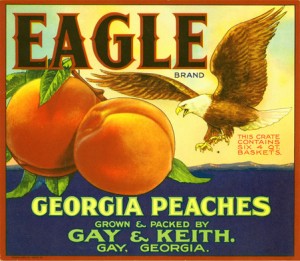
georgia-peaches1

Containing neither lemonade, nor anything relating to Georgia, the Sweet Georgia Lemonade packs a whallop and is not for the faint of heart. Named in honor of my buddy’s home state, it is stronger than the average cocktail and so tasty you’ll quickly find yourself reaching for more. But be warned ye fair poker players, go easy on this delicious devil because she packs a full-house punch.

Sweet Georgia Lemonade (makes 2 servings)

3 oz Rittenhouse Rye Whiskey

1 oz Triple Sec

½ oz Sweet Vermouth

1 oz Simple Syrup

1 oz Fresh Lime Juice

3 Dashes of Angostura Bitters

2 Mint Leaves

Muddle the mint and the simple syrup. Add a handful of ice and the remaining ingredients. Shake vigorously and serve in a rocks glass over crushed ice.

swedish-chef-2

“Add the bittering hops now!”

“Yes, Chef!”

“Stir, man, stir!”

“Yes, Chef!”

“Don’t let that malt extract boil over now; you’ll never get the bloody stuff off the stove!”

“Yes, Chef!”

It was only a matter of time before top chefs stepped behind a brew kettle and made their own beer.  I mean, making beer is essentially cooking anyway, much more so than winemaking.  Winemaking is often “made in the vineyard”, and man’s role is to interfere as little as possible.  But beer, my friend, can be a mad chef’s dream.

Let’s break down the similarities between cooking and brewing:  1) You follow a recipe. 2) The recipe details what types of grains and hops to use, how much, when to add and how long to boil.  3) Like cooking, boil times are exact, temperatures are precise and timing is key.  All in all, it makes sense. You thought my lobster stock was good, says chef, wait till you gulp down a pint of this!

Well, two chefs have gotten in on the action: Ferran Adria from El Bulli in Spain and Floyd Cardoz of NYC’s Tabla.  Working with experienced brewers, they’ve utilized their knowledge of spices and flavor combinations to create brews worthy of their names on the labels.

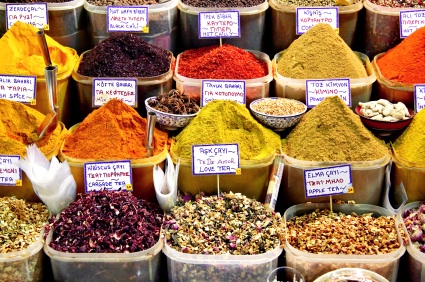
spice-market

Brooklyn Brewery, with Garrett Oliver and Chef Cardoz at the helm, has released Cuvee de Cardoz. I got me some on a recent trip to Jimmy’s No 43, and was wowed by the myriad spices and the seemingly impossible way that they all balanced together. Starting with a wheat beer base, Chef Cardoz adds a slew of spices that were ground and roasted in the Tabla kitchen. Ginger, tamarind, mace, black pepper, coriander, fennel, fenugreek, cinnamon, cloves, nutmeg, and chilies go in the kettle and then the beer is infused with toasted coconut after the fermentation. What what, you say? I know! As a home brewer, all these ingredients boggle my mind, but my palate was happy and intrigued by its complexity and slight heat on the finish.

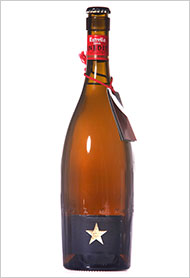
Now let’s hop the Atlantic to Spain. After countless decades of pairing wine with his dishes, Chef Ferran Adria felt that beer had been overlooked. In his true maniacal fashion, he decided to create the ultimate beer. Teaming up with mega-brewer Estrella Damm, Adria and his sommeliers released a hybrid beer called Inedit.

inedit-beer-2

Where as one would never think to mix two beer styles together, they have done just that to create Inedit. A blend of Belgian wit-bier style Wheat Ale and a traditional lager, they attempt to capture the spicy, creamy texture of a wheat beer with the dry, bitter characteristics of a lager to make the perfect food-friendly brew.

I’m itching like mad to taste Inedit. It’s available in limited quantities at Whole Foods Beer Room in NYC, but it’s been continually out of stock. Apparently, other food, wine and beer geeks in the city are hot on its trail too. Chef Adria, I will happily accept an invitation to taste it firsthand at El Bulli. I mean if you want a solid review, its only natural I try it with your food. Airline tix can be sent to my attention please. And I prefer first-class. I’m kind of a tall dude.

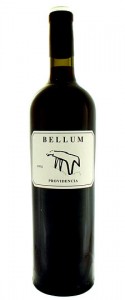
Providencia (100% Monastrell), Bellum, Yecla, Spain, 2005

(15% alc)

flamenco

Monastrell is one of my favorite grapes, bar none. It makes a unique red wine that takes you by surprise, like when you fall for a new band that sounds a lot like your past favorites, but stands on its own and brings a new sound that grabs your attention. And Spain? Don’t even get me started. Amazing.

What doesn’t Spain rock at?  I mean, seriously between the culinary and wine frontal assaults we’ve been seeing over the past decade, its got foodies and wine lovers eating out of its palm. Tradition and innovation seamlessly joined.

bellum-providencia2

Step outside of the better-known regions of Rioja, Ribera Del Duero or Priorato, and you’ll stumble upon some great wine regions; and at great value. Look for white Verdejos from Rueda, Mencia reds from Bierzo or red Monastrells from Yecla (like this one).

Spain has this to offer:  killer wines for $10-15.  And I won’t even go into the amazing chefs that have brought Spain to the forefront of the culinary world.  (But just to give you an idea:  over a million people call each year to book a table at El Bulli, the famed restaurant run by experimental genius, Chef Ferran Adria).

yecla-spain-map1

Back to the wine:  Rich and velvety with mouth-awakening tannins that give rise to an earthly blend of dark fruits and subtle spice, Monastrell is often haunting in its tension between earth and fruit.

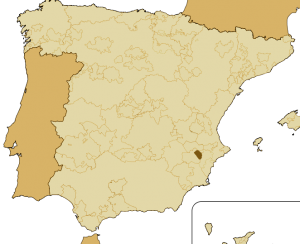
The Providencia hails from Yecla in southeastern Spain, and is made from grapes from 50-year old vines. Dark Plum with a hint of spicy oak on the nose, it is full-bodied with black fruit and hints of leather and exhibits a refreshing acidity and a dirty oak finish.  Classic velvety tannins make their presence known, and nice herbal notes on the finish. Overall, very drinkable and highly recommended with food.

And with a price point just under $15, happily whip out the purse of Pesetas and get your sip on after a day at the bull fights…or just on the couch after a day of battle in the streets of NYC.

bullfighter

michelada-beer-cocktail

Pink Panty Dropper.  Irish Steamroller.  Porch Crawler.

Hmm…A list of my nicknames from high school?  Well, no, (despite the sometimes aptness of the names); these are just a few of the many beer cocktails out there.  And with each passing day at the hands of clever mixologists, they’re getting more complex and taking their rightful place on cocktail lists.

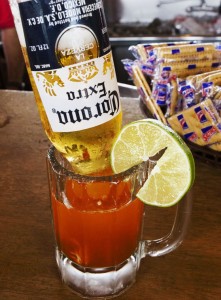
A beer cocktail?  Say huh?  What the f is that?  Why would I want to ruin the taste of my delicious Michelob by adding anything to it?  Well don’t hold on to that can too tightly, because you’re going to start seeing more and more beer-based libations hitting the bar tops near you.  But they’re far from new…

The word “cocktail” originally was used to denote a drink made with distilled spirits, sugar, water and bitters.  These were the “classics”, and spawned a multitude of drinks playing off this basic recipe, like the Old Fashioned.  But today, the word cocktail has broadened and has come to mean any mixed drink made with alcohol.  (For those curious geeks who want to dig a bit deeper, the origins of the word itself are quite interesting).

ben_franklin-lightning

Beer cocktails themselves have been with us for hundreds of years.  In Colonial America, the Flip was a popular drink that consisted of mixing two quarts of beer with a half pint of gin, four beaten eggs and four ounces of sugar.  It was poured vigorously between two steins until foamy and sprinkled with a bit of nutmeg.  

Those who were feeling more adventurous grabbed a hot poker from the fire, stuck into the drink and gave it a quick stir, which imparted a toasty flavor.  Wow.  I want to sit fireside with Ben Franklin sipping on one of those bad boys, because it’s bound to go to straight to the head and with all those hot pokers lying around, the fun is sure to never end.

The Shandy was a popular drink in 17th century England, which consisted of a lager topped with a pour of lemonade, ginger beer or ginger ale.  This gave the beer a nice zip and it went down like a cool glass of lemonade (not to mention disguised the often poor quality of the brew).  

talk about a hangover...

talk about a hangover...

Today, a popular drink in England is the Snakebite, which consists of your favorite beer mixed half and half with cider.  (Author’s note:  I lived in Sunderland, England for a year, and after a particularly raucous night where I received many bites of the snake, I can no longer go near a Snakebite, nor stand the smell or taste of cider).

Japan has a version called the Broadway made by mixing beer with cola, and versions abound worldwide made with additions like Tabasco sauce, coffee or melon liqueurs.  But these are amateur in comparison to some of today’s beer cocktails.  

At the recent James Beard Awards, I met mixologist Bridget Albert who was serving the Chicago-Style Cocktail made with Goose Island Matilada Belgian Style Ale, Raspberry Ginger Shrub Syrup, Cane Rum and Grand Marnier, which blew my mind with its flavor balance and use of seasonal ingredients (click here for the recipe).  

abbey-flip

Abbey Flip

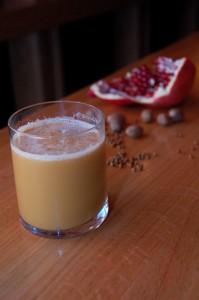
Mixologist Marshall Altier designed the Abbey Flip, which we serve at Terroir wine bar and is made with Ommegang Abbey Ale, Pomegranate Molasses, Coriander Syrup, egg yolks and a dash of nutmeg (sorry, no hot poker though).

Now get out and HopSkip and Go Naked, but keep it on the Down Low or you may have a Meltdown and wake up with a nasty Russian Eyebrow.

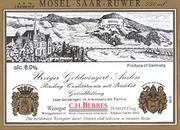
Riesling Auslese, Erdener Treppchen, C.H. Berres, 1996, Mosel, Germany

(8.0% alc)

mosel-castle2You want complexity?  You want range of flavor?  You want your tongue slapped around like a rag doll and taken on a journey?  Then you want some Riesling.  The noblest of the nobles that many still haven’t discovered, Rieslings can range from bone dry to unctiously, hypnotically sweet.  Running the gamet from petrol to honey to citrus flavors, they’re mostly lower-alcohol wines that keep you reaching for the glass and licking your lips like a fiend.

The smack of acidity that defines this godly grape makes it the perfect food wine, whether it be with your Moo Shoo Pork or with a packet of Saltine crackers when the cupboards are bare.  Let’s forego even explaining that all Rieslings are not sweet, because its been said again and again…oh, I guess I just said it again…

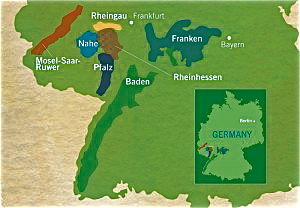
mosel-map21

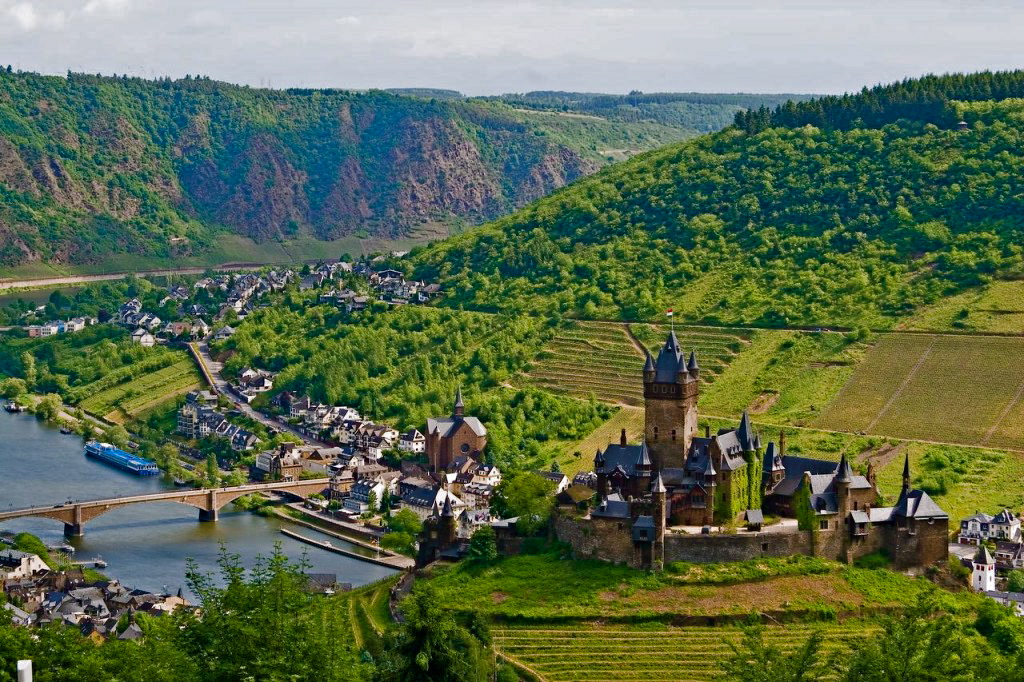
So, buckle up, and lets jet to the famed vineyards of the Mosel-Saar-Ruwer in Germany where a whopping 66% of the vineyards are planted on hillsides of 60 degrees or more.  Hold onto your flugelhorn, because one misstep in these ancient vineyards, and you’ll wind up face-first in the Mosel River having crashed through rows of meticulously manicured, stake-trained vines.

Since 1510, Weingut C.H. Berres has been a family-run operation consisting of only 3.5 hectares (about 8.6 acres) of prized vineyards.  Hand-picked and selected with German precision, the grapes are weened from the famous Mosel slate that gives this region’s wines their unmistakable minerally, wet-stone characteristics.

ch-berres3Due to the extreme northern climate and the steep inclines, the Mosel gets about a third of the sunlight hours as Provence.  Bottom line:  its a fight for survival.  But its worth it, as nowhere else in the world is there such a concentration of prized vineyards.  Dear Lord, if I spent my life fighting in such extreme conditions to squeeze out a few grapes, you know they’d be precious.

Light-straw in color, this wine gives off petrol notes and aromas of dried apricots rolled up in gunflint and slate.  Strap on your six-shooter because after an initial hit of residual sugar, your mouth is showered in vibrant acidity and flavors reminiscent of Lemonheads dipped in honey and dredged over river rocks.

Delicious, I say.  The Romans who first planted these vineyards would happily slaughter a lamb in approval…and serve it with a glass of chilled Riesling…

Leave a comment below and tell me:  who are YOUR favorite Riesling producers?

Ask an Insider is an interview series that talks to the people that make, serve, shake, sip, pump, pour, crush, distill, and bring life to this industry.  (For other interviews in the series, click the Ask an Insider tag at the bottom)

knife

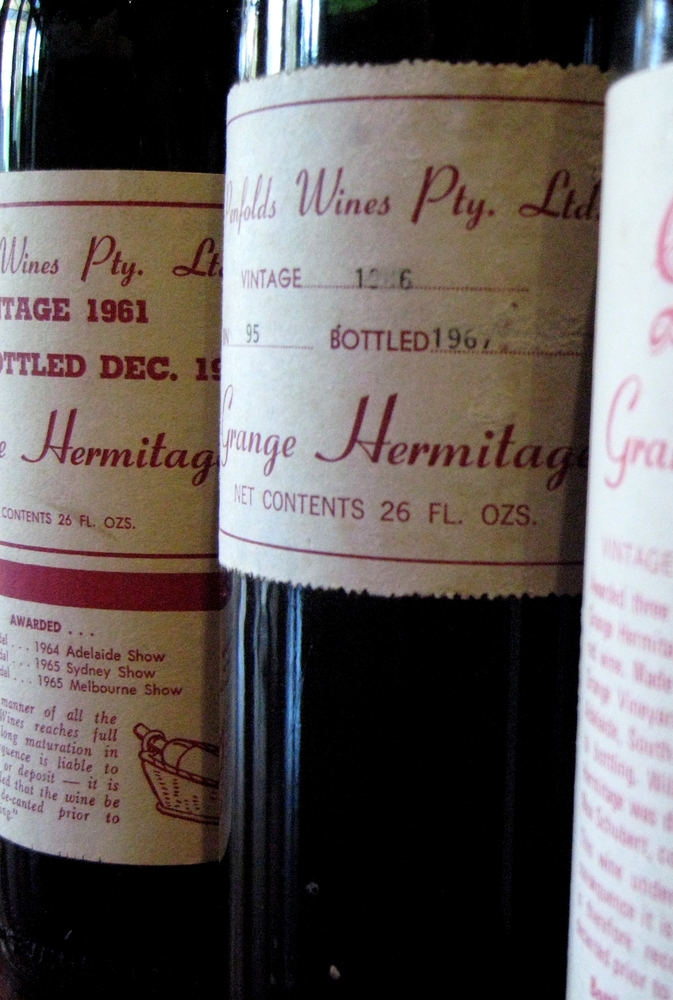
I realized the other day that the words “Australian wine” have not ventured from my lips in months.  Wow.  It came as a shock that I can’t remember the last time I even talked about Australia wines (maybe its because I work with Paul Grieco whose establishments are not exactly swimming in California or Aussie wines).  This used to be a region at the forefront of my mind.  Last year, I was lucky enough to attend a lunch and drink a handful of vintages of Penfold’s Grange with winemaker Peter Gago.

penfolds-grange

So what’s happening in Australia?  I needed to find out.  I turned to a friend who I worked with in the trenches of a wine shop in Brooklyn.

A natural palate who always tells the straight truth and is authentic as they come, he now works for a prestigous wine importer and their Australian portfolio (I shudder to think back on how much Yellowtail Shiraz we peddled out of our wee shop, but for the record, we did our absolute damnedest to steer them to the more elegant Aussie wines…but it was tough.  Like trying to tear a tiger away from its prey).

He shall remain nameless for conflict-of-interest reasons (as he now sells Australian wines), so let’s call him “Concerned Citizen for Australian Integrity’.  I contacted CCAI, and referenced an article in the Telegraph which discussed the drought and current weather calamities. And not one to disappoint, he had some interesting comments:

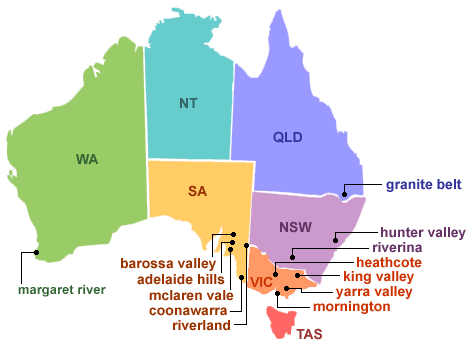
“There are multiple problems in Australia. Along with drought, which is well over a decade long, you have the increasing effect of the ‘Yellowtails’. This article references the Riverlands region which outlies the main areas of Barossa and McLaren Vale and has a much more continental climate.  This region is where a majority of vineyards that Yellowtail, Banrock Station and other less desirable wineries source. So huge. They get their water from what becomes the Onkaparinga River as you get into McLaren Vale and Adelaide.

australia-wine-regions-map

I think what we will see is many smaller growers and wineries die but also, hopefully, we’ll see a conscious effort to promote diversity and pedigree in Australia. Because larger companies source from everywhere, quality is not always associated with specific regionality. And with the great plots of land, old vines and true beginnings of intellectualism, critical acclaim has not been rational but corrupted by a negociant style stranglehold on the industry.

What you get is Roogle Red with 92 pts at $12 and SC Pannell Grenache with 93 pts at $50. One is no match for the other but the schizophrenic Australian persona that was cultivated remains.

The cure…..bubble burst. Which has and is happening. I only hope the next wave is based in the true value of Australia and not the inflated ego’s of Jay Miller, Dan Phillips and the quantity-over-quality that will doom Argentina in due time.  From what I’ve seen in the market is that Australia has basically deflated and South America has officially taken it’s place. It’s irrational because value is still at a premium in a major way when it comes to Australia but just as the financial markets ALL confidence is lost. California for some reason, ‘domestic’, gets a free ride when most if it is shit”

Interesting stuff, indeed.  Australia is hurting.  And in addition to the crippling water and climactic problems, it may have fallen prey to:“The rising tide floats all boats”, because the gems seem to be drowning in the tidal wave of inexpensive plonk running roughshod over the markets.  Yes, the big boys certainly can make a name for a wine region, but sometimes in doing so, they put a stranglehold on the little guys who are focused on quality not quantity…

drought_swimming_hole
ch8ayzpshg

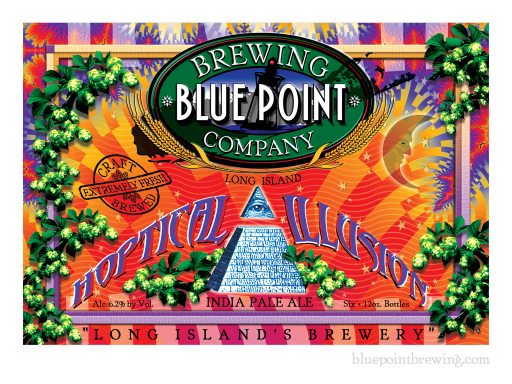
IPA, “Hoptical Illusion”, Bluepoint Brewing Company, Patchogue, New York

(6.8% Alc)

hoptical-illusion

I’m feeling the hops.  Like mad feeling the hops.  I dream of immersing myself in a McDonalds Playland where the balls have been replaced with barrels are barrels of hops.  And there must be some freak out there whose managed to stuff their pillows with hops (note: please send me one asap).  And for those who’ve been following my blog, you may have realized the extent of my obsession when you read my dissertation/diatribe/love letter/term paper to hops a couple of weeks ago.

Bottom line: of late, my taste is sliding that way…the way of the hops.

Recently, I found myself in the grocery store doing the beer wall scan; pondering the favorites and searching for the newbies…you know the drill.   There, amongst them, was this bottle with the brilliant, hippy, psychedelic label that entranced my eye. 

jimi_hendrix-51

“Hoptical Illusion” it read; so bright and colorful it was as if the tie dyes from my high school bedroom were looking back at me.  Cool label I thought, but what’s inside?

Well, what’s inside is slamming good.  It’s a full-flavored IPA that smacks you with a steam-train of hops, but also delivers a balancing mouthful of malts. 

Billed as “Long Island’s First Microbrewery”, Blue Point is located in Patchogue, NY; and for those who aren’t familiar with it, it’s at the eastern fork of Long Island just before the split between the Hamptons to the south and the North Fork wine country to the north. 

Peter Cotter and Mike Burford opened their brewery in 1998 after years of dreaming, homebrewing and scheming.  Making the leap was an exercise in fund-raising and a challenge like none they’d faced, with each taking odd jobs to make ends meet; Mike in a fish shop, and Pete in construction. They eventually traveled to Maryland for a brewery auction where they walked away with their first kettles, tanks, mashtuns and mills.  There they bought a massive old brick kettle which they disassembled brick-by-brick in Maryland and brought back to NY to rebuild; it is still the centerpoint of their brewing operations today.

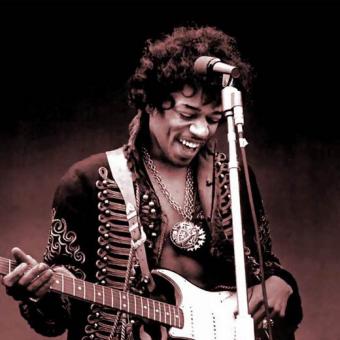
Light to medium, caramel brown in color, Hoptical Illusion gives off a light fruit and nuttiness on the nose.  It’s vibrant and alive in the mouth, and bristles with a resinous core accented by hints of pine, almond and malty strawberry.  It’s a big beer with a long finish.  Delicious stuff.  Have you ever been to Electric Ladyland?

tyedye-1


dark-knight-robbers

A huge explosion goes off.  In a matter of minutes, countless barrels of wine are obliterated and left to soak into the floorboards.  A covert group has attacked a winery to send the world a message.  Whoa, wait…Is this the latest Jason Bourne movie?  Did you say “winery”?  Wine?!  What the hell is going on?

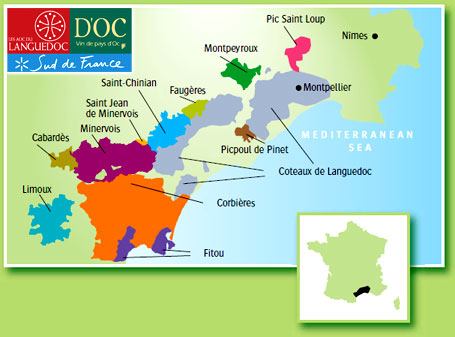
I found myself reading a recent NY Times article to learn that the beautiful South of France is now at the epicenter of a wine war.  A war complete with raiding terrorists, who are standing up for the authenticity of their wine by blowing up select wineries;  it seemed to be a classic underdog story of farmer versus factory.  A story about the ancient techniques of winemaking being overtaken by the dark forces of technology.  But turns out its not so simple…

langueuc-only-map

At the bulls-eye lies a wine style that many have dismissed, but many more have embraced (including myself):  Rosé.  So, how did this war begin, you ask, and just what is all the uproar about?

Well, the European Union is considering relaxing their regulations on just what constitutes the production and labeling of “Rosé”.  When I first heard this, I was pissed off.  One more example of capitalism rolling its slick-rimmed wheels over the little guy and tarnishing what made something special in the first place.  It seemed clear:  “EU, don’t fuck this up; keep Rosé pure!”  But then I thought more about it.  Is this a case of evil technology burying tradition? Or is it a case of misplaced regulation crimping on the winemaker’s art?  It’s an interesting debate…

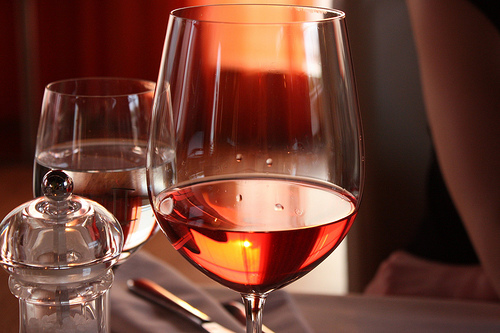
The heart of the question:  can European winemakers legally blend white and red wines to make “Rosé”, or “blush”—a technique made famous by our boy Gallo in California.  Why not, the advocates ask?  The Americans and the Australians are doing it to great success.  The world gobbles up their table wines like crack-fiends.  But the opposition argues that the process of making true Rosé can’t be faked.  They fought a long journey for respect and are finally seeing a share of the marketplace.rose-glass

The traditionalists (the ones blowing up the vino) believe the very soul of Rosé is at stake.  Sure, mixing red wine with white white will give you a pink wine that looks the same, but this isn’t Rosé in the traditional sense.  It’d be like eating a sausage with a traditional casing, but one that is stuffed with sawdust.  To make Rosé, the clear grape juice is fermented with the skins of red grapes (just like red wine), removing them when a partial amount of color has been transmitted.  It takes time, and to fake this technique is an outrage–another example of Wal-Martization where quality and skill is thrown out in the name of speed.  Screw the soul of it; if one can produce it faster, cheaper and get more people drinking it, they’ll never know that anything better exists.  They’ll be drowning in it!

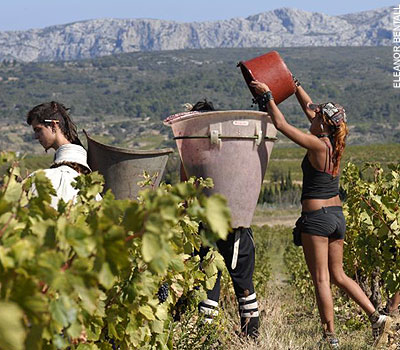
languedoc-harvest

But then I thought about it.   What if the winemaker wants to mix red and white?  Is the result not a Rosé?  We all know that Champagne is a blend of three grapes (two reds and a white), or that Côte-Rôtie winemakers can add white grapes to their Syrah, or that Chateauneuf can legally blend 13 grapes, including whites.  If you can legally blend Cabernet with Malbec to make a better wine, who’s to say that blending a Gewurztraminer with a Pinot Noir won’t produce a delicious blend?

And if the industrial giants want to pump out loads of swill and call it “Rosé”, does that mean people will look no further?  This seems to demean the intelligence of the wine drinker.  In fact, could these “fake” Rosés serve as gateways to get more people on track to discover the “real” Rosés of the world?

Frankly, I don’t know the answer.  Initially, I was reaching for the dynamite…but now I’m not so sure…what do you think?

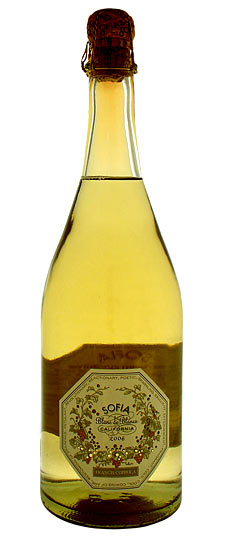
Blanc de Blanc Sparkling, “Sofia”, Francis Ford Coppola Estate, 2007, Monterey County
(12.6% abv)

coppola-sofia2Michael
My father went back, only this time with Luca Brasi.
Within an hour, he had a signed release for a certified check of $1000.

Kay Adams
How did he do that?

Michael
My father made him an offer he couldn’t refuse.

Kay Adams
What was that?

Michael
Luca Brasi held a gun to his head,
and my father assured him that either his brains or his signature would be on the contract.

-The Godfather

Francis Ford Coppola means business.  He always has.  The movies he’s written and directed are legendary:  The Godfather 1, 2 & 3, The Conversation, Apocalypse Now, Rumble Fish, Bram Stoker’s Dracula just to name a few.   They are tight, beautifully wound films with a level of tension that can be unbearable (not unlike some killer Rieslings I’ve tried).  But the wine business?  How did Francis Ford Coppola end up in one of the most prime real estate patches in Napa?

godfather1

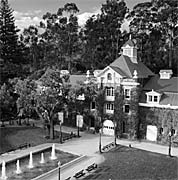
In 1880, Gustave Niebaum, an uber-successful fur trapper and seaman, set up shop in Rutherford, Napa Valley when it was a wee infant in the wine world.  Napa?  Huh?  He created Inglenook winery and went on to win worldwide acclaim for his wines, and this long before Napa became the ultra-chic enclave it is today (and not a facelift in sight).  He built an old school European estate like no one had ever seen and made the first Bordeaux-style wines in the United States.

And almost a hundred years later, in 1975, Francis Ford Coppola fell in love with it while looking for a vacation home where he could make some wine. Originally buying only Gustave’s Victorian home and a 120-acre spread, it would be twenty more years until he finally acquired the original vineyards plus the connecting Châteaux.

coppola-niebaum-estate2

With the release of his sparkling wine series, Sofia (named after his daughter of Godfather 3 fame), he launched a Prosecco-style sparkler.  And much like the rowdy Corleon brothers, Michael, Sonny and Friedo, it is a blend of three grapes (Chardonnay, Pinot Blanc and Muscat), all which vye for their own piece of the pie.

Sourced from Northern Monterey County, the grapes are whole-cluster pressed in stainless steel for primary fermentation and then blended before undergoing secondary fermentation via the Charmat method (just like Prosecco) in large tanks.

Pale straw color with tiny, lively bubbles and a buttery lemon-citrus aroma.  A medium to full body wine with biscuity shortbread notes and a vibrant, round mouthfeel.  Apricots rolled in white pepper and served on thin slices of strawberry come to mind, and leave a tingling on the tongue tip.

It’s a serious sparkling wine that doesn’t mess around with nuance, instead sending a bold taste message.

de-niro1

[Tessio brings in Luca Brasi’s bulletproof vest, delivered with a fish inside]

Sonny
What the hell is this?

Clemenza
It’s a Sicilian message. It means Luca Brasi sleeps with the fishes.

handful-of-hops

You want terroir in your beer? You want the taste of the earth from which it came from? Some will say that wine grapes are the true reflection of the land from which they came.  And they’re right: a Meursault is never gonna taste like a Chardonnay from Sonoma. The soil is different, the weather is different, the drainage of the earth, the pruning techniques of the vine, and even the underwear worn by the winemaker all come into play. But beer isn’t a reflection of anywhere specific and can be made anywhere, right? It isn’t connected with its environment, right?  I claim it is.  And that’s because of one thing: hops.
oktoberfest-girl

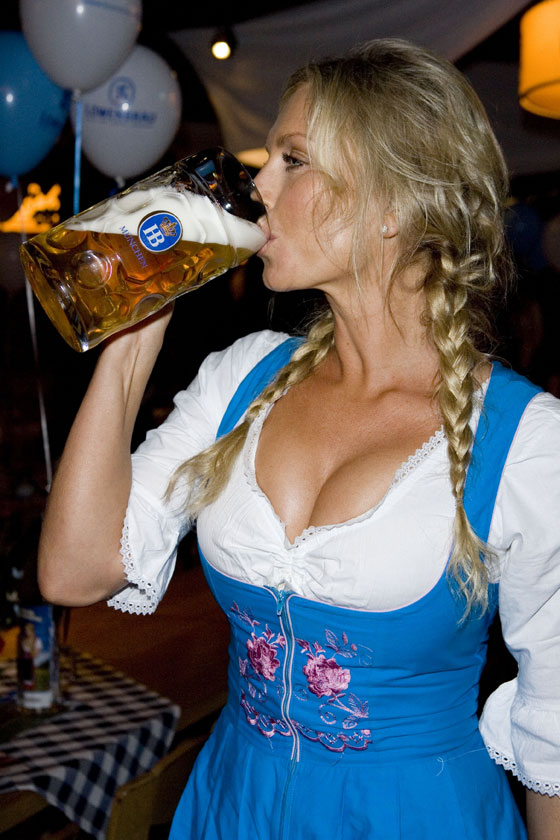
Hops are the often overlooked lifeblood of a beer. They are the seasoning that not only gives a beer its particular style, but also the driving engine for its aroma and bittering characteristics. But we don’t like bitter things! Well, on the contrary, my friend, we certainly do! In fact, we love em. We need balance. Think peanut butter and jelly with its sweet/salty opposition. Or a package of Sour Patch Kids, with their opposing sweet/sour profile that keeps our tongues doing a violent dance of stimulation. We crave that teeter- totter. Its what makes good food great, good wines great, and good beers even better. With beer, its the balance of sweet/bitter that keeps us licking our lips and headed for another sip. The sweetness of the malts need to be balanced by the bitterness of the hops.  Balance, balance, balance.  The key to life, really…
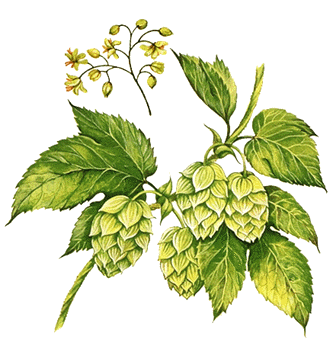
hop drawing

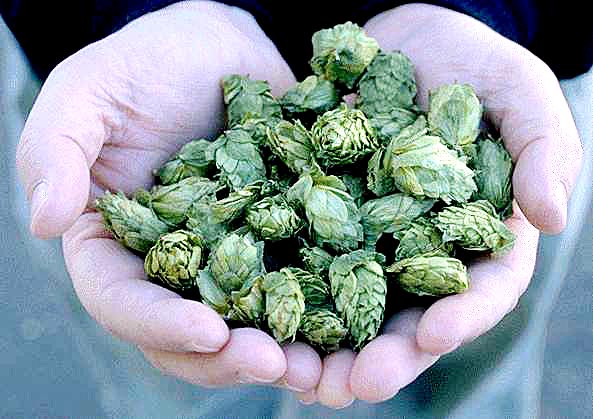
But what the hell are hops? We’ve all heard the name tossed around in tv commercials, and we know they’re in our beers for some reason, but why? Simply, hops are the female flower cones of the hop plant (Humulus Lupulus) which is part of the family Cannabaceae. For those who this name may sound familiar to, yes, they are a relative of the Cannabis (hemp) plant, and do have a very similar appearance and aroma to the bags of Humbolt-County’s-finest that your cousin Eddie sends you every couple of months.

Hops are primarily a flavoring and stability agent for beer, and have been prized by civilization for more than 1200 years, with the first documentation of hop cultivation going back to 736 in the Hallertau region of Germany (still a prized region for hop growing today). Beer brewing has gone on for over 4,000 years, so brewers have experimented with many bittering agents over time, and have thrown in countless herbs and flowers from dandelions to marigolds. In addition to giving a beer its balance, hops also serve to have an antibiotic effect on the brewer’s yeast and prevent any nasty microorganisms from munching away at your liquid gold.
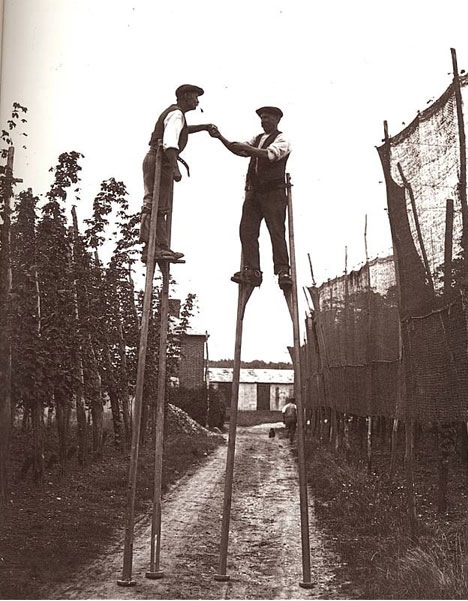
hops-pickers-on-stilts

Strung up on high wires, hop bines (yes, “bines“) climb like Jack’s beanstock, and may grow up to 25 feet in a single season. How’s that for a magical bag of beans? This is where the terroir, or “sense of place”, comes into the equation. Like grape vines, hops are finicky and certain areas are better for growing certain varieties than others, with Germany and the US leading the charge in terms of total production.  The main growing centers in the US can be found in the Yakima (Washington) and Willamette (Oregon) Valleys.

Some say beer has no terroir, or sense of distinct heritage. But like Syrah grapes from the Rhone valley, different species of hops are connected with different towns or regions. European varieties include Saaz, Hallertau, Tettnanger and Spalt. These are named for their home towns, and are considered the “noble varieties” just like Riesling, Pinot Noir and Cabernet Sauvignon are in the wine world.  But there are many more, all with distinct characteristics.
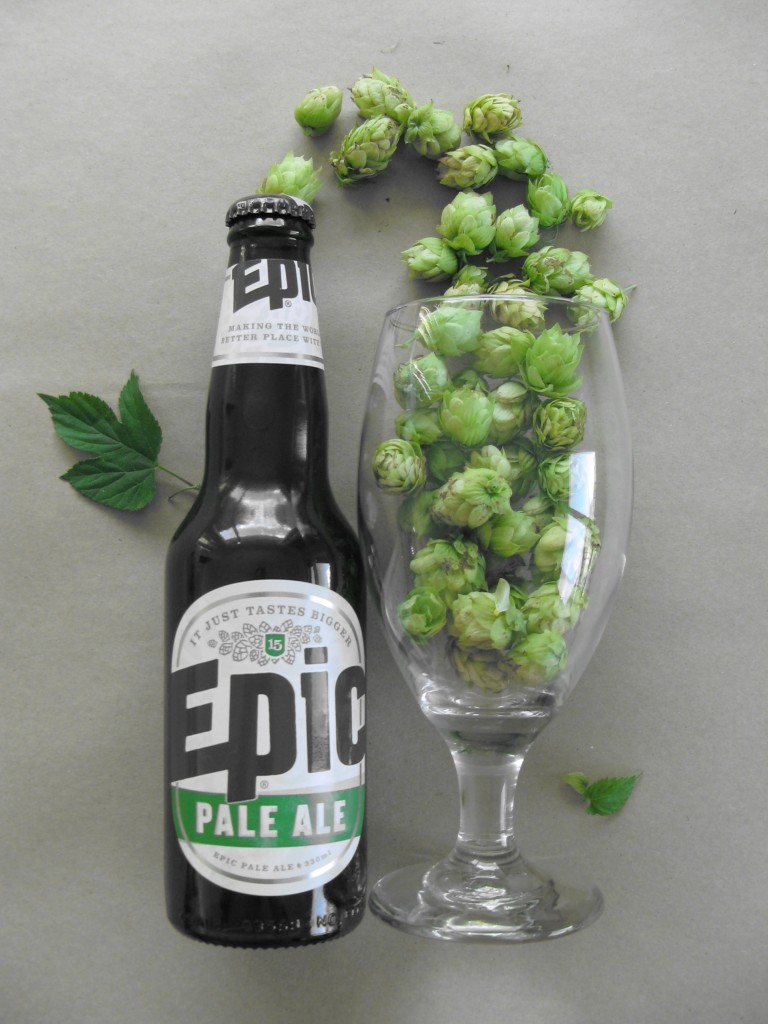
bottle-glass

Hops used in brewing are broken into two categories: bittering hops and aroma hops. Just like their name implies, certain hop varieties are used for different outcomes, with the bittering hops added to the initial boiling of the wort to give the bitter backbone to the beer, while the aroma hops are added near the end of the boil to impart, well, aroma to the finished beer.  At the heart of a hop cone is the essential oils from the resinous lupulin which is composed of two main acids: alpha and beta.

Hops are ranked on their alpha acid content, and even have their own system to measure it called the International Bitterness Units Scale . Most lagers are lower in IBU’s, while more intensely hoppy beers like India Pale Ales come in higher on the scale. Some like the Lagunitas Hop Stoopid Ale claim to be “so hoppy that it threatens to remove the enamel from one’s teeth” (and it does…I’ve tried it. Overall I wouldn’t call it in balance, as it is a Frankenstein of a beer, with such intense hops that you feel you’re either lost in a Carolina pine forest or hanging out in a Phishhead’s dorm room in Boulder).

Hops are all the rage today, and microbrewers are constantly pushing the IBU ceiling and releasing whallopingly-hoppy beers with names like Hoptimus Prime or Hop Whore.  So if you like hops, you’re in luck.  And if you crave your tongue to be dredged in a relentless, lupulin embrace of skunky resins, step on up the IBU scale…

Balance shmalance, just give me my damn hops!
bells-hopslam

old-peculiar-the-legendOld Ale, Theakston, Old Peculiar The Legend, Masham, North Yorkshire, UK
(5.6% Alc abv)

Brewed with Fuggle hops and from a long tradition, Theakston’s Old Peculier Ale “The Legend” is a little deceiving. It’s dark, squat brown bottle sits like a tank looking back at me. Its steely eyes watching my every move. The beer is delicious and I found I had to find a new reference because the color is dark, and could be confused for a stout by looks alone, but not in the flavor. It takes you by surprise. But why?

Throughout the last 180 years, Theakston has been brewing beers in Masham, a town of just over 1200 people in the North Yorkshire area of England. But that is just the mere tip of the iceberg, as the town’s history goes back far enough to reveal the owners of the land having been rescued by the Knight’s Templar almost 900 years ago. But thats for another day…

The Old Peculiar is what’s known as an “Old Ale“, a name often not touted around my world, at least. Its kind of an interesting process where the beer is brewed at lower temperatures, yielding less sugar and more dextrin (a carbohydrate); normally, brewing is done at high temperatures, resulting in more sugars and less dextrin. The high levels of dextrin give a fuller body and leaves the beer with a slight acid zip that leaves you refreshed.

With subtle aromatics, an almost red fruit character on the nose, and great complexity in the finish. Rich in malt and with that classic spicy Fuggal hop flavor I like in my English beers.

Old Ales are pretty wild stuff. I must try more. I see that North Coast brewing has the “Old Stock Ale“, which looks interesting.

(For more info: check out Theakston’s website here)

cote-rotie-sepia

In a land far, far away lies a tiny nook, a mere stitch in the massive quilt of the wine world.  Tucked nearly out-of-sight amongst the steep valleys above France’s Rhône River, the sound of its name conjures up a land far from prying eyes and stretch limos of gawking tourists, its mere mention eliciting a hushed nod of adoration from the most die-hard wine lovers.  Its name is Côte-Rôtie, and it is a special land where one grape reigns supreme.  It is in fact, one of the most hallowed homes for the Syrah grape.  If one were to utter the phrase “Yellow Tail Shiraz” in this area, it just may result in an ancient, rusty shotgun blast to the kneecaps.

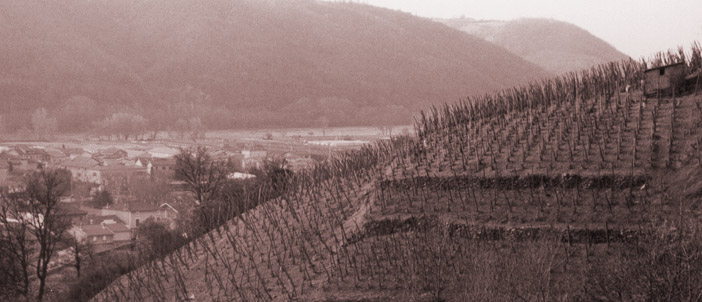
bare-hillsides-of-vines-cote-rotie1

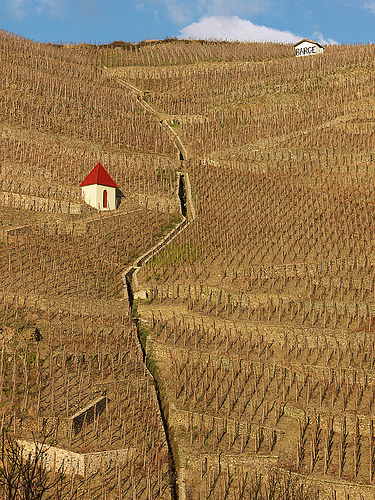
Is it the most perfect match of grape and soil, wind and sunshine, sweat and devotion?  Quite possibly.  For no wine quite elicits the peppery aliveness, the funkiness, the precision and complexity of a Côte-Rôtie.  And this from a land made up of less than 500 acres, its best vineyards meticulously planted up hillsides approaching 60 degrees of incline.  It is a mere postage stamp in the broader Rhône Valley of Southern France.  You won’t find a mechanical harvester here because Mother Nature won’t allow it.  Instead, the workers brave the steep hills to bring the grapes down in small baskets, or form a human chain to guide them meticulously down from their sun-drenched perches far above the valley floor.

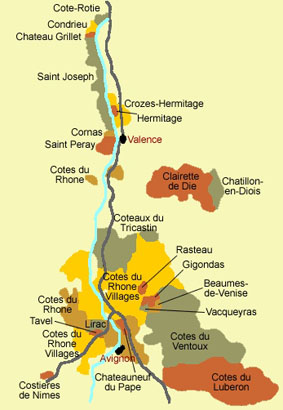
rhone-map1

Côte-Rôtie lies at the top of the Northern Rhône Valley.  The area had gone out of fashion, only to rise again in the last 35 years because of an infusion of modern winemaking techniques combined with those of the past like the use of small, new oak barrels.  By law, vignerons are allowed to blend in 20% Viognier (a white grape), but you will rarely find anyone using more than 5%, and this because it not only adds aroma to the wine, but somehow, somewhere, the Viognier vines found themselves scattered in miniscule specks throughout the patches of Syrah.  It’s as if God had merely sprinkled a couple grains of salt into his fields of pepper scattered across the hillsides.

Translating as “roasted hillside”, Côte-Rôtie is made up of a handful of famous slopes, the most prized being the Côte Brune and the Côte Blonde, supposedly named after the daughters of an ancient aristocrat, with every available inch of steep vineyard being utilized to capture the direct sunlight of the day.  At night, the high altitude and the winds that whip through the valley chill the grapes down and preserve their acidity.

The Northern Rhône is a beautiful, yet savage land where the Mistral blows like a howling demon through the steep valleys, lashing the vines with a cold north wind that will chill one to the bone.  It requires the grower to meticulously stake each vine down to prevent it from being wrested from the earth and tossed to the heavens.  After heavy rains, it’s not uncommon for the workers to have to carry the granitic soil back up into the vineyards after being washed down to the valley floor.  Backbreaking work?  Absolutely.  But there is nothing quite like these wines, and no area quite so strikingly brutal and beautiful at the same time.  And somehow, man and grape have learned to form a perfect union built on tradition and adaptation.

Producers to look for: E. Guigal, Paul Jaboulet Aîné, M. Chapoutier, Rene Rostaing, Jamet and Bernard Burgaud

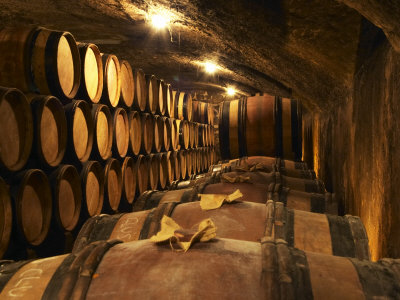
barrels-domaine-guigal-cote-rotie

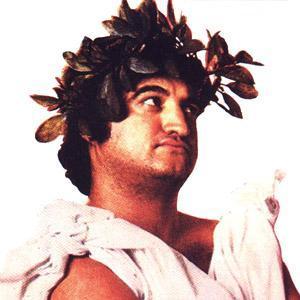
john-belushiIn Roman times, the ultimate show of power was to own a vineyard. In fact, one of the highest honors possible was for the Emperor himself to prepare you one–actually planting and pruning with his own two hands. Forget nude community baths or prized flocks of sheep, if the King throws a few rows of Sangiovese vines in my backyard, my neighbors will never again scoff when they ride by on their ox cart.

Maybe that’s the answer:  President Obama needs to go on a vine-planting world tour, stopping at every international hot spot to get down on bended knee and dig around in the dirt with the leaders of the world.  I find it hard to fathom that Kim Jong Il would have any interest in firing off a Taepo-Dong missile after sipping on Sassicaia and slurping down a bowl of homemade pasta sprinkled in white truffles and parmesan cheese.  But I digress…

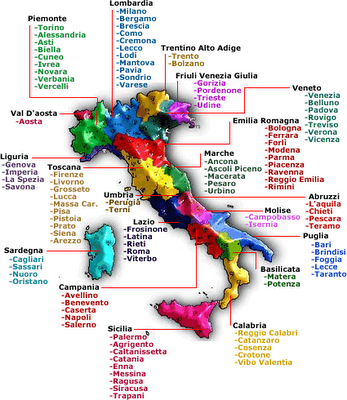
Italy: Twenty distinct wine regions.  More than 1,000 native grape varietals.  And with some wines named by region, others by grape, some by grape and region, and others seemingly pulled out of Uncle Luigi’s hat, it can get quite confusing.  Well, my friends, in a country covered in close to 900,000 individual vineyards, and nearly every hill, mountain and valley covered in vines that may have been introduced thousands of years ago, it pays to take a step back and tip to your hat to the prowess that is Italian wine. From a rustic, earth driven, high-alcohol Primitivo from the south to a vibrant, mouth-watering Prosecco in the north, the sheer range of grapes and wine styles is staggering.

Now, about that vineyard in my backyard; when can I set up a time for Michelle and Barack to plant a couple of Dolcetto vines on my fifth floor fire escape?

A 30-second quiz for you.  How well do you know Italian wines and regions?

italian-wine-map

1.  The US wine market was awash in cheap versions of this wine in the 70’s and is served by Dr. Lecter as an aperitif with his fava bean dish:

(a) Morellino di Scansano

(b) Barbera d’ Alba

(c) Chianti

(d) Lambrusco

2.  A favorite with sommeliers for its full body, rich tannins and high acidity, this southern, dark-skinned grape is the star in Basilicata and Campania:

(a) Montepulciano

(b) Sangiovese

(c) Lagrein

(d) Aglianico

3.  This town in Piedmont takes the Nebbiolo grape on a ride to greatness.  Rising close to 165 ft higher than the Barbaresco zone, its vineyards make up close to 4,200 acres (1,700ha).  Decades of bottle age are possible:

(a) Siena

(b) Verona

(c) Barolo

(d) Assisi

4.  The northern region from which the Gargenega grape and the Trebbiano grape come together to yield intense white wines with mouth-filling texture and citrusy liveliness:

(a) Soave Classico

(b) Firenze

(c) Valpolicella

(d) Pisa

5.  In terms of volume of wine exported, Italy lands in what place?

(a) Fifth

(b) First

(c) Third

(d) Second

ANSWERS:  1(c)  2(d)  3(c)  4(a)  5(b)


(Originally posted as a guest article on Hop Talk)
battle_of_bosworth

Take your filthy hands off my beer can!

Within the wine, beer and spirits world, passions run deep.  And so do the divisions.  Whether it is beer vs. wine, red vs. white, or vodka vs. bourbon, the warring camps of devotees are steadfast and thirsty for the other’s blood.  Whether it is double- vs. triple-distilled, screw cap vs. cork, or old world vs. new world, you’re going to get some pretty set opinions.  “A screw cap on my wine?  I ought a bust you in the lip and drown you in a vat of Yellow Tail Shiraz!”  Well, one of the most famous is the can vs bottle division, but the lines are being redrawn.  Change in the beer world is coming…. you afraid of the can?  Well, my friend, it may be time to look again.

So often the choices we make in what we drink tell us a lot about the person.  Like wearing an Armani suit, strutting around with a bottle of Sam Adams Utopia is an indicator of class, style and attitude.  I remember when just the sight of my bottles of microbrew was called out as being “fancy”, and I was regularly taunted by can-wielding upperclassmen.  And of course in this case, “fancy” meant arrogant, or high-falutant, like I was some sort of beer dandy or something.  Well, looks who laughing now, you Schlitz-drinkin d-bags…and no, you can’t have a bottle of my homebrew.  And now, the door has opened even further and we’re seeing the unthinkable:  microbrews in cans.  What the f?  A can?!  “But only swill comes out of a can”.  “Only those that care nothing about their beer would disgrace it with such a filthy vessel”, the naysayers rally.  And you’d be surprised just who is saying such things….

cans-bottles2

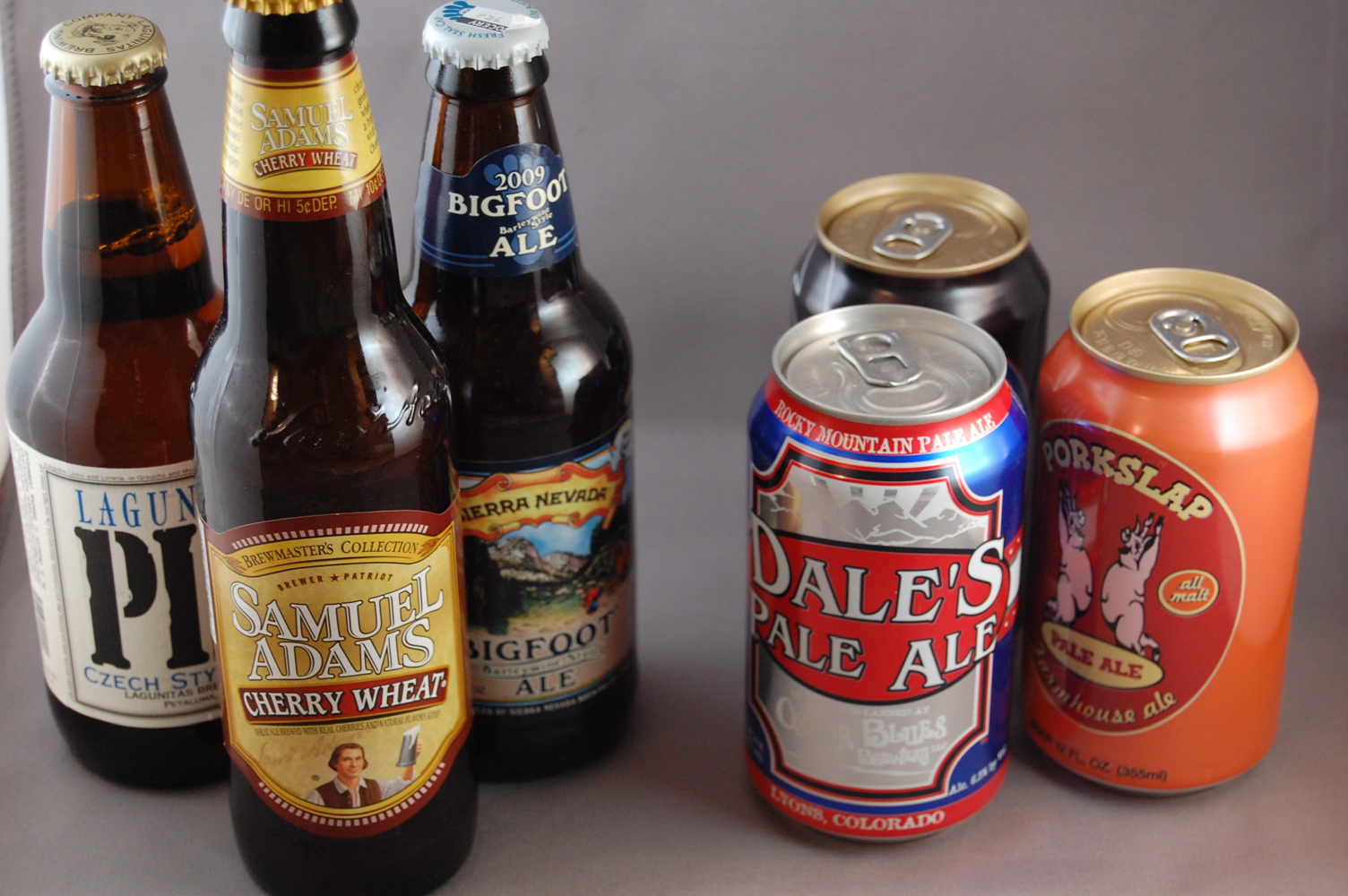
A few years ago, Jim Koch of Boston Beer Company (Samuel Adams) shocked the beer world with his blatant disregard of the can. In 2005, he released what he called the “Beer Drinkers Bill of Rights” to ensure better beer for one and all, and stated, “”Beer shall be offered in bottles, not cans, so that no brew is jeopardized with the taste of metal.”  Uproar ensued in the microbrew community, especially at my beloved Oskar Blues Brewery in Lyons, Colorado where they have taken can technology to new heights and are the pioneers in leading the movement away from the beloved bottle.

The evolution of the can is a fascinating one.  As recently as the 1930’s, tin cans could not hold beer without exploding.  And then came the advent of the liner.  Initially made of vinyl (and fancy polymers today), they sealed the can, and prevented all liquid contact with the metal.  Over the years, the technology has improved ten-fold and the fear of tainting our precious bevies with metal has become irrational.  In fact, its seeming more and more like the can is the perfect vessel for beer.

I was fortunate to meet Dale Katechis, the founder of Oskar Blues brewery a few years ago at Brewtopia.  There in the midst of all these breweries and their countless bottles was a table filled with cans.  Huh?  It seemed so strange.  Yet for Dale, it was a subtle war cry; a shot across the stern of the micro beer community.  Dale’s Pale Ale was not just a great beer, but also a new philosophy: the Can is King.  Backed by the belief in “less air, less light”, Dale was upbeat, passionate and grounded in his renegade ways.  And the beer? Unbelievable.  Featuring caramel toffee notes highlighted by fresh hops and an intoxicatingly smooth balance, it is delicious, and was deemed the Top Colorado Brewed Beer by the Rocky Mtn News in November, as well as the NY Times pick as the Best Pale Ale in America in 2005.

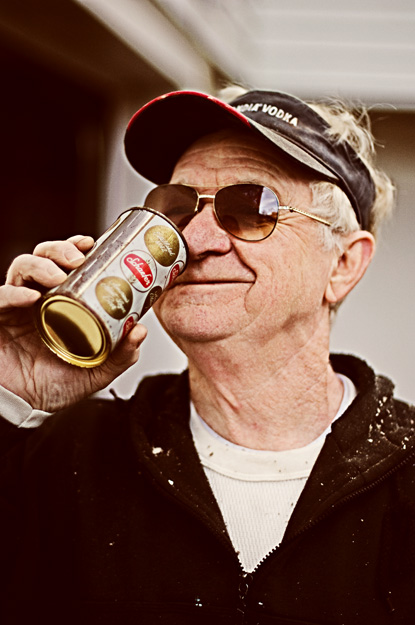
kennywithbeer1

So fast-forward a few years, and cans are now popping up everywhere in the craft beer world.  Breweries like Butternuts in upstate New York, New Belgium in Ft Collins, Colorado, and most recently Sly Fox from Pennsylvania, to name a few, have begun canning.   They’re on the band wagon, and are espousing the advantages of the can:  better protection from light and air, easier storage and transport, as well as a quicker cooling time for your tailgate fiestas…So what does that mean for us, the beer drinkers?

Well, frankly, better beer.  Be it canned or bottled, brewers are testing and reinventing the ways we package our prized beverages.  Concerned with the freshness of their beer, every detail is being scrutinized  (and argued over).  But honestly, bottles aren’t going away.  The only thing that’s really changing?  You’re going to find some damn tasty microbrews in cans.  So embrace them, my friends.  Embrace them without shame.  The can will serve you well.

« Newer Posts - Older Posts »