David & Goliath

Owning a microbrewery is a labor of love.  Often times, the genesis is a mad homebrewer’s hobby growing so big that their basement, kitchen, garage and children’s closets become so clogged with gear that they HAVE to go pro.

This is what happened to Matt and Renee Nadeau who are about to celebrate the tenth anniversary of Rock Art Brewery.  But now they’re being attacked.

rock_art_logo(Personally, as a homebrewer living in a tiny one- bedroom apartment in Queens, it has certainly been a challenge and I can tell you that one corner of our bedroom is so overloaded with hoses, brushes, buckets and tools that were my wife not so in love with the beer, they’d end up on the curb for NYC’s finest to haul off.  But enough about me…)

This story is about a battle that’s brewing in the cozy state of Vermont.  And its gonna be a long and costly one.  A classic tale of corporate greed and the power of the dollar squashing the little guy.  The villian in this story?  Monster Energy Drinks.  But wait, you ask, what the hell does Monster want with a small microbrewery in Vermont?

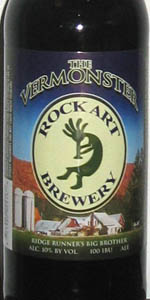
monster_energy-LOGOWell, in a stroke of pure asinine genius, the corporate wizards at Monster have decided that the beer being brewed in Vermont under the name “Vermonster” may cause confusion in buyers and be a threat to their billion-dollar enterprise.  What the f*c%?!!

Yeah, I certainly know that I’m confused when I go to buy my oversized can of energy goo/dog shite:  “Crap! wait!  Is it the black aluminum can that proudly claims “Unleash the Beast!” or is it the 22 oz glass bottle that has a clearly depicted Rock Art Brewery logo in the center of the bottle? Oh, my head hurts, I’m so confused!  I just want my jolt of sugar crap in my veins and now I got to LOOK at the label?!”

Vermonster

Confused?

What a frickin joke.  And the irony?  Everyone knows it.  The sad part is that Matt and Renee are small businessfolk who don’t have the financial means to fight this giant.  Everyone has advised them to just back down and change the name to avoid the years of legal wrangling that will ensue, and the dollars it will cost.  But Matt refuses to cowtow.

(Frankly, my feeling is that Monster and the whole slew of caffeine-driven energy drinks will prove to be ridiculously toxic, but only after years of our children mindlessly consuming this garbage.  But this is America, and they’re free to peddle their crap).

What pisses me off is their attack on Rock Art Brewery.  For that, its time for us to stand up!  Stand up for the little guys and stand up for the microbrewery that doesn’t have the means to defend itself.

Here’s Matt’s story in his own words:

httpv://www.youtube.com/watch?v=kbG_woqXTeg

Take action, people.  Start by boycotting Monster then get involved by clicking on the links below:

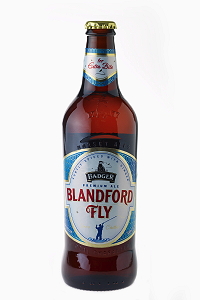
English Pale Ale, Blandford Fly, Badger Brewery, Hall and Woodhouse, Dorset, England

(5.2% Alc)

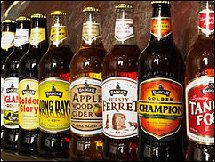
Badger Beers and Cider for 2008In the small, sleepy town of Blandford Forum in southern England, a tiny predator lurks at the banks of the River Stour.

Rumors abound as to its actual size; some claim it is mere millimeters, while others claim it is the size of a pterodactyl.  But all can agree on on one thing:  the bite from the Blandford Fly is vicious, leading to fever and swelling.  The cure?  Beer, of course.

Local, Nick Malden (whom I met while scuba diving in Costa Rica where we were both honeymooning), tells this account:

Feeding Mosquito“Playing in fields abutting the Stour River as a child,  rumours periodically resurfaced about the dreaded Blandford Fly or “Blanny bomber” as it was known to us.  No one quite knew what they looked like, but their bites were real enough and the stuff of legend – I can still picture a blister the size of a dinner plate on a neighbour’s leg.  I pictured them as huge mutated crane flies with savage, blood-smeared proboscises”.

For some reason, the fly was attracted to the sweet flesh of the local housewives and, as we all know, you don’t mess with an English mummy…especially not one covered in welts.

They sprang into action and, over the years through trial and error, it was determined that ginger was the preferred salve (stinging nettles and poison sumac were quickly ruled out…oh, the horror…).

hall and woodhouseNever failing in their civic duties, the brewery of Hall and Woodhouse sprung into action.  Hence, the Badger Blandford Fly was born–“subtly spiced with ginger for extra bite“.

Ginger has a long history with English brewing, and was heavily used as a spice (along with licorice and various tree barks) in the 1700 and 1800’s.  They give the beer more complex aromas and flavors, but most importantly, serve to balance the sweetness of the malts.

badger-breweryBadgery Brewery (Hall and Woodhouse) is an independent, fifth-generation family brewery that has been brewing traditional bottle and cask ales since 1777.  Knowing I’m a beer geek, Nick was kind enough to smuggle me a bottle from across the Atlantic…and it was well worth the journey.

Light brown in color with a slight head retention, the Blandford Fly gives off notes of cinnamon, clove and ginger on the nose.  Malty, with the flavor of English biscuits (thats “cookies” to you, Yanks), there is a delicious, subtle ginger seasoning on the palate akin to drinking liquid Ginger Snaps.  Its a fruity ale with a nice, lifted spice that grounds and balances the notes of tangerine present in the flavor.

Now if you can just smuggle me back a Blandford Fly itself, Nick, I can complete the circle and test the beers therapeutic and redeeming qualities.  I guarantee this sweet Irish flesh would be a tasty target.

Cabernet Sauvignon, Cape Winemakers Guild, Kanonkop, 1997, Stellenbosch

(14% Alc)

YodaWhat if Yoda made wine?  And what if instead of focusing on intergalactic peace, the Jedis gathered to taste through barrels of Pinotage and hammer out the intricacies of pruning and soil characteristics?

And what if after hours of intense debate, they chose their favorite wine from that year’s vintage to represent them all?

Well, it does happen…and once a year.  But its not in Tatooine where you’d suspect, but in the land of South Africa.  I present to you: the Cape Winemakers Guild.

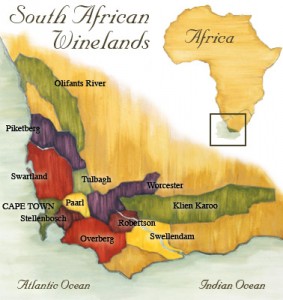
South-Africa-MapOnce a massive player on the world stage (the Constantia Muscat-based dessert wines were once considered the finest in the world), South Africa’s wines fell into the abyss for much of the 20th century.  Beginning in the 1980’s, however, they began to rise triumphantly again and have continued their steady march to today.

Now firmly rooted amongst the best in the world, South Africa is one of those wine regions that produces great quality at killer prices.

And this week, I was fortunate to taste some of their finest bounty with Abrie Beeslaar, winemaker from Kanonkop estate in Stellenbosch when he unleashed a flurry of their wines at Terroir.  From Pinotages to Paul Sauer Cabernets, they were all sick, but one stood out: the Cape Winemakers Guild 1997.

CWG logoSort of akin to the military’s Delta Force, the CWG is a select group of top winemakers whose mission it to hone, finesse and extract the purest vinous expression of South African terroir possible in their wines.  No doubt meeting in secluded chambers deep in mountain crevassses, and traveling by Black Hawk helicopters in the dead of night, the Guild remains invitation-only with a current membership of about 36 wine producers.  The requirements?

1)  That you’re bad ass with your fruit

2)  That you’ve been producing outstanding South African wines for at least 5 years.

3)  That you can lift an X-wing Starfighter out of a bog sheerily by using your mastery of the Force.

Each year, members submit up to two wines from their best barrels, the group tastes them in a blind sampling and then chooses their top wine to be bottled as the Cape Winemakers Guild selection.  I was struck speechless when I tasted the CWG Kanonkop 1997.  Wow.

Kanonkop logo2Made of a blend of 80% Cabernet Sauvignon, 10% Merlot and 10% Cabernet Franc, it is the same makeup as the 1997 Paul Sauer Cabernet Sauvignon, yet blended from only the best barrels of the vintage.

Upon first sniff, hypnotic notes of cedar, eucalyptus, red raspberry, blueberry and dusty cherry set my senses ablaze.  These flavors unfold on the palate, as well, and most notably, the wine has a mouth-watering acidity that takes you through a soft tannic journey then leaves your mouth bone dry and yearning for more.

Let me just state that I’m relieved the Cape Winemakers Guild is using their powers for good rather than for evil.  And who needs a wine key when you’ve got a light saber?

darth-luke

Photo by Lucasfilm Ltd.

GABF logo 2It’s concluded.  For the 27th year in a row, the Great American Beer Festival overtook Denver in sudsy force.

Although not in attendance myself, nor having ever seen the madness firsthand (insert mini violin here), I’m always amazed by the festival statistics because they’re just too damn staggering to believe.  Plus, Colorado is my home state and their beers nursed me into adulthood, so I feel the same affinity for this event as a babe does to its mother’s teet.

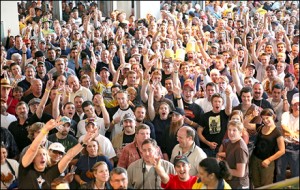
GABF crowdI can only imagine that the whole 3-day affair is akin to a Monster Truck Rally/Beer Rodeo/Science Expo/Mardi Gras Blowout.  And lo and behold, Colorado killed it, being the state to receive the most medals for its beers and brewers.

The GABF is the largest commercial beer competition in the world.  78 beer categories are set up  and brewers large and small submit their finest to be judged by a crack crew of 132 international beer judges from 10 countries.  This year, the judges had their task cut out for themselves as there were a whopping 3,308 entries (enough beer to sustain an entire brigade of Belgian monks for three months—well, give or take a day or two).

Colorado and California are the top dogs to beat and this year was no exception.  The top 5 winning states were:

  • Colorado (45 medals)Photo by Jason E. Kaplan
  • California (39 medals)
  • Oregon (22 medals)
  • Washington (13 medals
  • Pennsylvania (12 medals)

(And don’t lose heart, NY’ers, we placed 7th—and we’re only gaining strength with each passing brew coming out of our kettles).

And just in case you’re still not convinced how ridiculously massive this festival truly is, get out your graph paper and slide rulers and check out these stats:

  • 457 breweries in the festival hall
  • 2,100 beers served at the festival
  • 49,000 attendees (including brewers, volunteers and ticket holders)
  • 3,000 volunteers
  • 495 breweries in the competition
  • 3,308 beers judged in the competition
  • Average number of competition beers entered in each category:  42
  • Category with the highest number of entries:  134  (American Style India Pale Ale)

Hot damn.  Now thats a party.  Congrats to the winners and the Brewer’s Association for the continued success of this event.  Now if you could just send me a plane ticket and set me up with a place to sleep, I’ll see you at the next one.  I’m really not that picky; a cot somewhere in the corner of the beer hall will be perfect.  Oh, and a pair of pajamas decorated in hops should do the trick (yes, with booties).  Surely they make these for men that are 6’2″, right?

For more stats and to see a list of the winners, visit the Beertown.org website.

GABF gold medal

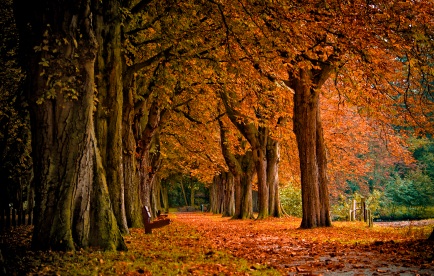
autumn in the forestIts about that time.  Spices, baby, spices.  As the mercury begins to drop, I always become strangely nostalgic.  Oh, Fall, you mischevious devil.  How do I count the ways I love you?  And oh, how you taunt my beer glass with your seasonal delights.

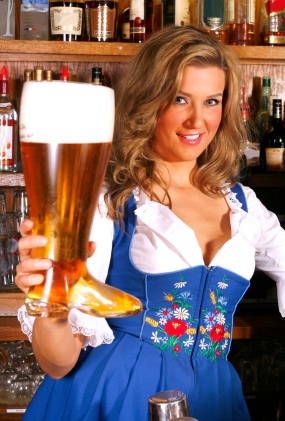
I popped into my local store a couple of weeks back and found a race in my heart as I saw the Oktoberfest beers hitting the shelf.  Hells yeah.  Bring me a sweet, sweet Marzen and let me crack one open under a Sycamore tree while zoning out on the changing colors of the leaves.

Too good to be trueAlmost a year ago, one of the first pieces I wrote with a vengeance was about the origins of Oktoberfest and the beer styles associated with it.

But this piece is about the Fall Seasonal beers Marzens, Pumpkin Ales and Fresh Hopped IPAs.  Look out, because we’re starting to see beer labels emblazoned with jack-o-lanterns, witches and the obligatory ghouls and goblins.

And underneath these ridiculous labels, we’re talking tasty beers.  Fall just tastes good.  The air goes crisp, the sun sets earlier and the wind hints at the winter lurking on the far horizon.  Let’s break em down…

“Marzen” is the German word for “March” and is the month in which these lagers are brewed.  Originating sometime before the 16th century, this style of beer would sit in cold storage for six months before being opened at the start of the Fall celebrations.  But why so far in advance, you ask?

ayinger-okt-festWell, you simply couldn’t brew during the summer in Germany before refrigeration, as it was just too damn hot and would lead to funky bacterial infections in your beer. But brew it when its cold, then stash it away in the cellar (otherwise known as “lagering”), and you’re good to go when the fall season hits.

Marzens are dark, spicy, delicious beers with an alcohol level that ends up between 4-7% abv.  They are often toasty, full-bodied, dark/copper in color and have a mild hop profile.

And its Harvest time, kids, so that means the fruit of the earth and all its bounty is coming forth.  Cornucopias of pumpkins and fresh-picked hops are being unleashed.  “Pumpkin beer”, “Fresh hop beer” and “Field blends” are all now officially recognized categories by the Great American Beer Festival.  What you end up with is Fall in a bottle.

Post Road Pumpkin AleIn celebration of the gourd, Pumpkin Ales are made around this time.  Often seasoned with Cinnamon, Nutmeg, Allspice, Ginger, Clove and what have you, they’re sometimes not even made with pumpkins at all, but instead with their more flavorful gourd-ish brethren.  When I made my Praise the Gourd homebrew, I cut up a Winter Gourd, covered the pieces in brown sugar and roasted them until caramelized.   Tasty stuff.  Plus, George Washington was known to make it, so you know its gotta be good.

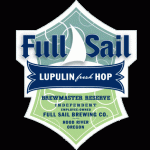
Full Sail Lupulin Fresh HopFresh hop ales, sometimes called “Wet hop” ale or “Harvest ales”, are made with hops that have just been harvested (sometimes only hours previously).  They give distinct notes of citrus, earth, pine and spice to the beer.  Often appearing at the end of September, these are for those with a serious craving for the lupilin.

Damn if I don’t love me the Fall.  I hereby announce the changing of seasons.  Summer was great, but nothing beats Fall.  Bring on the spice, the chill in the air and the Headless Horseman.

Drop a comment below and let us know what Seasonal Fall Beer you got your eye on…

sleepy_hollow_2

Pineau d’Aunis, Adonis, La Grapperie, 2005, Loire Valley

(13% Alc)

Reach out and touch meI’ve always liked the freaks, the misfits, those that are labeled “quirky”.  They’re not easily categorized and usually take some time to understand.

As wine consumers, we swim in a sea of decently made, yet entirely forgettable wine.  But sometimes a wine grabs you by the nuts and the mind at the same time.  A perfect clash of the visceral and the intellectual crashing together in a cataclysmic explosion.  And for a moment, you’re left speechless.

And so it was that I became haunted and couldn’t get this damn wine out of my mind.  It was like nothing I’d ever tasted made from a grape I’d never heard of:  Pineau d’Aunis (“Pee-no Doh-nee”).

pineau-daunis

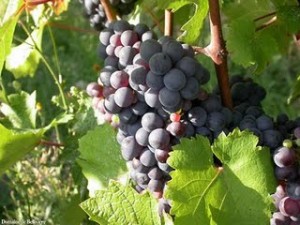
Pineau d'Aunis Grapes

A native red grape to the Loire Valley, Pineau d’Aunis is known locally as “Chenin Noir”, and was once popular in the medieval times by English royalty, being a favorite of Henry Plantaganet.

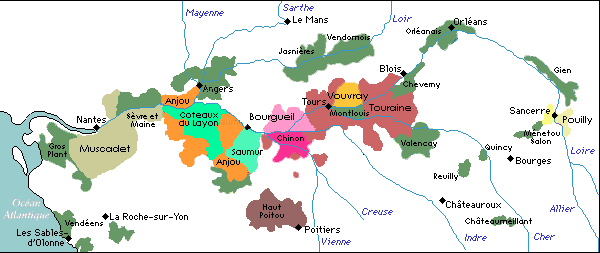
Now there are some name similarities you’re seeing, but don’t get ahead of yourself now.  Neither belonging to the Pinot family, nor any relation to Chenin Blanc, she is a grape that stands in her own camp.  And it’s a bizarre camp; no doubt inhabited by all manner of circus freak and castaway that couldn’t be understood by the masses.  Sadly, the Pineau d’Aunis grape has fallen from grace.  Once planted all around the Anjou and Touraine region, the vines have mostly been ripped out to make way for the mainstream grapes, thus pushing her bizarre delights even further from the limelight.

And I get why, don’t get me wrong.   I serve this wine to ten people, and nine will be confused–and thats a frightening thought for a winemaker.  But maybe, just maybe, that one person will fall head over heels for it.  And never underestimate the power of one…

And that’s what happened when my nose innocently passed over the glass.  The needle on the record scratched and my eyes bugged out.  What the f?  Did I really just get a nose full of herbs and black peppercorns?  No, surely someone had mistakenly upended their spice rack in my bottle.  But no!  That’s her mysterious charm and this wine is all about the herbs, herbs, herbs (not unlike a large segment of the freshmen who inhabited my college dorm).

Renaud Guettier

Renaud Guettier

Renaud Guettier started the La Grapperie winery in 2004 with very little previous winemaking experience.  Today, he owns a mere 4 hectares of vines; everything is farmed according to organic principles and harvested by hand.

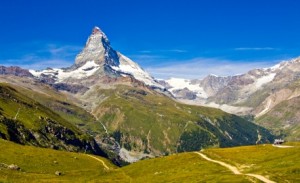
With a medium red color with hints of purple, the nose of the Adonis is richly aromatic.  Sage, peppercorns and violets dance across your nostrils like naked sirens, and lurking somewhere deep underneath, a hint of wild strawberry beckons.  Medium-bodied on the palate, the wine is super herbal, yet with an underpinning of wild red berries.  The fruit is tart and sour and tangos beautifully with the herbs, Matterhornmuch like eating a mountain-grown herbal salad thrown together by a high-alpine shephard and eaten within view of the Matterhorn.  The finish isn’t necessarily long, but while your mouth comes down, your mind kicks into overdrive, desperately trying to make sense of the wild flavors in the glass.

But you can’t make sense of it.  It is a freak.  A misfit.  A wine so strange that most people would quickly reach for something familiar to forget this bizarre detour ever happened.  But not me.  I’ll open the freak’s cage and set her free.  I love me a good misfit.

batman-gotham_l

DC Comics

Fire up the bat signal, commissioner!  We’re being invaded by an army of citrusy hops and specialty malts this city has never seen the likes of!  Rouse Batman from his cave, cause NY Craft Beer Week begins today and there’s no turning back!

As I write this, the taps are being screwed on, the glasses are being polished, the cask ales are being tapped, and the beer is about to start flowing through the streets of our fair Gotham.  Hot damn, I say.  This place used to be a waste land for beer lovers.  When I moved here nine years ago, looking at the beer selections depressed me.  Opening up my menu at a restaurant left me flummoxed.  How the hell could such a progressive city be so far out of tune?

Ah, but how times change.  Today, you’d be hard pressed to go into a corner store and not spot a jacked-up IPA from a local brewery or a Belgian beauty looking back at you.  Not to mention, the restaurant scene has become a Mecca for a beer lover looking to pair some Saison with spicy Vindaloo.  And so, today, my friends, the jackals of beer pleasure are being set free.

ny craft beer week

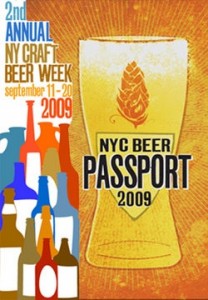
Just check out these stats:  83 bars, over 30 restaurants and over 20 breweries are in on the action.  How does it work?  Visit www.NYCBeerWeek.com, purchase yourself a “passport” for $35 and hit the streets.

In addition to $2 beers from a slew of great producers, they’ve got events lined up and beer dinners going on that bring a tear to my eye and make me proud to be a NY’er.

Just check out this dish at Mas (farmhouse):  Fried Oysters Rockefeller Style with Spinach in a Bacon Cream paired with Southampton Double White Ale.  Now that’s dancing with the devil in the pale moonlight.

Here’s some links to get you goin from NYCBeerWeek.com:

**Plus, Mapfaced.com will help you plan a beer crawl and Beermenus.com will tell you what’s pouring where

statue_of_liberty

"Give me your tired, your poor and your beer geeks"

winebloggers conference

Look ma, I won me an award!  And its drinkable!

I’m stoked to announce that my piece entitled “Portugal: the Land that Time Forgot” has been selected as a second place winner for the European Wine Blogger’s Conference awards.  Looks like my time traipsing through the streets of Europe with a backpack on finally paid off in the form of a tasty case of Portuguese wine coming to my doorstep.

Organized by Catavino, Viniportugal and Dunn Robbins, events were held in NYC and California to reach out to bloggers and spread the word about the vinous delights coming out of Portugal.  It was a pretty great way to leverage social networking, rally the blogosphere and a great excuse to gather a bunch of wine geeks under one roof for some joyous carousing.  Afterwards, bloggers submitted pieces for a contest to win a trip to Portugal and the rest is history.

All that being said, I’m excited to be amongst a great group of winners, so be sure to check out their pieces….oh, and party at my place.  I’ll keep a bottle open for you…

Ask an Insider is an interview series that talks to the people that make, serve, shake, sip, pump, pour, crush, distill, and bring life to this industry.  (For other interviews in the series, click the Ask an Insider tag at the bottom)
Brewery

There are many professions that kids consider downright uncool.  “What’s your dad do?  Oh, he’s a middle manager for a bank?  Lame.  I’m gonna be an astronaut”.  “Yours is a teacher?  Yuck!  I’m gonna be a millionaire in Dubai” (yes, times have changed).

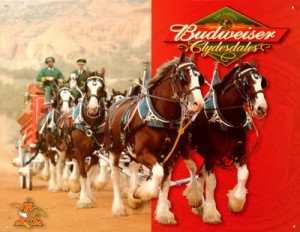
But when I was a kid and heard that my best friend’s dad was a brewer at Anheuser-Busch, I thought it was pretty damn cool.  I’d been on their brewery tour and seen the shiny equipment, the fancy conveyer belts and the endless bottles whizzing by at light-speed.  Plus, did he get to ride the Clydesdales?!
Budweiser clydesdales

Well, I never really knew exactly what he did, and so after a recent trip of his to NYC where I grilled him about my home brewing techniques, I thought it was time to ask him.

Doug Hamilton saw the rise of the microbrew industry from the inside of a macrobrewery.  In the early 1970’s, breweries like Sierra Nevada and New Belgium hadn’t yet come on the scene and the industry was dominated by five national brewers:  Anheuser Busch, Schlitz, Pabst, Miller and Falstaff.  Much consolidation was happening, and regional brewers began to fall by the wayside, which created a void in the local brewery scene.

schlitz

And so it was that a handful of savvy entrepreneurs, after traveling through Europe and tasting the specialty beers they had to offer, entered the scene and a new segment of the industry was born: craft brewing done by “microbreweries” (a brewery with an annual production of less than 2 million barrels).

But through it all, and even after being approached to work for multiple microbreweries, Doug Hamilton chose to stay in Fort Collins, Colorado and work for the mega-brewer he had come to love: Anheuser-Busch.

Now, granted, Budweiser is not my first choice for a great beer (or even my top 50).  In fact, their world is one I know very little about.  But after my interviews, I’ve come to have new respect for what they do.

Upon graduating from UC Davis in 1973 with a Master’s Degree in Food Science/Brewing Science, Doug went to work for Great Western Malting Company.  In 1987, he moved to Fort Collins and accepted a position at the new Anheuser-Busch plant where he remained for the next 19 years, eventually retiring as Area Manager.

When and how did you get your start in brewing?
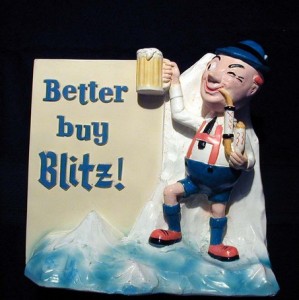
Blitz Weinhard

MY DAD WORKED AT BLITZ-WEINHARD BREWERY FOR 40 YEARS. I GREW UP WITH IT. SOME OF MY FONDEST MEMORIES AS A LITTLE BOY WERE GOING THROUGH THE BREWERY WITH MY DAD ON WEEKENDS. THE SMELLS OF THE HOP ROOMS, THE FERMENTING BEERS (THEY STILL HAD A FEW OPEN FERMENTORS BACK IN THE EARLY FIFTIES), THE COLDNESS OF THE FILTER CELLARS.

What is the typical schedule of a brewer?

DEPENDS ON THE LEVEL: AT ENTRY LEVEL, IT WAS ROTATING SHIFTS EVERY MONTH (DAY, AFTERNOONS, AND MIDNIGHTS).  AT HIGHER LEVELS IT WAS WORKING DAYS AND SOME WEEKENDS. ALWAYS, YOU HAD TO BE READY TO TAKE CALLS AT ANY HOUR OF THE DAY OR NIGHT, AND BE PREPARED TO COME INTO THE BREWERY, IF NEED BE.

Scariest thing about brewing?

BOIL-OUTS. WE USED TO BOIL THE WORT IN THE BREWKETTLE WITH THE ENTRY HATCH OPEN. THIS ALLOWED FOR A GOOD DRAFT AND ENABLED EASY ACCESS TO ADD THE HOPS.

OCCASIONALLY, THE WORT WOULD SUPER-HEAT AND WOULD SEND A THREE-FOOT DIAMETER STREAM OF BOILING WORT IN A FIFTEEN-FOOT LONG ARC ACROSS THE BREWHOUSE AND COVER THE FLOOR IN BOILING SUGARY SOLUTION THAT WOULD SEVERELY SCALD ANYONE UNFORTUNATE ENOUGH TO BE IN THE WAY.

I’VE SEEN BOIL OUTS THAT PUT 120 BBLS (ALMOST 4000 GALS.) ON THE FLOOR IN LESS THAN 30 SECONDS. TRULY SCARY!!

What is your pick for the most underappreciated beer?
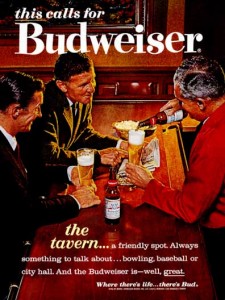
Budweiser Ad

AMERICAN LAGERS ARE OFTEN LOOKED DOWN UPON BECAUSE THEY ARE SAID TO LACK CHARACTER. YET, IN MY OPINION, THESE CLEAN, FRESH TASTING BEERS ARE SOME OF THE MOST DIFFICULT TO MAKE, SIMPLY BECAUSE THERE IS NOTHING TO MASK ANY OFF FLAVORS OR DEFECTS.

When was the first time you recall hearing about “microbrews”?

IN THE LATE 70’S GREAT WESTERN MALTING STARTED SUPPLYING MALT TO HOME BREWING CLUBS IN SOUTHERN CALIFORNIA. IN THE MID 80’S THEY STARTED SUPPLYING BREWERS LIKE ANCHOR STEAM AND SIERRA NEVADA.

What was the general view of them from the inside of the macrobrewery?

SOME PEOPLE THOUGHT OF THEM AS INTERLOPERS AND A POTENTIAL THREAT. I THOUGHT OF THEM AS A WELCOME ADDITION TO THE INDUSTRY. HOWEVER, IT IS IMPORTANT TO NOTE THAT QUALITY VARIED FROM EXCELLENT BREWS TO UNDRINKABLE. THOSE THAT COULD MAKE A GOOD BEER, CONSISTENTLY, I APPLAUD. THOSE WHO CAN’T SHOULD LOOK FOR ANOTHER LINE OF WORK. MANY PEOLE IN A-B THOUGHT THE SAME WAY.

THE PROGRESSION OF MICROS FROM THE “BEGINNINGS” IN THE 80’S BEGAN SLOWLY AND THEN PICKED UP SPEED AND WAS ALMOST EXPONENTIAL BY THE MID 1990’S. AT THAT POINT EVERYBODY AND HIS BROTHER THOUGHT THEY COULD MAKE BEER AND I RECALL TASTING SOME BEERS THAT HAD SUCH STRONG OFF-FLAVORS AS TO BE UNDRINKABLE.

mmm...delicious

mmm…delicious midpalate

THERE WERE THOSE WHO THOUGHT THAT IF A LITTLE SPECIALTY MALT WAS GOOD A LOT WAS BETTER. I RECALL TASTING A PEATED MALT SCOTTISH ALE THAT HAD THE LOOK OF USED MOTOR OIL AND THE FLAVOR OF “LIQUID SMOKE” THAT YOU WOULD USE AT YOUR BBQ.

AS WITH MANY “CRAZES” THE BAD BREWERS AND LOUSY BEERS CAME AND WENT AND THOSE WHO PAID ATTENTION TO THEIR PRODUCTS AND PRODUCTION CAME THROUGH IT WELL. SOME EXAMPLES, BUT CERTAINLY NOT ALL I COULD MENTION:

Ken Grossman of Sierra Nevada

Ken Grossman of Sierra Nevada

SIERRA NEVADA WAS ONE OF THE EARLY ENTRIES. THEY STARTED WITH A CLEAR PLAN, GOOD TRAINING AND ATTENTION TO DETAIL.
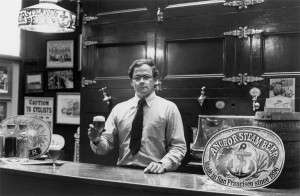
Fritz Maytag of Anchor Steam

Fritz Maytag of Anchor Steam

ANCHOR STEAM IS ANOTHER STORY. THAT BREWERY HAS BEEN AROUND THE SAN FRANCISCO AREA FOR WELL OVER A CENTURY. IT SURVIVED PROHIBITION, BUT BY THE 1960’S IT WAS IN DECLINE. FRITZ MAYTAG, OF THE MAYTAG APPLIANCE FAMILY, BOUGHT THE BREWERY AND MOVED THE OPERATIONS TO THE SOUTH END OF THE CITY. HE PUT HIS HEART AND SOUL INTO IT AND MADE IT INTO A HIGHLY SUCCESSFUL HIGH QUALITY BREWERY.
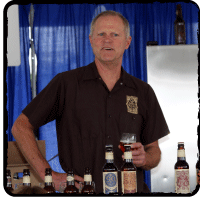
Doug Odell

Doug Odell

AS YOU KNOW, FORT COLLINS HAS ODELL AND NEW BELGIUM, TO BRAG OF. IN THEIR OWN WAYS THEY HAVE DONE EXTREMELY WELL.

A-B COULD MAKE MICRO PRODUCTS IN THE MAJOR BREWERIES, BUT THE VOLUME IS NOT THERE TO SUPPORT THESE PRODUCTS IN THE SCALE THAT WOULD BE PROFITABLE.

Was there at the time, and is there today, a divide between the two worlds?

THE REAL DIVIDE BETWEEN THE MICROS AND MAJORS IS THE TARGET CONSUMER. MAJOR BREWERS TARGET PEOPLE WHO WANT TO HAVE A BEER TO QUENCH THEIR THRIST AFTER WORKING IN THE BACK YARD OR TO DRINK A FEW WITH SNACKS WHILE WATCHING A SPORTING EVENT.

MICROS ARE SOMEWHAT DIFFERENT. THEY TEND TO GO WITH MEALS OR AFTER MEALS AND, USUALLY, ONE OR TWO AT A TIME.

THIS IS NOT ALWAYS TRUE, BUT THE TENDENCY IS THERE. THUS THERE IS PLACE FOR BOTH.

“My top 5 favorite beers are…”

  • I STILL LIKE BUDWEISER
  • SIERRA NEVADA PALE ALE
  • FULL SAIL LTD #3 (SEASONAL)
  • REDHOOK ESB
  • ODELL ISOLATION ALE (SEASONAL)
  • ODELL ALSO MAKES A DRAUGHT-ONLY SEASONAL BEER CALLED “DOUGWEISER”. (NAMED AFTER DOUG ODELL, THE OWNER) QUITE GOOD.

Thanks, Doug, for reminding me of the fact that whether you go micro or macro, we’re all beer lovers.  And though I may not be pouring a Bud Light into my glass any time soon, I respect those who do.  Good brewers share the same goals: quality, consistency and respect for craft.

Now how about letting me borrow one of the Clydesdales?  I’ve got a hot date to take out on the town tonight.

Marinha Cove

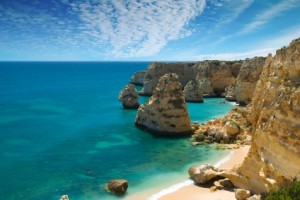
From the moment my foot hit the tarmac upon debarking from the plane, I knew I was in a different world.  The warm Portuguese sun hit me square in the face and I had one of those palpable moments in life that you never forget.  I literally felt the sands of time slow down, forcing me to recalibrate to a pace slower and fuller than ever I had encountered.

Portugal marches by its own drum and has stayed true to its rich past while aligning itself with the modern world.  It has taken the slow road, honoring tradition over technology, and it has paid off.

We’ve all heard of fortified Port wine and know it’s highly prized by collectors.  But there has been a groundswell over the last decade.  In a country best known for only one style of wine, a quiet renaissance has been taking place behind the scenes.  Driven by experimentation, a wash of investment from its neighbors and true devotion to the grape, Portuguese winemakers have gotten savvy.  The still wines now being produced can be hypnotically complex and, because they are under-the-radar, with prices that are dirt-cheap…and this is some prized dirt, let me tell you.

portugal map

At a recent tasting at Aldea Restaurant organized for a group of NY bloggers (shout out to you all), Ryan and Gabriella Opaz and the team from ViniPortugal and Catavino poured a selection of wines that ran the gamut from elegant to bold, simple to complex, and reminded us of what a fascinating wine region Portugal is and the trailblazers who are driving its renaissance.

For a 21-year-old exchange student living in England, and far away from Colorado, Portugal was a profound life experience for me.  The people, the culture and the meshing of the sea with everyday life, left me feeling like Americans in their zeal to rush through life had somehow missed the meaning of life.

Douro1

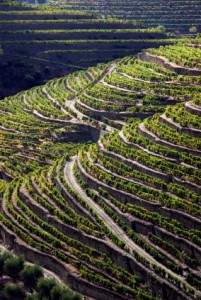
Portugal is tiny (smaller than the state of Kentucky), yet plays a major player on the world stage, clocking in at 9th place in terms of land planted to vineyard.  And these aren’t just any vineyards.  A lazy hand didn’t come along and plant these; oh no, my friends.  Because of the brutal landscape of steep riverbanks and hillsides composed of granite and schist, vineyard terraces had to be created mostly by hand with hammers and dynamite.  Dirt was hauled up in baskets and narrow terraces were planted with thin rows of vines.  Now that’s love for the grape; especially considering just how damn hot Portugal can be.

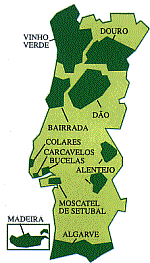
In terms of wine regions, there are five main ones, each now producing some tasty wines at incredible value.  Starting north and moving south, look for wines from the Minho, the Duoro, the Dao, Bairrada and Alentejo.

Due to the hot climate, Portuguese wines are full-flavored, often with great complexity and spicy, plummy characteristics.  Mostly a blend of local varieties used to make Port, you’ll find white grapes like Alvarinho and Encruzado, and (just to name a few) reds like Jaén, Bastardo, Aragonez, Baga and Touriga Nacional.

Fishing

While there, I stayed in Lagos, a backpacker’s destination on the Southern coast.  One afternoon, I found myself transfixed as I watched a lone fisherman with a simple fishing rod casting into fifteen-foot high waves.  To me it seemed so fruitless and I was frustrated just watching him, but he just continued on patiently.  When I returned hours later, he was still there…and with a basket full of fish.  You win again, Portugal.

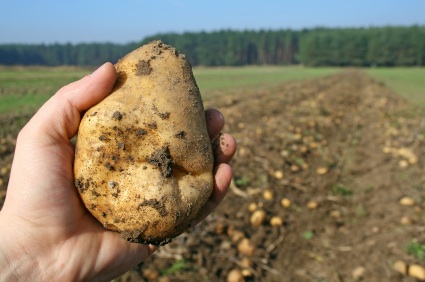
Potato

I’m a sucker for all things terroir-driven. If you’ve read my scribblings previously, you’ll know I’ve geeked out on the origins of hops, the tell-tale slate of Mosel Rieslings and the bizarre wines of Jura.

To me there is something beautiful about a grape being grown a world away and ending up as wine in my glass. Or a rare German hop variety ending up as lager in my stein. And no one will dispute that a single-malt scotch can never be replicated in a processing plant in Iowa.
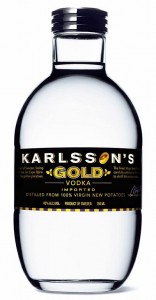
But we’ve seen time and time again how a unique product is blown out on a mass scale only to lose touch with the land it came from.  So it was that I was a bit skeptical when a friend turned me on to Karlssons Gold Vodka.

karlssons_vodka

“But I’m not a vodka fan,” I protested. “Why would I drink something that is odorless and flavorless, that’s had the living soul distilled out of it again and again?”

Vodka doesn’t hold a special place in my book. Maybe its because of the ridiculous level of marketing in the ‘90s for “artisan” vodka and its devoted followings of lemmings who drank their way through countless Cosmos. But in the fear of seeming too snobbish in my libation’s, I digress.

It’s simple: I want a unique taste in my drinks and a great story behind their journey to my table.  For me, its all about the producer’s respect for the art of winemaking, brewing or distilling.  And once I heard the story of Karlssons, I quickly found myself intrigued and my geek-antennae raised. In the world of tripled-distilled, lifeless, soulless, mass-produced vodka, they were doing something different: tricking out on potatoes!

Known as the “Father of Absolut”, master-blender Börje Karlsson helped create Absolut vodka. On the heels of that success, he wanted to turn his talent to something that better honored his home country of Sweden, and specifically, their traditional use of potatoes in distillation.

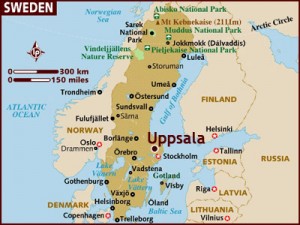
Sweden Map

Map of Sweden or a potato?

Some countries use grain for their vodkas, others use potatoes, but as with both, you boil them down to a mash to convert their starches to sugars, throw in some yeast to ferment it into alcohol and then feed it through a still. This process concentrates its essences and purifies it down to a “spirit”.

Börje Karlsson went to the heart of his country’s prized potato region, Cape Bjäre, and selected seven types of potato for his brew (Solist, Gammel Svensk Röd, Sankta Thora, Princess, Hamlet, Marine and Celine). That’s some serious spud love, and frankly if I was a potato, I’d rather end up in a martini glass than on the floor of a McDonald’s ball crawl.

And to capture the essence of the potato blend, Börje distills it ONCE. Less human intervention, more flavor, and more terroir.  With citrusy-floral notes on the nose, it is bright and alive in the midpalate with a smooth, round complexity.

Way to smash down the walls of boredom and lifeless spirits, sir!  Although I may not be reaching for a vodka and cranberry juice any time soon, I was pleased to hear there is authenticity in a world of darkness that I had turned my back on.  Viva la potato!

mcdonalds fries

A sad fate...

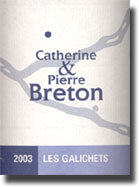
Bourgueil (100% Cabernet Franc), Les Galichets, C&P Breton, 2007, Loire Valley

(12% alc)

tour de france

I found myself sipping on this wine last week and was reminded how hypnotic Cabernet Franc can be.  Fragrant and juicy with crisp acidity, it is often blended with Cabernet Sauvignon in other wine regions, but in Bourgueil (pronounced “boor-geye”) it is king and stands alone.

That night, I switched on the TV and was riveted by the sight of the Tour de France rolling through the Loire Valley.  As the riders zipped through Sancerre (the famed white wine appellation that many consider the standard bearer for Sauvignon Blanc), I was struck by the image of a 14th century castle coming face to face with modern man.  Surrounded by rows of meticulously manicured vines, the scene was suddenly pierced by colorful jerseys zipping by the castle gates on newfangled carbon fiber machines.  In a flash, the pack of riders was gone, and life returned to normal in a land that time seems to have forgotten, leaving its grapes just dangling in the breeze.  Wow.  What a special race this is…and what a mind-bogglingly gorgeous area.


Chateau de Chenonceau

The Loire Valley is one of the largest wine regions in France, and certainly its most diverse.  From dry to sweet, still to sparkling, light to full, white to red to rose, there is nothing a wine lover can’t find here.  While you may know the famous appellations like Poilly-Fumé, Sancerre or Chinon, the charms of the Loire are endless.  Terroir-driven reds that boggle the senses and whites that grab you by the handlebars and nearly throw you off a cliff with their complexity.  With over 50 appellations, you could essentially ride your bike along the Loire River for the next five years and still only crack the surface of this region.  I say we all rent a chateau, slap on the lycra and get our party on at the banks of the Loire (just don’t mess with the suit of armor near the castle’s front gate, you drunken winos; it’s an antique for God’s sake).

loire_wine_map

Buried deep in the middle of this wine Mecca, lies the tiny hamlet of Bourgueil and the farmhouse of Catherine and Pierre Breton.  Surrounded by vineyards that go by the name of Les Galichets, they have been making wine for decades and are devout practicioners of organic winemaking.  Using no pesticides and chemical fertilizers, they let their vineyards and grapes speak for themselves, using no filtration when bottling their wines.

Les Galichets

The Les Galichets Cabernet Franc elicits notes of haunting dark cherry and herbs on the nose, with a hint of barnyard (did the Bretons’ use their horse’s hooves to stomp these grapes?).  Medium body with an acidity that washes over your mouth like a refreshing dip in the Loire River, its fruit and earth flavors are transfixing with a slight eucalyptus note.  Slight tannins pull at your cheeks and the wine just screams out for some country sausage and a crust of bread.

What do you think, Lance Armstrong?  Can we go for a lap around Bourgueil before next year’s tour?  I’ll put you up in the chateau if you bring the carbon fiber gizmos.  And Catherine and Pierre, if you awake to some rustling in the vineyards outside your bedroom window, don’t worry, it’s just a bunch of crazed wine geeks and cycling fans paying homage to your vines in the moonlight.

CatcherLabelWeb

Homebrewing is sort of like parenting…  Watching the little tyke evolve from the ornery days of vicious fermentation may just be akin to the terrible two’s where your kid would rather nash at your arm than peacefully eat his or her porridge.

And like a good parent, a brewer must give the beer proper temperatures to evolve (a challenge in my Queens apartment that can often feel like a grungy, humid cantina in Cuba where you’ve been tied up in the back room over a poker game dispute and the one lone ceiling fan is moving so slow it only serves as a whirling, hypnotic tease above you—just me?), racking the beer off its leftover yeasts and trub is akin to changing diapers, and bottling and labeling is akin to sending that child off to college, hoping they return as upstanding citizens worthy of finally impressing your skeptical friends.

Disturbedkid

I’ll tell you what, I was a hyperactive little demon child and it took me a bit longer to evolve…I guess that would be like a Belgian Saison that must be bottle-conditioned for 2-4 months, as opposed to the normal 2-4 weeks.  Okay, it’s official, if I was a beer, I’d be a wild Farmhouse Saison Ale.  Tempermental in its development, but once there, damn smooth and a perfect companion on a hot summer’s day…

It is with great pleasure that I announce two things:  one, the arrival of our latest beer, the Catcher in the Rye.  And secondly, that I announce Matt Rogers, the eccentric, big-hearted, master-of-the-pen from Chattanooga as the winner of our unofficial Name-That-Homebrew Contest.  His submission of Catcher in the Rye was seemingly simple at first, but began to grow on me to become something much deeper (just like the resulting beer, I hope…she’s still at college now, only on her second week of bottle conditioning, and hopefully not spending too much time at the Sigma Alpha Epsilon frat house).

Catcher in the Rye recipe:

2 lbs Rye Malt

½ lb Munich Malt

1½ lb 2-Row Malt

5 lbs Extract Pale Extract

2 oz Mt Hood Hops for bittering

1 oz Hallertau Hops for aroma

White Labs Dry English Ale 007 Yeast

And, for your enjoyment’s sake, a few of the runners-up in the Name-That-Homebrew competition:  “Rye-kers Island”, “Mad Rye-mes”, “Rye I Oughta”, “Rye of the Tiger”, “Rye-ke It Rong Time”, “This is What it Sounds Like When Doves Rye”, “Rye Me a River” and “Rye-nocerous”.

An open letter to Mr JD Salinger:  Dear Mr Salinger, I love your book.  And I also know you fiercely protect its image, and in fact will sue at the drop of a hat to protect its honor.  Please don’t sue me.  My beer child means you no harm, and I certainly won’t make a sheckle off of it.  That is unless of course you yourself would like to purchase a batch.  Let’s start the bidding at $500 a bottle.  This is my child we’re talking about, for God’s sake.

space needle

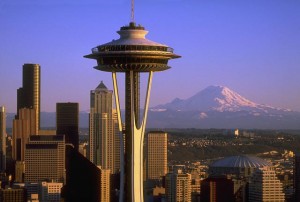
Seattle rules.  For an NYC boy like me to get to see more than a sliver of the sky at a time, it’s a pleasure, but to see the entire sky at once was beyond therapeutic.  And the sheer amount of art?  Whoa.  I thought the East Village was artsy, but its got nothing on Seattle, where every direction you look, art awaits.  A bus stop?  No, to Seattle, it’s a place to put poetry and paintings on four walls where a bus just happens to pick people up.  The neighborhoods are dripping with character, and the people are friendly and generous, with a pre-requisite to live there being at least one appendage entirely covered in tattoos.  An arm?  Nope, a canvas for a slew of tats.

Though Washington puts out some incredible wines, this trip was all about beer. A recent inductee to the dark arts of homebrewing, my brother Joe and I will riff for hours on what our favorite microbreweries are doing (I guess this is what growing up in Fort Collins, Colorado does to you; they should just give you an Odell’s pint glass when you’re born at Poudre Valley Hospital because you will no doubt be spoiled by loads of amazing beer by the time you reach high school graduation. The drinking age in Colorado is 16, right?)

Based on my recent posting of the Zymurgy Top 50 Beers chosen by homebrewers, we were on a mission to taste the beers not available to us in our fair Gotham (seriously Odells and New Belgium, get your asses out here!). First on our list was the chart-topper, Pliny the Elder, which was so damn tasty, we were reduced to babies screaming for their bottles, chanting: “Pliny! Pliny! Pliny!” And in a city where a beautiful thing exists called the Schooner (6 oz glass), we sampled a plethora of beers and felt like kids in a candy shop.  Well, intoxicated kids in a candy shop.

Here’s a quick round up of a few of the brews we tasted:

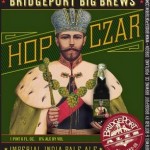
Imperial IPA, Hop Czar, Bridgeport Big Brews, Portland, Oregon, 8.5% abv

hop-czar1

A caramel brown appearance with nice head retention. It started off promising, with an aroma of apricots rolled in hop resin with a whiff of bright citrus, but boy we were in store for a demon. Now I like my hops, but my note on this one was: “layers of aggressive hops that whipped the fuck out of my mouth, leaving it abused and covered in a filmy, resinous afterglow.” Far from balanced, but impressive due to its sheer ridiculousness, it had a pine needle finish. If it stopped ¾ of the way through the journey through my mouth, it’d be perfect, but instead it was an onslaught and I would be hard-pressed to finish twelve ounces of it.

Double IPA, Pliny the Elder, Russian River Brewing, Santa Rosa, California, 8% abv

pliny-the-elder1

Copper caramel color, with notes of blood oranges drizzled with pine resin on the nose. An intoxicating aroma that is both bright and fresh. Full-flavored hops unfold at once, leaving your tongue stimulated from front to back. Supported by malts that taste as if they were dipped in caramel, and with a hint of lime juice. The flavors stay lifted and forward in the mouth. Though super hoppy, it finishes clean and leaves you longing for another sip. I was reduced to a baby wanting another sip from the bottle. Delicious, complex and very drinkable.

Imperial Porter, Black Butte XXI, Deschutes Brewery, Bend, Oregon, 11% abv

BBXXI-Simple040709

Brewed as a limited release, the Black Butte XXI is a much sought-after release, and we were stoked to find it. It’s a porter brewed with local chocolate and coffee, with 20% of it aged in bourbon barrels. Dark chocolate and near black in appearance, it had a milk chocolate colored head that had minimal foam retention. An aroma of espresso grinds, dark chocolate and a hint of smoked chipotle pepper. Complex flavors that hit you en masse, but then quickly sort themselves out elegantly. Each flavor is clear and distinctive and balances beautifully, finishing clean. Afterwards, we noted the bottle said: “Best after October 2010”, so we rushed back to grab another bottle, which we’ll sit on, till next year. A powerhouse.

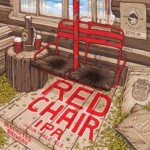
IPA, Red Chair, Deschutes Brewery, Bend, Oregon, 6.4% abv

redchair_label

With a creative label portraying an abandoned ski resort chair-lift that had been fashioned into a porch chair for a cabin, I was instantly intrigued. Copper caramel in color, the Red Chair exhibits a citrusy hop freshness. With flavors that fill the mid-palate, the hop character is firmly rooted and balanced over a nice malty platform. Notes of caramel dipped tangerines and graham crackers lead to a nice long finish. Refreshing and super drinkable.

What a great trip it was. Now if I can just figure out what tattoos to cover my right arm with, I’ll be all set…

Ploussard, La Chamade, A&P Bornard, Arbois, France, 2006

(13.5% Alc)

barton-fink-write3

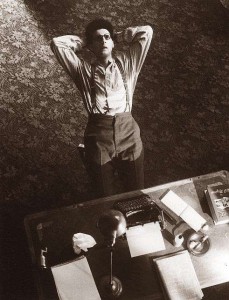
Barton Fink is one of my favorite movies.  I first saw it when I was fifteen, and remember it vividly.  It was like no other movie I’d ever seen: complex, dark, and quirky with strange characters (a neurotic NY playwright who moves to LA to write a wrestling film and a jovial insurance salesman turned serial killer), a bizarre plotline (writer’s block gone bad in a deserted hotel) and camera angles that surprised at every turn (see pic above).  Well, last week, I discovered my Barton Fink of wine: the region of Jura and the Ploussard grape.  And now, everything’s changed.

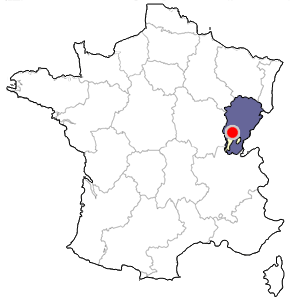
arbois-jura-map

The region of Jura is not a familiar one, and is steeped in mystery and ancient winemaking techniques. Lying in the shadow of Burgundy, it is a region tucked away on the eastern flank of France between Burgundy and Switzerland. With similar climate and soils to Burgundy, it’s unique because of its proximity to the Jura Mountains, which bring harsh winters and relative isolation. Mostly known for its whacky, oxidized whites called vin jaune, the wines from Jura (red, white and rosé) are quirky and play by their own rules like Joel and Ethan Coen, the creators of Barton Fink. Common white grapes include Savignin and Chardonnay, while red grapes include Ploussard and Trousseau, not exactly wines found on the shelf next to the Kendall Jackson.  In fact, you might not find them on the shelves at all.

On a recent outing, I went into three separate wine stores, only to be told: yep, tried em, but can’t sell em cause no one knows em. Being told “no” only drives me on more, and much like Barton Fink hooked me on the films of the Coen Brothers, so too has the Bornard La Chamade got me fixated on the wines of Jura. Oh Ploussard, you are a saucy red devil, and I will hunt you down.

bonard-ploussard-2

The La Chamade Ploussard by Annie and Philippe Bornard hails from the commune of Arbois Pupillin, the most well-known region in Jura. Your first hint that something interesting is going on is the nose of the wine; notes of spicy strawberries and spiced apples tease your nostrils. The body is medium to full with a delicious midpalate of acidity that wakes your senses. The core of the wine has an earthy, barnyard character, but one that is wrapped in fruity, pink grapefruit and a candied cherry finish. It’s delicious and startling, and balances a tightrope between earth and fruit.

goodman-flames

We’ll never see these wines take the world stage with a vengance, but that is what makes them special. There was a bit of something lost when the Coen Brothers’ film, Fargo, won multiple Oscars. Yes, it was a great accomplishment, but I got damn sick of hearing everyone spouting their off their feeble attempts at a North Dakota accent. So let’s leave Jura off the map for a little while longer and enjoy it for ourselves…

« Newer Posts - Older Posts »